

Sustainability versus convenience can be aligned when you start with small changes that last.
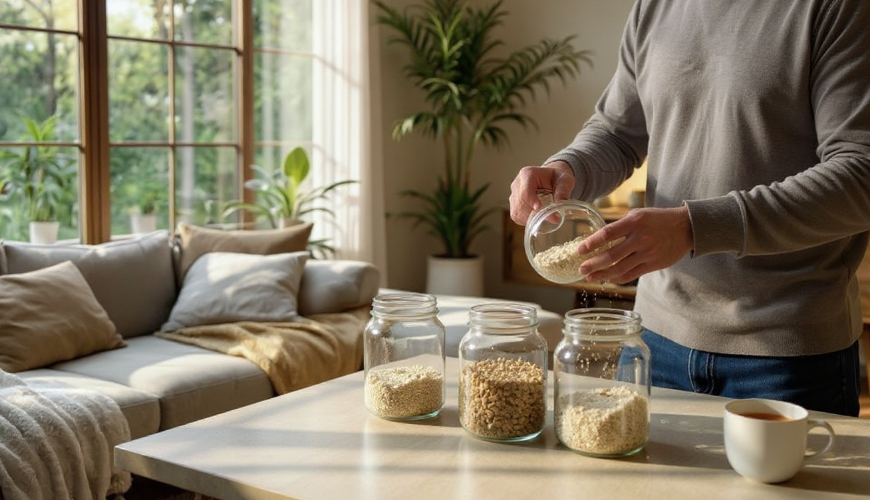
The tension between sustainability and convenience has become almost a social sport in recent years. On one side stands speed, availability, and "click and it's done," and on the other, the guilt that the planet cannot sustain such a pace in the long term. But is it really necessary to choose either-or? Many people today put it simply: I like convenience, but I want to live sustainably. And this statement is surprisingly a good start. It doesn't contain perfection, just direction.
Sustainability is sometimes marketed as an ascetic discipline: fewer things, less travel, less joy. However, in practice, the opposite often works. When you manage to find simple sustainability – that is, sustainability that can be maintained long term and without pretense – it begins to bring peace. Less chaos at home, fewer impulsive purchases, less "where did I put this thing again." Convenience does not have to become an opponent, but rather a goal that is simply redefined: convenience as a state where things make sense, last, and do not burden the mind or the environment.
And it's not just a feeling. According to the framework recommendations of the IPCC (Intergovernmental Panel on Climate Change), changes in lifestyle and consumption play an important role in how successful emission reductions are in practice; this is also concisely summarized in publicly available materials on the IPCC website. This doesn't mean that the responsibility lies solely with individuals, but that small changes make sense – especially when combined with pressure for better offerings and fairer rules.
Try our natural products






Sustainability versus Convenience: A False Conflict or Misaligned Expectations?
When you say "sustainable," many people imagine a complex project: sorting ten types of waste, making everything at home from toothpaste to laundry gel, riding a bike even in winter and rain, and doing it all with enthusiasm. It's no wonder that an inner voice protests: "This is nice, but I just like convenience." Yet convenience is not laziness. Convenience is often just the need for things to work in a real day, when you're rushing to work, dealing with kids, shopping, clubs, fatigue.
The problem often lies in sustainability being told as an immediate identity transformation. As if one must overnight switch to a "zero waste" regime and never make a compromise again. In reality, it's more of a mosaic. Some things are easy, some gradual, and some perhaps not at all – and that's okay too. Sustainability that tries to win over convenience by force usually doesn't last long. Sustainability that allies with convenience, on the other hand, has a chance to become routine.
In everyday life, convenience often means "not having to constantly deal with it." And that's exactly what well-set sustainability can bring: fewer one-time purchases, fewer improvisations, less waste that needs to be taken out. When you switch from disposable paper towels to a few quality cloths at home, it seems like a small thing. But a small thing that saves time (doesn't always need to be restocked) and space (fewer packages). Similarly, switching to refilling detergents or concentrated products works: less hauling, less storing, less worrying.
It helps a lot to change the question "What all do I have to change?" to "What can bring me convenience and meaning at the same time?" And then start where it's the easiest.
How to Live Sustainably and Enjoy It: Small Changes that Reinforce Themselves
"Enjoy" doesn't mean that every purchase becomes an ecological ritual with candles. Rather that sustainable choices won't feel like a punishment. The experience of many households is that changes with immediate benefits work best: better order, less chemical smell, less skin sensitivity, a more pleasant environment. And also changes that are easy to repeat. That's the magic of habit.
A real example? Imagine a typical apartment: two adults, one child, work, school, clubs. In the evening, the trash is taken out, full of packaging, disposable bags, and empty cleaner bottles. One day, a simple decision is made: instead of three different "miracle" sprays, only one gentle universal cleaner is kept at home, refilled in a larger container, along with a quality microfiber or cotton cloth and a brush. A week later, the difference is visible: fewer packages, fewer things under the sink, cleaning is faster because you're not searching for "the right" spray. And most importantly – no one feels like they've lost comfort for the sake of sustainability. On the contrary, a sustainable eco-home and comfort suddenly start meeting in one drawer.
A similarly surprising change works in the kitchen. You don't have to stop eating what you like. But you can notice how much food is being wasted. According to the UN (FAO), food waste is a significant problem with both economic and environmental impacts; the basic context is provided by FAO's materials on food loss and waste. And here, convenience and sustainability complement each other perfectly: when planning is simpler, less is wasted, and the household saves.
Sometimes a small thing is enough: having a "eat me first" zone in the fridge – one shelf where food with a shorter shelf life is placed. It looks trivial, but it works. A child takes a yogurt, an adult adds the last pepper to dinner, and suddenly less is thrown away without a big ecological debate at home.
And what about clothing. Sustainability in fashion is often reduced to expensive "eco" collections, but convenience and meaning sometimes lie in the simple question: does it fit, is it worn, does it last? When you buy fewer things, but those that are really worn, the closet and the mind are relieved. And yes, it's also convenient – less decision-making every morning.
"It's not about doing everything. It's about doing something that lasts." This sentence deserves a sticker on the fridge because it captures the mentality that prevents sustainability from becoming a short-term challenge but a long-term lifestyle.
Simple Sustainability in Practice: When Rules Aren't Against You
The biggest barrier is often complexity. Once sustainability becomes a list of obligations, it starts losing to fatigue. It's much better to look for "switches" that you set once and then run automatically.
One such switch is the shopping routine. Once you try how practical it is to have a few proven products at home that work for multiple things, you often don't want to go back. This applies to detergents, cosmetics, and household equipment. Instead of a cluttered bathroom full of half-used bottles, aim for a few staples: gentle soap, quality shampoo (even solid, if it suits), a universal cleaner, dish detergent, laundry powder or gel that doesn't burden the skin or water. The result? A sustainable household isn't a museum of jars, but a place where living is easy.
Another switch is transportation. Not everyone can ride a bike or take a train to work. But many people can make one small change: combine errands into one trip, pick up a package on the way, or have a "car-free day" once a week when possible. Instead of big promises, small but regular adjustments that don't increase stress are enough.
And then there's energy at home. Some imagine they must immediately install solar panels, but often it's enough to start where it's least painful: turning off lights in empty rooms (yes, it still makes sense), using energy-saving bulbs, not overheating, and ventilating briefly and intensely. In many households, it's also worth checking the water heater temperature setting or washing machine modes. Comfort doesn't suffer – rather, a pleasant bonus comes in the form of lower bills.
For sustainability to be enjoyable, it must also be "forgiving." A day when you buy something in plastic isn't a failure. It's just information: next time it might be different, or maybe not – and the world won't collapse. The "all or nothing" approach is one of the greatest saboteurs of good intentions.
Sustainable Eco Home and Convenience: How to Set It Up to Work
Home is where sustainability meets reality the fastest. There's no time for endless experimentation. And that's why it makes sense to build on things that are practical, hygienic, and long-term pleasant.
Quality plays a big role. A cheap item that breaks quickly isn't convenient – it's an extra worry. A quality alternative is often more sustainable simply because it lasts. This applies to water bottles, food containers, sponges, brushes, as well as clothing or shoes. Convenience in this sense isn't "quick and disposable," but "reliable."
It's interesting how quickly perceptions of cleanliness are changing. Many people associate a clean home with strong fragrances and "chemical" smells. But cleanliness is actually more about the absence of dirt than the presence of perfume. Gentler products often smell milder or almost not at all, and the household adapts surprisingly quickly. Moreover, the risk of irritation is reduced, which is appreciated especially by families with children, allergy sufferers, or people with sensitive skin.
Convenience also means that things have their place and make sense. In an eco-home, jars, bags, boxes, and "it will come in handy someday" sometimes accumulate. But comfortable living needs space. Sustainability can be done without a home warehouse. Instead of collecting "just in case," it's worth keeping only what's genuinely used. This, by the way, is one of the least showy but most effective steps: fewer things means less cleaning, less decision-making, less overwhelm.
If you want, you can set a simple rule: before buying something new, try to find out if there's already something at home that can serve the same purpose. It's not about deprivation, but about attention. And often it leads to the surprising realization that convenience is already at home – just lost under a layer of small things.
And what if the thought persists: "I want to do it right"? Maybe another question helps: is the goal really to be "perfect," or rather to have a home that is healthy, pleasant, and doesn't leave an unnecessarily heavy footprint? Most people eventually find that how to live sustainably and enjoy it is more about rhythm than rules.
If only one practical guideline should be given, then this: choose a few changes that are both convenient and visibly useful, and give them time. Sustainability spreads best as a good experience. When one step proves successful, the next doesn't feel like a sacrifice but like a logical continuation.
And perhaps this is where the supposed conflict "sustainability versus convenience" dissolves. When convenience stops being measured by the speed of consumption and starts being measured by the quality of everyday life, it becomes clear that both sides can play on the same team. All it takes is for sustainability not to be a competition, but a normal, human path that can be lived – and even with joy.