

# What is tahini and how to use it in the kitchen Tahini is a thick paste made from **ground sesame
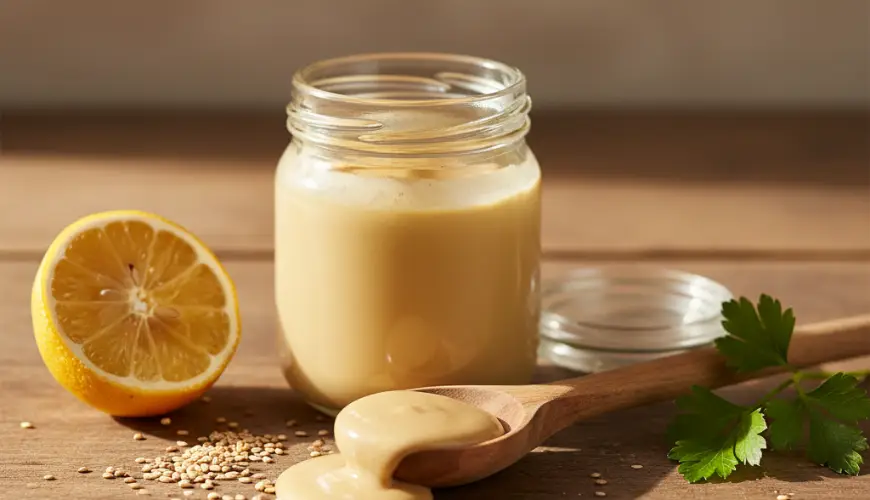
Tahini is one of those foods that long remained unnoticed in Czech cuisine, even though it has formed the basis of countless dishes in the Mediterranean and Middle Eastern world for centuries. Today, however, the situation is changing. Healthy eating, plant-based diets, and an interest in authentic flavours from around the world are bringing tahini to Czech dining tables more and more frequently – and anyone who tastes it in its proper form will find it hard to find a substitute.
Tahini is essentially a paste made from ground sesame seeds. It sounds simple, and at its core it truly is – but the result of this straightforward process is flavourfully rich, nutritionally exceptional, and culinarily surprisingly versatile. Sesame seeds are first roasted or left raw (both options have their advocates), then ground into a smooth, creamy paste with a characteristically nutty flavour and a slight bitterness that sets it apart from peanut butter or almond paste. Quality tahini should have the consistency of liquid honey, a golden to light beige colour, and an aroma reminiscent of freshly roasted nuts.
Try our natural products



Why tahini is more than just an ingredient in hummus
Most people know tahini exclusively as a component of hummus, and that is understandable – without tahini, hummus would not be hummus. But reducing this paste to a mere ingredient in a single dip would be like claiming that olive oil only serves for frying. Tahini is a standalone food with its own nutritional profile, its own history, and its own place at the table.
From a nutritional standpoint, tahini is truly remarkable. Sesame seeds are one of the richest plant-based sources of calcium – two tablespoons of tahini contain approximately as much calcium as a glass of milk, making it a valuable food particularly for those who avoid dairy products. In addition, tahini provides healthy unsaturated fats, protein, iron, zinc, magnesium, and B vitamins. It also contains sesamin and sesamol – lignans with antioxidant properties that, according to research published in the Journal of Agricultural and Food Chemistry, may help protect cells from oxidative stress.
It is worth noting that tahini appears in historical records dating back thousands of years. Ancient Mesopotamian texts mention sesame oil and paste as a rare and prized food, with sesame being one of the first crops cultivated primarily for its oil. Today, tahini is an indispensable part of cuisines from Morocco through Lebanon and Israel to Greece and Turkey, with each culture adapting it in its own way.
How does tahini differ depending on its origin and processing? Israeli tahini tends to be lighter and more delicate, Arab varieties can be more intense and bitter, while Ethiopian tahini – known as sesame paste – has its own distinct character. When choosing a product in a shop, it is worth paying attention to the ingredients: ideally it should contain a single ingredient – sesame seeds. Nothing more.
Five ways to incorporate tahini into your everyday diet
Moving from knowing that tahini exists and is healthy to actually using it every day – that is a step many people keep putting off. Yet it only takes knowing a few basic uses for the sesame paste to become a natural part of one's culinary repertoire.
Salad dressings are probably the quickest way to use tahini on a daily basis. Mix two tablespoons of tahini with lemon juice, a little garlic, water to thin it out, and a pinch of salt – the result is a creamy dressing that transforms an ordinary leafy salad into something considerably more interesting. This base can be further varied by adding miso paste for umami depth, maple syrup for sweetness, or fresh ginger for a spicy kick. The advantage is that the dressing can be prepared in a minute and kept in the fridge for an entire week.
The second way is to use tahini as a sauce or dip for vegetables, falafel, or grilled meat. This is where tahini truly shines – mixed with garlic, lemon, and parsley, it creates the classic Levantine sauce served alongside every dish in Mediterranean restaurants. Tahini sauce, as it is known in Israel or Lebanon, is versatile: it pairs well with roasted aubergine, grilled chicken, fish, and as a dip for pitta bread. This is the version that Jana, a thirty-year-old Prague resident, fell in love with after tasting it on holiday in Tel Aviv. "At home I thought it would never taste the same, but then I discovered that all it takes is buying quality tahini and adding plenty of lemon," she says.
The third way is baking and cooking sweet dishes. Tahini holds a surprisingly strong position in the world of desserts. In Mediterranean cuisine, it is added to biscuit dough, halva (which is itself a tahini confection), chocolate brownies, or cakes. The combination of tahini's bitterness and the sweetness of chocolate is one that the confectionery world is only now rediscovering – yet in Turkey or Greece it is a traditional pairing hundreds of years old. Adding just one tablespoon of tahini to porridge or a smoothie bowl makes the result creamier, more nutritious, and more complex in flavour. Tahini in baking also naturally moistens the dough, much like butter or oil, while adding protein and healthy fats.
The fourth way may come as a surprise: tahini as a base or thickener for soups and sauces. In Middle Eastern cuisines, tahini is added to lentil soups, roasted vegetable creams, or pasta sauces as an alternative to cream. The result is rich and creamy, without the need for dairy products. Simply add a tablespoon or two towards the end of cooking, stir it in, and the soup gains a new dimension. This approach is particularly appreciated by those looking for nutritious vegan alternatives to classic cream-based dishes.
The fifth and perhaps least expected way is using tahini as a spread on bread or toast, in place of butter or nut butters. Tahini on wholegrain toast with slices of banana and a drizzle of honey is a breakfast that satisfies, provides energy, and tastes exceptional. In Israel, tahini on bread is completely commonplace, just as butter or jam is for us. It can be combined with avocado, fresh herbs, tomatoes, or simply with a little olive oil and sea salt. This option is also nutritionally very substantial – the combination of complex carbohydrates from wholegrain bread with the healthy fats and protein from tahini provides long-lasting satiety without blood sugar spikes.
How to choose and store tahini, and what to watch out for
The quality of tahini varies greatly on the market, and the difference between an average and an exceptional product is significant. Cheaper varieties tend to be bitter and grainy, while quality tahini is silky smooth, with a pleasant nutty flavour and no unpleasant astringency. When shopping, it is worth looking for products made from 100% hulled sesame seeds with no added oils, sugars, or preservatives. Organic varieties are naturally welcome, especially for buyers looking to minimise pesticide exposure.
The natural separation of oil from the solid component, which commonly occurs in tahini, is not a sign of spoilage – on the contrary, it is an indication that the product contains no emulsifiers. Simply stir the contents thoroughly before use. Tahini stored in the fridge after opening will keep for several months, and food safety research confirms that properly stored sesame pastes retain their quality and nutritional value significantly longer than most other nut butters.
One thing worth bearing in mind: tahini is a calorically dense food. Two tablespoons contain roughly 180 calories, the majority of which come from fat – albeit healthy fat. This does not mean it should be restricted, but rather used mindfully, especially for those monitoring their energy intake. On the other hand, it is precisely this nutritional density that makes tahini a food that genuinely satisfies and does not need to be eaten in large quantities.
As Israeli chef Yotam Ottolenghi, whose cookbooks introduced tahini to the Western world, once remarked: "Tahini is the glue that holds Mediterranean cuisine together." And perhaps this metaphor best captures why this humble paste made from ground sesame seeds deserves a firm place in every kitchen – not merely as an ingredient, but as a flavour in its own right, one that can bring simple ingredients together into something far greater than the sum of their parts. Whether added to morning porridge, spread on toast, or used as the base of an evening sauce, tahini is one of those foods that leaves no regrets – only the desire for more.