
# What is dopamine décor and why it will cheer you up
There is a reason why we feel instantly better, more relaxed, or energised in certain rooms – and it is neither coincidence nor pure magic. Behind this feeling lies specific science, specific colours, and a specific approach to interior design that has been conquering the world in recent years under the name dopamine décor – loosely translated into Czech as dopaminová výzdoba or radostný interiér. It is an approach that places personal joy, sensory pleasure, and emotional wellbeing above aesthetic conventions and fashion trends. And it turns out that it works – not only as a visual experience, but also at the level of our neurochemistry.
Dopamine is a neurotransmitter that the brain releases in moments of pleasure, reward, or anticipation of something enjoyable. This is precisely why people speak of "dopamine dressing" or "dopamine food" – meaning things that spontaneously bring us joy. Interior design is no exception. When we enter a room full of colours, textures, personal objects, and things that genuinely delight us, the brain responds similarly to other pleasurable experiences. Research in the field of environmental psychology – for example, work by experts at the University of Texas – confirms that the environment in which we live has a direct impact on our mood, productivity, and stress levels.
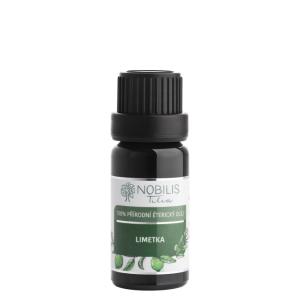
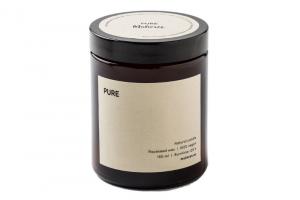
Try our natural products


Why minimalism is not enough for everyone
The last two decades have been defined by minimalism. White walls, neutral tones, fewer things, more space. This approach has its undeniable appeal and, for many people, is a genuine source of calm. However, design is a deeply personal matter, and what soothes one person can quite literally suffocate another. A grey wall and an empty shelf are not a symbol of freedom for everyone – for some, they are more of a symbol of missing joy.
It was precisely in response to the enduring dominance of minimalist trends that dopamine décor came to the fore. People began reaching once again for colours, patterns, unexpected combinations, and objects with strong emotional resonance. This is not a return to kitsch or overcrowded Victorian rooms – it is a conscious selection of elements that bring a specific person specific joy. As American designer and author Ingrid Fetell Lee aptly put it: "Joy is not superficial. It is a deep human need that has its physical basis in the world around us."
This shift is natural and understandable, particularly at a time when many people are spending more and more time at home. The home has ceased to be merely a place of rest and has simultaneously become an office, a gym, a café, and a sanctuary. This has increased the pressure for our environment to truly support us – not only functionally, but emotionally as well.
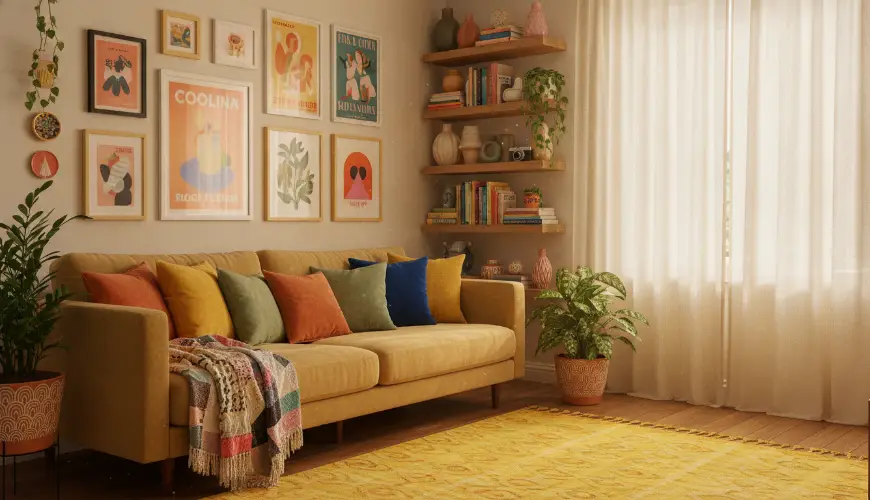
Consider, for example, Petra, a thirty-year-old graphic designer from Brno, who discovered during her work from home that she found it increasingly difficult to work in her white, "Instagram-perfect" living room. She added a yellow rug, hung a collection of colourful posters on the wall, and placed ceramics in terracotta and green tones on the shelf. The result? She says herself that she looks forward to going into the room in the morning and enjoys her work more than before. Science would agree with her.
How dopamine décor works in practice
The fundamental principle of dopamine décor is a simple rule: surround yourself with what brings you joy. This sounds trivial, but in practice it requires a certain courage – the courage to ignore what is "correct" or "on trend" and to listen to your own preferences. It means accepting that you love saturated yellow, even if everyone tells you it is too bold. Or that you collect vintage mugs, even though they take up space. Or that you want a painting on the wall that reminds you of a holiday, even if it does not fit the room's colour concept.
Colours play a key role in this approach. Research in the field of colour psychology repeatedly shows that different shades have different effects on our psyche. Yellow and orange are typically associated with energy, optimism, and friendliness. Blue and green evoke calm and focus. Red stimulates and activates. Purple evokes creativity and depth. Dopamine décor draws on these findings but does not enslave itself to them – more important than general rules is each individual's personal response to a specific colour.
Alongside colours, textures, patterns, and materials also play an essential role. Velvet cushions, striped curtains, mosaic tiles, knitted blankets, or wooden elements with a pronounced grain – all of this adds sensory depth and visual interest to a room. The combination of different textures in one space feels lively and organic, in contrast to sterile uniformity, which may be aesthetically clean but emotionally empty.
Personal objects and collectibles are also an important part of a dopamine interior. Photographs from travels, small souvenirs, books arranged by colour, mugs with patterns that make you laugh – all of these carry emotions and memories. Neuroscientists speak of so-called autobiographical memory, meaning the way in which objects connected to positive memories can activate pleasant emotional states. Having such objects visibly present in your space is therefore not sentimentality – it is a smart use of how the brain works.
Plants and natural elements also play a significant role. Green leaves, wood, stone, or natural fibres bring vitality and a sense of connection with nature into an interior. A study published in the academic journal Journal of Environmental Psychology confirmed that the presence of plants in an interior reduces cortisol levels – the stress hormone – and improves overall wellbeing. This is precisely the kind of subtle yet effective influence that dopamine décor strives for.
So how do you get started if this approach appeals to you? You do not need to repaint your entire flat or throw out all your furniture. It is enough to start small:
- Add one bold colour element – a cushion, a vase, a painting, or a rug in a colour that pleases you.
- Display objects that hold personal value for you – collections, souvenirs, books, or photographs.
- Experiment with textures – add a velvet or knitted accessory to your existing furnishings.
- Get a plant – even one small houseplant can transform the atmosphere of a room.
- Do not be afraid to mix patterns – stripes, florals, or geometric shapes can work together if they share a common colour palette.
A sustainable approach to a joyful interior
An important question is how to reconcile the desire for a colourful and joyful home with consideration for the environment. Dopamine décor does not have to mean uncontrolled purchasing of new things – quite the contrary, in fact. One of its principles is conscious selection and a deep connection to the objects we own. This is naturally aligned with the philosophy of slow fashion and the sustainable household.
Second-hand shops, vintage markets, and fairs are an excellent source of unique, characterful pieces with a soul and a story. A ceramic mug from your grandmother's collection, a retro lamp from a flea market, or a fabric patchwork blanket from a second-hand shop – all of these are objects with authenticity that belong in a dopamine interior far more than the soulless novelties from large retail chains. And they are also kinder to the planet.
When selecting new accessories, it makes sense to reach for products made from natural and ecological materials. Organic cotton, linen, recycled glass, natural dyes, or FSC-certified wood – these are materials that are not only beautiful and durable, but also in keeping with the values of a sustainable lifestyle. This is precisely the kind of approach that underpins Ferwer's philosophy, where the beauty of an interior and responsibility towards nature do not contradict each other, but rather complement each other.
Interesting inspiration is also offered by the trend of upcycling – meaning the creative transformation of old items into a new form. An old wooden crate can become a shelf, discarded jeans can be turned into a colourful cushion cover, and empty jars can become vases for seasonal flowers. This approach is not only ecological but also deeply personal – because an object that you create or transform yourself bears your imprint and becomes a source of both pride and joy.
Dopamine décor therefore indirectly teaches us something important: joy in the environment we live in need not come at the expense of the planet or our wallet. It is primarily about attention – about noticing what truly makes us feel good, what warms our heart when we look at it, what brings a smile to our face or a pleasant memory to mind. Such a home is not created overnight and certainly cannot be purchased as a complete package from a catalogue. It develops gradually, through the layering of personal stories, favourite colours, and objects that hold meaning specifically for you. And that is the most beautiful thing about it.