

Minimalism can transform your home and mind when you start with things that drain your energy.
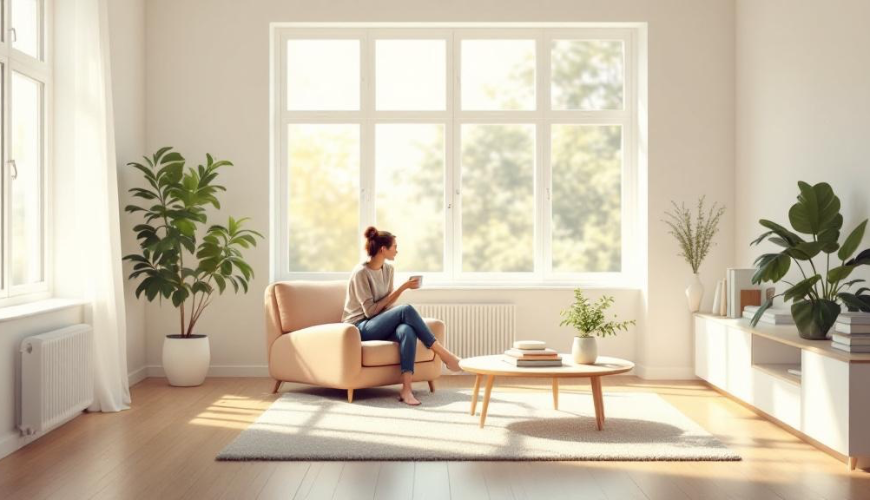
Minimalism in recent years has transformed from a design trend into a broader lifestyle choice. It's no longer just about white walls, smooth surfaces, and a few carefully selected decorations. Minimalism in life often begins subtly: a person notices that the things at home feel more burdensome than joyful, that constant notifications steal attention, and that "having more" doesn't automatically mean "living better." This is where minimalism proves surprisingly practical—it's not a competition of empty shelves but a search for balance between what we own, what we do, and where we direct our energy. Isn't it quite a liberating question: what if both home and mind could be lightened as easily as airing out a room?
Minimalism at Home: Fewer Things, More Space for Life
When we talk about minimalism at home, many people imagine radical decluttering. However, a more sustainable and long-term functional approach tends to be gentler: first noticing what really gets in the way at home, what duplicates, and what no longer serves. A home can easily become a warehouse of "might be useful someday"—and thus boxes, spare cables, glasses from ancient sets, and clothes "for home" that aren't even good for home pile up. Minimalism, on the other hand, works with a simple principle: things should support life, not complicate it.
Minimalist living isn't about living without personal items. It's more about ensuring each item has its place and reason for being at home. A change in perspective often helps: instead of asking "What to throw away?" it's more practical to ask "What do I want to keep—and why?" At that moment, it becomes clear that many items are kept out of habit, sentiment, or because it seemed a waste to throw them away. Paradoxically, these "wasteful" items often become the biggest burden: they take up space, collect dust, and add to the small daily decisions.
In real life, it often looks like this: a family with children tries to manage the workweek, school, extracurriculars, and shopping. In the evening, tidying up is done "just to make it look okay," but things lack a system. When guests arrive, toys disappear into bags, papers into drawers, and odds and ends into the "later" bin within ten minutes. A minimalist approach can surprisingly quickly help such a household—not by turning it into a sterile showroom, but by reducing the number of items that need constant moving. Suddenly, there's less cleaning, less searching, and more space for ordinary peace.
Minimalism at home also nicely aligns with an eco-friendly household. When less is bought impulsively, waste and chemicals decrease. And when things are selected thoughtfully, quality, repairable, and long-lasting options often prevail. Minimalism here isn't ascetic; it's more a return to the idea that a home shouldn't be a catalog but a functional base.
From a practical standpoint, sticking to a simple rule proves effective: one thing in, one thing out. It can't always be taken literally, but it works excellently as a compass. Similarly, distinguishing between what's "useful" and what's used helps. Many things can be useful—but only what's genuinely integrated into life is used. This is key for a minimalist home.
Minimalist Style and Minimalist Living: When Aesthetics Serve Well-being
Minimalist style is often associated with design: neutral colors, airiness, simple lines. However, aesthetics are just the visible part. The real value of minimalism in living often lies in reducing "noise"—both visual and mental. Overfilled shelves and randomly arranged decorations may feel cozy, but they can also cause restlessness, as the brain processes a large amount of stimuli. An airier space, on the other hand, allows the eyes and mind to rest.
Minimalist living can be achieved without large investments. Often, it's enough to work with what's already at home: unify storage, calm surfaces, limit the number of "visible trinkets," and prioritize things that genuinely bring joy. This is where minimalism becomes surprisingly personal. For someone, a library full of books is important because reading is their daily ritual. For another, quality pots are essential because cooking is a way to care for the family. Minimalism doesn't say "have little," but rather: have what suits your life.
It's interesting how minimalist style intersects with sustainability even in the wardrobe. If the home is lightened, wardrobes often naturally follow: fewer pieces that are easy to combine, higher quality materials, longer lifespan. In the world of sustainable fashion, this is called a capsule wardrobe, but the principle is similar: less decision-making, fewer "just in case" purchases, more items that are truly worn. And when shopping, it makes more sense to choose something that will last and that one will want to use for a long time.
Minimalist living often improves with small changes in habits: instead of placing things "anywhere," they get a specific place. And when there's no place, it's a signal there's too much. In this, minimalism is surprisingly honest—it can't be completely "talked around." Things either serve a purpose or just accumulate.
A phrase often repeated in minimalist communities is: "Every item we own wants a piece of our attention." And attention is perhaps the most precious commodity today. A minimalist home can give it back—by reducing the number of small worries that accumulate throughout the day.
Digital Minimalism: Fewer Notifications, More Focus
While clutter at home is visible, digital overload tends to be more insidious. Yet, digital minimalism can change the daily rhythm as significantly as tidying the apartment. Just look at a typical morning: the phone lights up, notifications bounce around, one "just quickly" checks messages, and suddenly twenty minutes are gone. Attention gets fragmented even before the day starts.
Digital minimalism isn't about ditching the smartphone and moving to the woods. It's more about setting up technology so it serves—not dictates—the day. A significant role is played by simply limiting stimuli: turning off unnecessary notifications, reducing the number of apps, unsubscribing from unread newsletters, and setting clearer boundaries for social media. Surprisingly effective can be a change in the home screen: when it doesn't have the apps that draw one in the most, the automatic "tapping" out of habit decreases.
Digital minimalism is also connected to how one works and rests. When free time is broken into short segments between notifications, it's hard to fit in real relaxation—reading, walking, a calm dinner, conversation. And this is where minimalism in life shows as a whole: it's not just about things and space, but about the quality of attention.
For inspiration, the work of Cal Newport is often mentioned, who popularized digital minimalism as a conscious choice of technology based on whether it supports a person's values or just fills the silence. His approach is based on a simple idea: technologies are not neutral because they are designed to retain attention. Even serious institutions have long warned that excessive screen time can be associated with poorer sleep and mental well-being, especially among younger people (for example, information and recommendations are published by the World Health Organization: https://www.who.int/). It's not necessary to take it catastrophically, but as a reason for a more conscious setup.
Digital minimalism can begin without grand gestures. Small rituals help significantly: the phone out of the bedroom, the first half hour after waking up without screens, designated times for news and emails. And when one fears missing out, they often find the opposite: they mainly miss what's truly important when the mind is constantly distracted.
How to Make Minimalism Last: A Few Simple Steps
Minimalism is tempting precisely because it promises relief. However, to avoid it becoming just a weekend project, it's necessary to set up a simple system that works in everyday life. How to approach minimalism so it doesn't become another chore?
- Start small and specifically: one drawer, one shelf, one category (like mugs). Success will come faster than trying to "redo the entire apartment."
- Clarify what the home should support: peace, family life, cooking, creativity, relaxation. Minimalism is easier when it has a clear direction.
- Limit purchases out of boredom and stress: the 24-hour rule for small items and 30 days for larger ones helps. The desire often fades.
- Set digital boundaries: turn off unnecessary notifications, reduce apps, create "quiet" time blocks.
- Give things a second life: sell, donate, pass on. Minimalism isn't about a full trash can, but about smarter circulation of items.
Minimalism has one practical feature: when it starts to manifest, it becomes visible and tangible. Less time spent searching, less impulsive shopping, less visual chaos, and often less tension that subtly accumulates at home. And if digital minimalism is added, the pace of the day can change—suddenly gaps appear where one can take a deep breath.
Minimalism is not a universal recipe and doesn't have to look the same for everyone. Someone might have a minimalist living space with a few pieces of furniture, while another keeps full shelves of books because that's their world. The important thing is that minimalism in life isn't about perfection, but about intention: keeping what makes sense and reducing what drains energy. And when it succeeds, the home stops being a place one "has to manage" and becomes a place where one can simply be.