

# What Does a Craving for Specific Food Mean from the Body's Perspective ## Basic Mechanisms of Cra

Everyone knows it. The afternoon arrives, you're sitting at your computer, and suddenly an irresistible craving for chocolate takes hold. Or you wake up in the middle of the night thinking about salty crisps. Or after a demanding week at work you simply must have pizza – and nothing else will do. These cravings are often so strong and specific that it's hard to simply ignore them. But what actually lies behind them? Is it merely a matter of willpower, or is the body genuinely trying to communicate something?
Science is engaging with this phenomenon with increasing intensity, and the results are surprising. It turns out that a craving for a specific food is very often not a random whim, but a sophisticated signal from the organism responding to a nutrient deficiency, hormonal fluctuations, psychological state, or even the gut microbiome. Decoding these signals can be the key to better understanding one's own health.
Try our natural products






The body as communicator: what lies behind individual cravings
The human organism is in constant motion – managing hundreds of biochemical processes simultaneously, for which it needs fuel in the right form. When something is lacking, it reaches for the quickest available means of communication: it triggers a craving for food that contains the relevant substance. This mechanism is evolutionarily very ancient and can be observed unambiguously in animals – cattle, for example, instinctively seek out salt licks when sodium is deficient.
In humans it is more complex, because emotions, habits, advertising, and cultural patterns all come into play. Nevertheless, the basic biological logic remains. Cravings for sweet foods are among the most common and most discussed. In many cases they stem from fluctuating blood sugar levels – when glycaemia drops rapidly, the brain sends a signal of urgent need for quick energy, and sugar is, from an evolutionary perspective, the fastest answer. Yet the same signal can also be sent by chronic stress, in which cortisol disrupts insulin sensitivity and creates a vicious cycle of sweet cravings.
The case of chocolate cravings is also interesting – these are often mistakenly associated solely with weak willpower. In reality, dark chocolate contains magnesium, a mineral whose deficiency is surprisingly widespread in modern populations. According to data from the World Health Organization, a significant proportion of inhabitants of industrialised countries suffer from magnesium deficiency, and this mineral plays a key role in regulating the nervous system, muscle function, and sleep quality. It is therefore no coincidence that chocolate cravings intensify precisely during periods of stress or before menstruation, when magnesium leaves the body more rapidly.
Cravings for red meat work similarly. If someone experiences them repeatedly and intensely, it may be a signal of iron or zinc deficiency – substances that are present in animal proteins in a highly bioavailable form. Women of childbearing age, vegetarians and vegans, or athletes under high physical demand are groups for whom this signal warrants attention and possible consultation with a doctor.
Salty foods, meanwhile, are most commonly called for by the body during dehydration or excessive sweating. Sodium is an electrolyte essential for proper cell and nerve function, and its loss – after intense training or in summer heat, for example – manifests precisely as a craving for salt. Interestingly, the body is capable of distinguishing: if it genuinely needs sodium, it is drawn to naturally salty foods such as olives, fermented vegetables, or quality sea salt. If it is more a matter of habit and taste preference, it will typically call for industrially processed salty snacks.
The gut, hormones, and the mind: three layers of cravings
Modern research adds a further fascinating dimension to this picture. It turns out that the gut microbiome – the community of billions of bacteria living in the digestive tract – actively influences what a person craves. Certain bacterial strains produce substances that stimulate the nervous system to seek out specific foods. Simply put: bacteria that feed on sugar can "persuade" their host to crave more sugar. These findings, published among other places in the academic journal BioEssays, open an entirely new perspective on what actually drives our food choices.
The hormonal dimension is equally important. Leptin and ghrelin – the hormones regulating hunger and satiety – are not the only players. Serotonin, the neurotransmitter associated with a sense of wellbeing, is produced approximately 90% in the gut, and its level directly influences what a person craves. Low serotonin, which accompanies depressive states or seasonal affective disorder, tends to be associated with a stronger craving for carbohydrates – the body instinctively attempts to increase the availability of tryptophan, the amino acid needed for serotonin synthesis. As psychiatrist and researcher Drew Ramsey aptly wrote: "What we eat affects our mood – and our mood affects what we eat."
The psychological layer cannot be overlooked either. Emotional hunger differs from physical hunger in that it arrives suddenly, focuses on a very specific food, and does not cease even after physical satiety is reached. It is closely linked to specific memories and emotions – which is why, after a break-up, a person "has to have" their mother's cake, or after a demanding business meeting reaches for the same food that gave them a sense of safety in childhood. These associations are not a weakness – they are a natural part of human psychology, and understanding them is the first step towards a more conscious relationship with food.
An interesting real-life example: a thirty-year-old teacher describes how every February and March she experiences a strong craving for fatty foods and cheese. For a long time she considered it a lack of willpower. Only after consulting a nutritional advisor did she discover she was suffering from vitamin D deficiency – in winter months the body cannot synthesise it from sunlight, and fatty foods are one of the few natural sources. Once she began supplementing vitamin D and included more oily fish in her diet, the intensity of the cravings subsided significantly.
Thousands of similar stories exist. They show that listening to the body is not weakness or an excuse, but valuable information – provided a person is able to distinguish what type of craving they are dealing with.
How to read cravings and respond to them consciously
Recognising the difference between a biological signal and an emotional or habitual craving is not always straightforward, but certain patterns help. Physical craving arrives gradually, is associated with an overall sense of hunger, and is generally satisfied by an alternative – if the body needs iron, it will be equally content with lentils as with beef. Emotional or habitual craving, by contrast, is narrowly specific, urgent, and arrives regardless of whether a person is physically hungry.
A practical tool is keeping a simple craving diary for two to three weeks. Record when the craving arrived, what preceded it, how intense it was, and how you felt – both physically and emotionally. The patterns that emerge from such a record tend to be surprisingly revealing.
From a nutritional standpoint, several specific connections are worth noting:
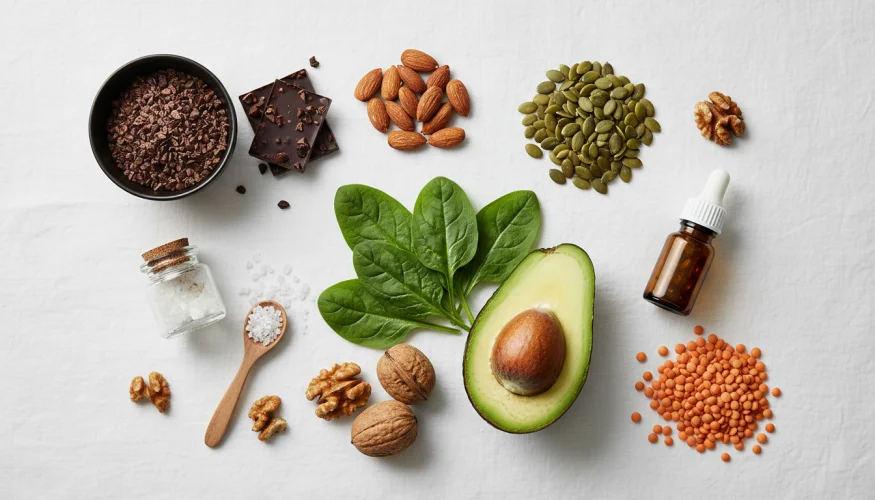
- Craving for chocolate or nuts → possible magnesium deficiency; natural sources include pumpkin seeds, leafy greens, and whole grains
- Craving for something sweet after a meal → may signal unstable blood sugar levels; including more fibre and protein with every meal can help
- Craving for fatty foods and cheese → possible vitamin D deficiency or insufficient healthy fats; omega-3 fatty acids from fish or linseed may help
- Craving for red meat → consider iron and zinc levels, particularly in women and active athletes
- Craving for salty and crunchy foods → dehydration or stress; adequate fluid and electrolyte intake can help
It is important to bear in mind that no craving should be automatically suppressed or ignored. Strict diets that ban entire food groups paradoxically lead to stronger cravings and a greater likelihood of overeating. Research repeatedly shows that an "everything in moderation" approach and consciously satisfying cravings to a reasonable degree is more sustainable in the long term than rigid restriction.
It equally holds true that if cravings are very intense, recurring, and accompanied by other symptoms – fatigue, mood changes, impaired concentration, or physical complaints – consultation with a doctor or nutritional specialist is warranted. It may be an expression of a specific nutritional deficiency, hormonal imbalance, or another health condition that deserves professional attention.
The world of cravings is far more complex than it appears at first glance. It is an intersection of biology, psychology, gut ecology, and each person's individual history. A craving for a specific food is a message – sometimes from cells in need of nutrients, sometimes from a nervous system seeking calm, sometimes from memories stored deep in the mind. Learning to read these messages with curiosity and without judgement is one of the most valuable steps towards a conscious and balanced relationship with food and with one's own body.