

# Bloating on a Plane and How to Prevent It
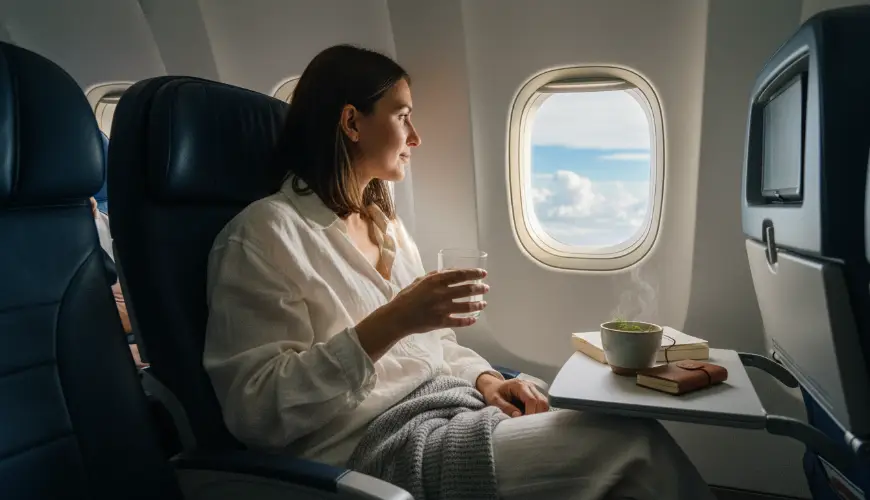
Anyone who has ever taken a longer flight probably knows that unpleasant feeling – the stomach starts to bloat, pressure builds in the abdomen, and no comfortable seating in a narrow seat makes the situation any better. Bloating on a plane is a surprisingly widespread problem, yet one that rarely gets discussed. Most passengers suffer through it in silence, unaware that there are very specific physiological reasons behind this unpleasant phenomenon – and that there are ways to reduce it or prevent it altogether.
Interestingly, pilots and flight attendants – people who fly practically every day – are very familiar with this problem. It is no exception or coincidence, but a direct consequence of the environment in which the aircraft operates.
Try our natural products





What happens to your body in the air?
The key to understanding the whole phenomenon is physics. When an aircraft climbs to an altitude of approximately 10,000 to 12,000 metres, where commercial airliners typically fly, the air pressure outside drops dramatically. The cabin is pressurised, but even so it does not reach the pressure we are accustomed to at sea level. The cabin pressure in an aircraft corresponds roughly to conditions at an altitude of 1,800 to 2,400 metres above sea level. This may sound like a technical detail, but for your digestive system it has very concrete consequences.
The physical law behind this was formulated back in the 17th century by Irish scientist Robert Boyle. Boyle's Law states that at constant temperature, the volume of a gas is inversely proportional to its pressure – in other words, when pressure drops, gas expands. And that is exactly what happens to the gases trapped in your digestive tract. According to estimates from NASA and aviation health studies, air in the body can expand by up to 30 percent at typical cabin flight pressure. Thirty percent – that is a volume your intestines simply have to accommodate somewhere.
Under normal circumstances, the digestive system produces gases as a by-product of food digestion, particularly through the fermentation of fibre and carbohydrates by bacteria in the intestines. On the ground, these gases move relatively freely and the body eliminates them naturally. In the air, however, their volume increases, and movement in a cramped seat slows their passage even further. The result is that characteristic feeling of a bloated, tense abdomen that can escalate into painful cramps.
Take Kateřina, for example, a thirty-year-old accountant from Brno who regularly flies on business trips to London. She admits that in her early years these flights were physically uncomfortable – regardless of what she ate or drank. It was only when she consciously began adjusting her diet before travel and moving around more during the flight that she found significant relief. Her experience is far from unique.
What role does food and drink play before a flight?
While the physical cause of bloating is a given and cannot be entirely eliminated, dietary habits before and during a flight have a significant influence on how intensely you experience the discomfort. There are foods that substantially promote the production of intestinal gases, and consuming them shortly before boarding can dramatically worsen the situation.
The biggest culprits include legumes – beans, lentils, peas – as well as broccoli, cabbage, cauliflower and onions. These foods contain specific types of carbohydrates that the human body cannot fully digest and which become food for gas-producing gut bacteria. Carbonated drinks work similarly, as their bubbles simply add more gas volume to the digestive tract, which then has to expand somewhere.
Alcohol is another factor that many travellers underestimate. Although a glass of wine or a beer on the plane may seem like a way to relax, alcohol irritates the lining of the digestive tract, disrupts intestinal motility and ultimately worsens bloating. It also contributes to dehydration, which in itself complicates digestion.
On the other hand, adequate intake of water – plain, still water – helps the intestines function more smoothly and eases overall abdominal tension. As Mayo Clinic notes, hydration is one of the simplest and most effective ways to support healthy digestion in general, and in the conditions of an aircraft cabin, where the air is extremely dry, this applies doubly.
There is also a specific group of travellers for whom the problem of bloating during a flight is more pronounced than for others. People with irritable bowel syndrome, coeliac disease, lactose intolerance or a generally sensitive digestive system may experience significantly stronger discomfort during flights. For them, preparation before the flight is even more important.
As gastroenterologist and science communicator Michael Levitt, who devoted his entire career to studying intestinal gas, put it: "Intestinal gas is a completely normal part of physiology – it only becomes a problem when there is too much of it or when it cannot pass normally." And it is precisely on a plane that both of these conditions can easily occur simultaneously.

Practical ways to find relief and prevent discomfort
The good news is that bloating during flights can be significantly reduced through a combination of simple measures that require no special equipment or medication. The most effective approach is preventive – meaning you should start thinking about what and when you eat before you even board the plane.
Ideally, it makes sense to reduce foods high in fermentable carbohydrates in the 24 hours before your flight. Nutrition experts refer to these as FODMAP foods – a group of carbohydrates that are particularly prone to fermentation in the intestines. A more detailed overview of these foods is available from Monash University, which is a pioneer in research in this area. This is not some draconian diet, but a conscious decision to give your digestive system a chance to function more calmly.
Movement during the flight is the second key factor. Sitting motionless for hours on end slows intestinal peristalsis and makes it harder for gases to move. Getting up regularly, walking down the aisle, or at least stretching your legs and rotating your torso in your seat helps the intestines maintain their natural movement. This is not just about comfort – movement has a direct physiological effect on how quickly and easily gases travel through the digestive tract.
The clothing you wear on board plays a greater role than you might expect. Tight jeans, narrow belts or constrictive underwear physically restrict the space for natural abdominal movement and can intensify the unpleasant sensations. Loose, comfortable clothing is not just a matter of style – it is a practical decision in favour of your own comfort.
For those who suffer from bloating repeatedly and intensely, there are also over-the-counter remedies available. Simethicone, found in various products available at pharmacies, helps break down gas bubbles in the intestines and facilitates their natural passage. Natural alternatives include enzyme preparations or herbal teas – in particular fennel, ginger and peppermint have proven effects in reducing bloating and cramps. Fennel tea is, incidentally, a traditional folk remedy that modern science has confirmed to be effective.
It is also worth noting what happens with chewing gum or sucking on sweets during a flight. Many travellers do this to equalise pressure in their ears, but in doing so they also swallow larger amounts of air, which adds more gas to the digestive tract. It is a minor factor, but in combination with everything else it can contribute to overall discomfort.
It is also worth mentioning the psychological dimension of travel. Stress and anxiety – whether from flying itself, from making a connection, or from the work-related pressure associated with the journey – have a direct effect on digestion through the gut-brain axis. The nervous system and the digestive tract are connected far more closely than most people realise, and tension literally manifests in the abdomen. Conscious breathing, meditation or simply listening to calm music through headphones are therefore not just ways to relax mentally – they can have a measurable impact on digestive comfort during a flight.
If you are travelling with children, it is worth knowing that they are generally more sensitive to these pressure changes. Their digestive systems are less experienced and their intestines react more strongly to changes in their environment. Offering a child fennel tea or slightly adjusting their diet before the flight can make a significant contribution to a more pleasant experience for the whole family.
Flying is an everyday reality for many people today, and a bloated stomach during a flight does not have to be an inevitable price to pay for convenient travel. Understanding why this phenomenon occurs and preparing consciously before a journey can transform an unpleasant experience into a routine matter that you pay no further attention to. Your intestines will surely thank you for a little care before take-off – and you will be able to fully enjoy the view from the window without spending the entire flight focused on the pressure in your abdomen.