

Steaming is experiencing a well-deserved return to the spotlight
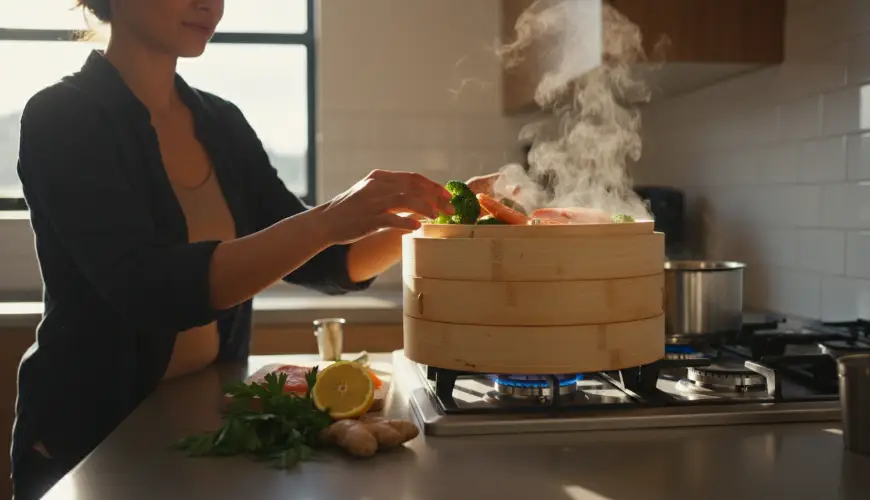
If we looked into the kitchens of our great-grandmothers, we would probably find no air fryers, microwave ovens, or sous-vide circulators. And yet the food that came out of those old kitchens would be surprisingly nutritious, tasty, and respectful of everything that went into the pot. One method that was part of everyday routine back then and is slowly returning to the awareness of modern cooks is steaming – a method of heat preparation that has survived millennia, but got lost somewhere in the era of fast food and industrial cuisine.
It is not exotic or complicated. Steaming works on a simple principle: the food is not submerged in water, but placed above a boiling surface, where it is surrounded by hot steam. The temperature hovers around 100 °C, similar to classic boiling, but the result is fundamentally different. Nutrients stay in the food, colours are more vibrant, textures are firmer, and the flavour is cleaner. Exactly as it should be.
Try our natural products





Why did we stop caring about this method?
The answer is fairly simple: convenience. The twentieth century brought many technologies into kitchens that promised speed and simplicity. Canned goods, frozen ready meals, microwave ovens – all of this changed the way we think about cooking. Steam seemed too slow, too unassuming, too "old". Kitchen trends began to revolve around intense flavours, frying, grilling, and roasting. Steam retreated into the background as a relic of the past.
And yet in Asia it never ceased to be the centrepiece of everyday cooking. In China, Japan, Vietnam, and Korea, dumplings, fish, vegetables, rice, and desserts are all prepared using steam. Bamboo steamers are standard equipment in every home kitchen and restaurant. While Europe was forgetting, Asia carefully preserved and continued to develop this art.
Today, as more and more people are interested in healthy eating, sustainability, and a return to natural methods of food preparation, steaming is coming back into the spotlight. And rightly so.
Modern research confirms what generations of cooks knew instinctively. A study published in the scientific journal Journal of Food Science showed that vegetables prepared by steaming retain a significantly higher proportion of B vitamins and vitamin C compared to boiling in water. Specifically, broccoli prepared by steaming retained up to 33% more vitamin C than classically boiled broccoli. That number speaks for itself.
Take Martina, a thirty-six-year-old mother of two from Brno, who switched to a healthier way of eating a year ago. She began experimenting with steam after reading that her favourite carrots lose a large portion of their beta-carotene during classic boiling. She bought a simple bamboo basket, started preparing vegetables, fish, and chicken by steam, and after a few weeks admitted that the food tastes different – cleaner, more natural, and her children eat it without protest. She added that the time she spends at the stove has shortened, because steam does the work on its own and there is no need to watch or stir the food.
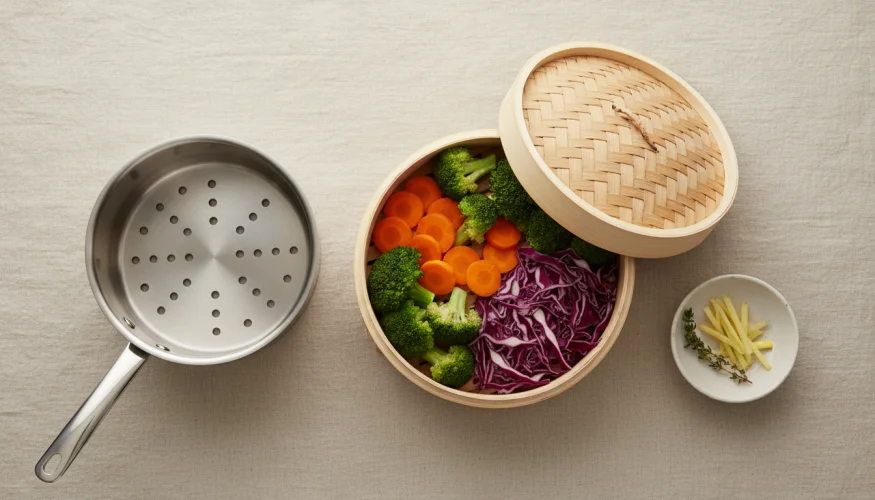
It is precisely this aspect – the effortlessness and naturalness – that is perhaps steaming's greatest asset. It is not a method that requires special training or expensive equipment. All you need is a pot, a little water, and some kind of rack or basket. The results come on their own.
What can be prepared by steaming?
Many people picture only vegetables when they hear the term "steaming" – and that is a shame, because this method is surprisingly versatile. Fish and seafood are made for steam preparation: the delicate texture of salmon or cod is perfectly preserved in steam, the flesh stays juicy and does not dry out as easily happens with frying or roasting. If a slice of ginger, lemongrass, or a sprig of thyme is added to the water beneath the basket, the steam itself carries subtle aromatic notes directly into the meat.
Chicken breasts, which are otherwise notoriously dry and unforgiving, are transformed by steaming into a juicy and tender morsel. Eggs work equally well – an egg prepared in steam has a creamier white and a yolk of exactly the consistency the cook desires. And then of course there are legumes, potatoes, sweet potatoes, or rice rolls and dumplings, which are the kings of steam cooking in Asian cuisine.
A lesser-known but very interesting area is the preparation of desserts. The Chinese cake fa gao, Japanese mushi-pan, or classic English puddings are traditionally prepared by steaming. The result is moist, fluffy textures that an oven cannot fully replicate. As British chef Heston Blumenthal says: "Steam is the gentlest form of heat we have in the kitchen – and at the same time the most underappreciated."
It is also important to mention the practical aspect: steaming is one of the most economical methods of heat preparation. Energy consumption is lower than with an oven, there is no need to heat large amounts of oil as with frying, and a single pot with steam can serve multiple levels at once – vegetables in the lower basket, fish in the upper one, everything ready at the same time. For households looking for ways to reduce the energy demands of cooking, steam is a logical choice.
When it comes to equipment, the options are wide. Bamboo steamers are a traditional and affordable solution that also looks beautiful and does not create condensation inside the way metal alternatives do. Metal steamer inserts for pots are practical and easy to store. Electric steam pots offer the convenience of timers and adjustable temperatures. And for those who want to take steaming to the next level, there are combination ovens with a steam function that allow dry and moist heat preparation to be combined with degree-level precision.
The ecological dimension of steaming is also not negligible. The method requires no fats, oils, or additional ingredients that would need to be produced and packaged. Less waste, less consumption, less burden on the planet. At a time when more and more households are looking for ways to live more sustainably, steaming is a natural step – unassuming, but meaningful.
An interesting perspective is also offered by the World Health Organization, which in its recommendations for healthy cooking repeatedly emphasises reducing saturated fat intake and preserving nutrients in food. Steaming meets both of these conditions naturally, without any compromises in flavour or satiety.
For those who decide to start with steam, a few practical tips apply. The water beneath the basket should never reach the bottom of the basket – steam needs space. It is advisable to close the lid firmly at the start of cooking and avoid lifting it unnecessarily so that steam does not escape. Cooking times are generally shorter than one might expect: broccoli is done in four to five minutes, fish fillets in six to eight, chicken breasts in fifteen to twenty. Over-steaming is just as undesirable as overcooking – vegetables should remain slightly crisp, not mushy.
Interestingly, steaming is also experiencing a renaissance in professional kitchens. Michelin-starred chefs around the world are rediscovering this method as a tool of precision and flavour purity. In restaurants that place emphasis on the natural flavour of ingredients and minimalist preparation, steam has become the standard. It is not nostalgia – it is a conscious return to what works.
But let us return for a moment to those bamboo baskets, which are now available in every Asian shop and many e-shops focused on healthy living. Their beauty lies in their simplicity: bamboo is a natural material that absorbs excess steam and prevents condensation from dripping onto the food. It is lightweight, easy to clean, and with proper care will last for years. Bamboo as such is one of the most sustainable materials in the world – it grows quickly, requires no pesticides, and is fully biodegradable. So even the choice of cookware plays a role here.
Steaming is not a trend that comes and goes. It is a method with a thousand-year history, scientifically supported benefits, and practical advantages that stand up in any era. At a moment when more and more people are asking questions about what they eat, how it was prepared, and what impact their lifestyle has on their health and the planet, it makes sense to reach for methods that answer these questions naturally and elegantly. Steam manages this quietly, unobtrusively, and with results that speak for themselves – as they always have.