

Hormonal yoga through the eyes of women who tried it
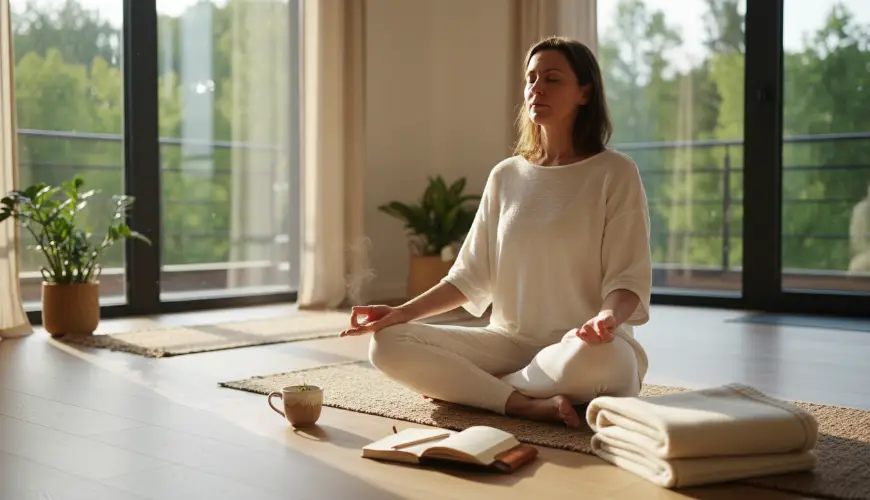
The topic of women's hormonal health has been gaining increasing attention in recent years – and along with it, interest is growing in approaches that work with the body naturally, without synthetic interventions. One of these is hormonal yoga, a method that is winning over followers around the world. But what exactly is hormonal yoga, how does it work, and what do women who have tried it themselves have to say?
Hormonal yoga is not just another fitness trend. It is a specifically designed exercise system that deliberately works with the endocrine system – the network of glands that produce hormones. The method was developed by Brazilian psychologist and yoga practitioner Dinah Rodrigues in the 1980s after she herself went through menopause and sought natural ways to alleviate its accompanying symptoms. The result was an elaborate practice combining asanas (yoga poses), pranayama (breathing exercises), Tibetan energy techniques, and deep relaxation. Rodrigues also supported her approach with research and collaborated with doctors who monitored women's hormone levels before and after exercise.
Try our natural products

How does hormonal yoga actually work?
The principle of hormonal yoga lies in stimulating the endocrine glands – primarily the ovaries, adrenal glands, thyroid, and pituitary gland. The combination of specific movements, breathing, and visualisation aims to support the natural secretion of hormones and improve their balance in the body. A key element is the so-called bhastrika, or fire breath, which activates energy in the body and improves blood flow to the internal organs. This type of breathing is deliberately fast and intense, which distinguishes it from calmer forms of yoga such as yin or restorative yoga.
The practice is tailored to the different life phases of a woman's life. A different approach applies to women of reproductive age suffering from irregular periods, polycystic ovary syndrome, or premenstrual syndrome, and a different one for women in perimenopause or menopause. A single session lasts approximately 30 to 40 minutes, with the recommended frequency being at least three times a week, ideally daily over a period of several months for results to become apparent.
It is important to note that hormonal yoga is not suitable for everyone without exception. It is not recommended, for example, in cases of endometriosis, fibroids, active cancer, or certain thyroid disorders. It is therefore always advisable to consult a doctor or gynaecologist before starting the practice.
What women who have tried hormonal yoga themselves have to say
It is the experiences of women that form the most valuable part of the entire hormonal yoga story. On various community forums, discussion groups, and social media, thousands of women share their observations – and the picture that emerges from them is surprisingly consistent.
Take the example of Markéta, a forty-four-year-old teacher from Brno, who came across hormonal yoga after her gynaecologist informed her of declining oestrogen levels. She refused to start hormone replacement therapy and looked for alternatives. After three months of regular practice, she described a significant improvement in sleep, a reduction in hot flushes, and an overall sense of calm. "I didn't believe that some movements and breathing could change how I feel in my own body like this," she said in an interview for a Czech wellness portal. Her story is far from unique.
Women in perimenopause most commonly mention a reduction in hot flushes, better sleep quality, and greater emotional stability. Those struggling with irregular menstrual cycles or PCOS describe improvements in cycle regularity and a decrease in painful periods. Younger women particularly appreciate the impact on their mental wellbeing – reduced anxiety, better stress management, and an overall improvement in mood.
It must be said, however, that not every experience is unambiguously positive. Some women noticed no significant changes even after several months of practice, while others reported that the intensity of the bhastrika breathing caused dizziness or headaches, particularly at the beginning. Yoga experts therefore emphasise that the technique must first be learned correctly – ideally under the guidance of a certified instructor – and that progress should be gradual.
Scientific research in this area is not yet extensive, but existing studies suggest promising results. Research published in specialist yoga and gynaecological circles has shown that regular hormonal yoga practice can lead to a statistically significant increase in FSH levels and other hormones in menopausal women. Dinah Rodrigues herself states that in her research, over 80% of practising women showed improvement in hormone levels. Even so, it is important to approach these claims with a degree of critical thinking and to view yoga as a complement to, rather than a replacement for, medical care.
It is interesting to observe how hormonal yoga is spreading. While in Brazil and Germany it has a firmly established community and certified instructors with decades of experience, in the Czech Republic it is still a relatively new phenomenon. Nevertheless, the number of teachers who have completed certified training directly with Dinah Rodrigues or her authorised trainers is growing, and the range of classes – both in-person and online – is continuously expanding.
The connection between body, breath, and mind that hormonal yoga offers also resonates with the broader trend towards a holistic approach to health. More and more women are refusing to accept hormonal fluctuations as something to be simply suppressed with medication, and are instead seeking ways to support their body's natural functions. In this sense, hormonal yoga is part of a larger story – a story about how women are rediscovering their relationship with their own bodies and their rhythms.
As Dinah Rodrigues herself says: "Every woman carries within her the natural wisdom of her body. Hormonal yoga simply helps to awaken it."
The experiences of women also show that results are strongly dependent on regularity and patience. Hormonal yoga is not a quick fix – it is more of a long-term commitment to oneself. Women who have been practising it for more than six months describe far deeper and more lasting changes than those who tried it only briefly. Many also emphasise that the greatest benefit they felt was not only on a physical level, but above all in the area of self-perception and their relationship with their own femininity.
For those who wish to learn more about hormonal yoga from a professional perspective, they can turn to the publications of Dinah Rodrigues, who has described her method in detail in several books translated into many languages. The Czech Yoga Association is also a valuable source of information, helping to navigate the range of certified classes and courses.
The practical side of things is key for many women. Hormonal yoga can be practised at home, without any special equipment – all that is needed is a mat, comfortable clothing, and a quiet place. This makes it an accessible method for women regardless of their financial situation or geographical location. Online courses and videos from certified teachers also make it possible to start anytime and anywhere. Nevertheless, most experienced teachers recommend attending at least the introductory sessions in person, so that the practitioner can properly establish the correct breathing and movement technique.
An important component of hormonal yoga is also the Tibetan energy technique, in which energy is consciously visualised and directed to specific glands. For women accustomed to a purely physical approach to exercise, this may feel unfamiliar at first, but most report that this part of the practice brings a profound sense of calm and connectedness. It is not a religious ritual, but rather work with physical and mental energy that has its roots in Tibetan and Indian tradition.
The whole phenomenon of hormonal yoga also raises a broader question: why has women's hormonal health been kept silent for so long? Menopause, PMS, PCOS – topics that for centuries were trivialised or medicalised without any deeper understanding of their causes. In this sense, hormonal yoga is also a cultural gesture – an acknowledgement that the female body has its own laws, which deserve attention, respect, and care tailored to their natural rhythms.
The age at which a woman begins hormonal yoga does not play a decisive role. The method is suitable for women from the age of twenty upwards, with each age group approaching the practice with different needs and expectations. Women in their twenties use it to regulate their cycle and reduce stress, those in their forties as prevention and preparation for the transition, and those in their fifties as a tool for managing menopause. This flexibility is one of the greatest strengths of the entire method.
The experiences of women with hormonal yoga ultimately point to one common truth: that taking an interest in one's own body and being willing to devote time and attention to it pays off. Whether the practice brings measurable hormonal changes, or "merely" a better connection with oneself and greater calm in everyday life – for the majority of women who have tried it, it has been worth it.