

# What Causes Non-Alcoholic Fatty Liver Disease Non-alcoholic fatty liver disease (NAFLD) is caused
The liver is one of the most remarkable organs in the human body. It works continuously, filtering blood, processing nutrients, breaking down toxins, and producing bile needed for fat digestion. And yet, its health is usually only considered when something visibly begins to fail. Therein lies the insidiousness of a disease that has quietly spread across the entire population in recent decades and today ranks among the most common liver diseases in the world: non-alcoholic fatty liver disease.
This diagnosis may sound abstract, but its essence is surprisingly simple. It is a condition in which fat begins to accumulate in liver cells — without any connection to alcohol consumption. Those affected do not drink, or drink only minimally. Yet their livers show changes that doctors have traditionally associated with chronic alcoholism. This paradox long confused the medical community and to this day causes many patients to receive the diagnosis with surprise and disbelief.
Try our natural products




Why non-alcoholic fatty liver disease is a disease of our time
The answer to why this disease is increasing so dramatically leads directly to the way modern society eats, lives, and rests. According to data from the World Health Organization, over 1.9 billion adults worldwide are overweight or obese, and excess weight is one of the most significant risk factors for developing fatty liver disease. But it would be an oversimplification to claim this is exclusively a problem for people with higher body weight. The disease also occurs in slim individuals, particularly those with so-called metabolic syndrome — a combination of high blood pressure, elevated blood sugar, and an unfavorable lipid profile.
The real trigger is rather the overall character of the contemporary diet. Industrially processed foods, an excess of simple sugars — especially fructose found in sweetened beverages and industrial confectionery — and chronic lack of physical activity create an environment in which the liver simply cannot keep up with processing excess substances. Fructose is particularly insidious in this context: unlike glucose, it is metabolized exclusively in the liver, and when too much arrives, the body begins converting it into fat that is deposited directly in liver tissue.
Research published in the specialist journal Journal of Hepatology repeatedly confirms that the global prevalence of non-alcoholic fatty liver disease reaches approximately 25% of the world's adult population. In some regions — particularly the Middle East and Latin America — the figures are even higher. Europe hovers around the average, but that is no cause for complacency. The Czech Republic, meanwhile, is far from a positive example in rankings of ultra-processed food consumption and sedentary lifestyles.
Consider a specific example: a forty-five-year-old accountant who sits at a computer all working day, has lunch from a nearby fast-food bistro, treats himself to a sweetened energy drink in the afternoon, and snacks on crisps in front of the television in the evening. He does not drink alcohol, does not smoke, and seemingly lives "normally." Yet during a routine preventive check-up, the doctor notes slightly elevated liver enzymes. An ultrasound reveals the first signs of fatty infiltration of the liver. The diagnosis is: non-alcoholic hepatic steatosis. The man is surprised — he feels fine. And that is precisely what makes this disease most dangerous.
How the disease progresses and what is at risk if nothing changes
Non-alcoholic fatty liver disease has several stages and does not always need to progress. In the mildest stage — simple steatosis — the liver is simply fattier, but otherwise functions relatively normally. Many people with this diagnosis live for years without significant symptoms and the disease never develops into a more serious form in them. The key factor is whether inflammation occurs.
If inflammation develops, doctors speak of non-alcoholic steatohepatitis, abbreviated as NASH. This is a condition that is already significantly more dangerous. Inflammation damages liver cells, triggers healing processes, and gradually leads to the formation of scar tissue — fibrosis. Over time, this can develop into cirrhosis, meaning irreversible liver damage that in extreme cases results in liver failure or significantly increases the risk of liver cancer. According to the American Liver Foundation, NASH is today one of the leading causes of liver transplants in the United States — and the situation in Europe is approaching this trend.
The insidiousness of the entire process lies in its lack of symptoms. The liver has no nerve endings that would cause pain when cells are damaged. The first signal is usually fatigue, a vague discomfort in the right upper abdomen, sometimes a feeling of fullness. But these symptoms are so general that most people attribute them to stress, lack of sleep, or poor fitness. The diagnosis therefore often comes by chance — during an examination for another reason or at a preventive check-up.
As American hepatologist Dr. Arun Sanyal aptly noted: "Non-alcoholic fatty liver disease is an epidemic that spreads in silence, because most people feel healthy — until they are not." These words may sound dramatic, but they reflect the real clinical reality that doctors encounter day after day.
What can be done: prevention and lifestyle change
The good news is that the liver is an organ with an extraordinary capacity for regeneration. If the disease is caught early and a genuine lifestyle change occurs, the process can not only be halted but, in the early stages, completely reversed. This is a scientifically proven fact that also makes intuitive sense: the fat that entered the liver through poor diet and lack of exercise can largely be removed by the right approach.
The foundation of treatment — and simultaneously the most effective prevention — is a change in dietary habits combined with regular physical activity. Experts agree that reducing body weight by 7 to 10% can significantly improve liver findings, and in the case of simple steatosis, lead to its regression. There is no need to resort to extreme diets — on the contrary, radical fasting can temporarily burden the liver even more. Sustainable, gradual change is more effective than short-term effort.
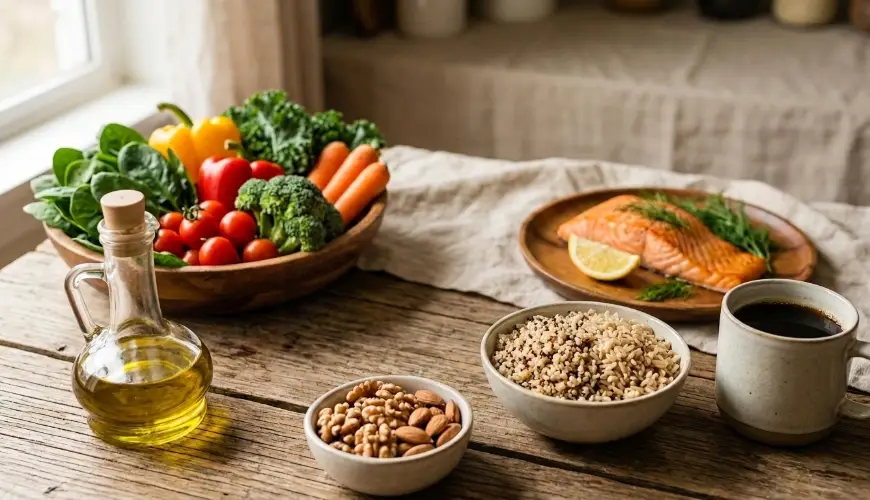
In terms of diet, the most beneficial approach appears to be one inspired by Mediterranean cuisine: an abundance of vegetables, legumes, whole grains, healthy fats from olive oil and nuts, moderate amounts of fish, and a reduction in red meat, industrially processed foods, and added sugars. It is also important to significantly limit sweetened beverages — soft drinks, energy drinks, and fruit juices with added sugar. These drinks are one of the largest sources of fructose in the modern diet and their impact on liver health is well documented.
Physical activity plays an equally important role. Nor does it need to involve intensive athletic performance — studies published in the journal Hepatology show that even regular brisk walking for 30 minutes a day, five days a week, has a measurable positive effect on liver fat. Aerobic exercise helps reduce insulin resistance, which is one of the key mechanisms leading to the development of steatosis. Strength training adds a further layer of benefits by increasing muscle mass and thereby improving overall metabolism.
There are also specific foods and substances to which research attributes hepatoprotective effects. These include, for example, coffee — and this is not a myth. Several large studies have confirmed that regular coffee consumption (without added sugar and cream) is associated with a lower risk of liver disease progression. Similar claims are made for curcumin found in turmeric, omega-3 fatty acids from oily fish, and vitamin E. None of these substances, however, is a miracle cure — they work as part of an overall healthy approach, not as a substitute for it.
From the perspective of dietary supplements, it is worth noting that the market offers a wide range of products aimed at supporting liver function. Quality preparations containing milk thistle, whose active ingredient silymarin has scientifically supported hepatoprotective properties, or products containing artichoke extract can be a useful part of liver care — especially in combination with a healthy diet and exercise. It is important to choose products from verified manufacturers with transparent ingredient lists.
Alongside diet and exercise, sleep quality also plays a role. Chronic sleep deprivation disrupts hormonal balance and increases insulin resistance, thereby indirectly contributing to the development of metabolic disorders including hepatic steatosis. Stress, which leads to elevated cortisol levels, has a similar effect. Caring for the liver thus in practice means caring for one's entire lifestyle — and that is perhaps the most important message to take from this topic.
Non-alcoholic fatty liver disease is not an inevitable fate of modern humanity. It is a signal that the body sends when it is not given the conditions it needs to function optimally over the long term. And unlike many other lifestyle diseases, it is a condition in which each of us holds very real tools to prevent it or halt its progression. We simply need to pay attention to them before we are forced to deal with the consequences.