

How to Support the Liver Naturally and Protect Your Health
The liver is one of the hardest-working organs in the human body. Every day, quietly and without seeking recognition, it carries out hundreds of different biochemical processes – filtering blood, processing nutrients, producing bile, neutralising toxins and regulating blood sugar levels. Yet most people only start paying attention to their liver health when something goes wrong. That is a shame, because the liver has a remarkable capacity for regeneration – provided a person gives it the right conditions.
The question, therefore, is not simply "what harms the liver", but rather: how can everyday decisions help it function to its full potential?
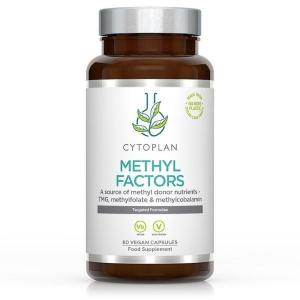
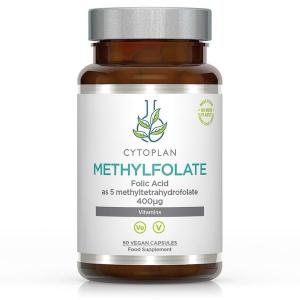
Try our natural products
What damages the liver every day
The most common enemy of the liver is alcohol. This comes as no surprise, but few people realise that even so-called "moderate" drinking can gradually cause microscopic damage to liver tissue. Alcohol is metabolised in the liver into acetaldehyde, a substance that is toxic to cells. With regular intake, the liver first develops fatty changes, then inflammation, and in extreme cases cirrhosis – irreversible scarring of the tissue. According to the World Health Organization, alcohol is responsible for approximately 50% of all cases of liver cirrhosis worldwide.
However, alcohol is far from the only problem. In recent decades, cases of non-alcoholic fatty liver disease, medically known as NAFLD (Non-Alcoholic Fatty Liver Disease), have been increasing dramatically. This rise is driven primarily by modern dietary habits – excessive consumption of industrially processed foods, sugar, saturated fats and fructose syrups. The liver converts excess sugar into fat and stores it in its cells. The result is an overloaded organ that gradually loses its ability to perform its functions.
Another less-discussed factor is medication. Paracetamol, ibuprofen and a whole range of other over-the-counter preparations are among the substances that place the greatest burden on the liver when overused or combined with alcohol. It is no coincidence that paracetamol overdose is one of the most common causes of acute liver failure in countries where this medication is readily available. This does not, of course, mean that medications should be avoided – but mindful use of them is appropriate.
Pesticides and industrial chemicals, which we encounter through food, water or air, also play a role. While the liver is capable of processing these substances too, its detoxification capacity becomes depleted with prolonged and cumulative exposure. Chronic stress has a similar effect – cortisol and other stress hormones affect fat metabolism and can contribute to the development of liver inflammation.
Natural ways to support the liver
The good news is that the liver is among the organs with an exceptional capacity for recovery. With proper care, it is capable of regenerating even after significant damage. The key is a combination of an appropriate diet, physical activity, sufficient sleep and conscious reduction of what harms it.
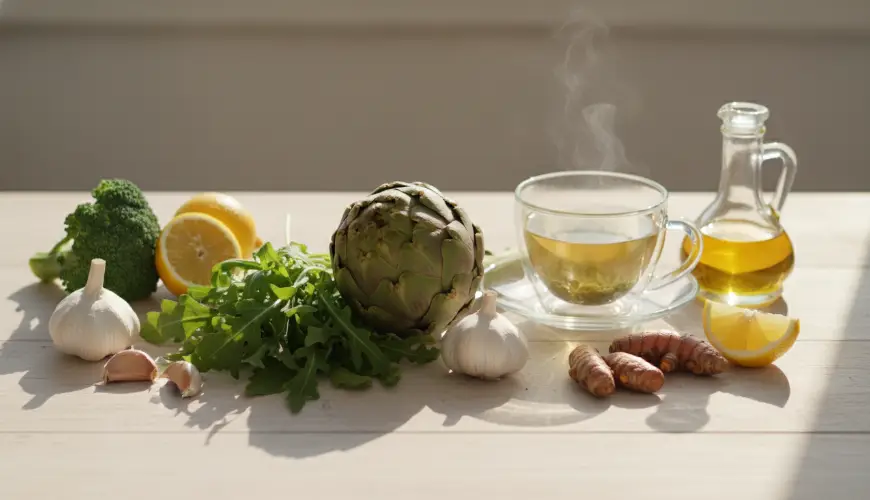
The fundamental pillar is a diet rich in vegetables, particularly bitter and crunchy varieties. Artichoke, rocket, broccoli, kale and watercress contain substances that actively stimulate bile production and support detoxification enzymes in liver cells. Artichoke deserves special attention in this regard – its active compound cynarin demonstrably increases bile production and improves blood flow through the liver. A number of studies, including a review published in the journal Phytomedicine, confirm its hepatoprotective effects.
Milk thistle acts in a similar way – a herb with a long history in traditional medicine. Its main component, silymarin, is an antioxidant that protects liver cells from damage caused by free radicals and supports their regeneration. In practice, it can be taken in the form of tea, extract or capsules – and products containing milk thistle are among the popular items in ranges focused on natural health support.
Water also plays an irreplaceable role. Adequate hydration is a basic prerequisite for effective detoxification – the liver needs fluids to be able to transfer processed toxins into the blood and kidneys, from where they are eliminated from the body. Experts recommend drinking at least 1.5 to 2 litres of plain water daily, ideally without sugar or artificial sweeteners.
Physical activity is another factor that tends to be underestimated in the context of liver health. Regular exercise reduces triglyceride levels in the blood, helps reduce visceral fat and directly contributes to lowering the risk of non-alcoholic fatty liver disease. This does not need to involve intensive training – even thirty minutes of brisk walking daily has a measurable positive effect.
As hepatologist and popular science author Dr Mark Hyman once said: "The liver is the brain of your metabolism. If you take care of it, it takes care of you." This thought perfectly captures the two-way relationship between lifestyle and the function of this organ.
Foods that the liver loves
When it comes to specific foods, research repeatedly highlights several groups that have a demonstrably beneficial effect on liver health:
- Bitter vegetables (artichoke, chicory, rocket) – stimulate bile production and support detoxification
- Garlic and onion – contain sulphur, which activates detoxification enzymes
- Citrus fruits – vitamin C and flavonoids protect liver cells from oxidative damage
- Green tea – the catechins it contains reduce fat accumulation in the liver
- Olive oil – healthy monounsaturated fats help maintain optimal levels of liver enzymes
- Turmeric – curcumin has powerful anti-inflammatory and antioxidant effects directly in liver tissue
Conversely, it is advisable to limit red meat, processed meats, fried foods, white sugar and sweetened beverages. This is not a strict prohibition, but a matter of consciously balancing what we add to the liver's workload and what we do to ease it.
Sleep, stress and the body's detoxification rhythm
A less obvious but all the more important factor is sleep. The body has a natural circadian rhythm that also governs detoxification processes – the liver is most active during the night-time hours, approximately between one and three in the morning. If a person sleeps irregularly or insufficiently, they disrupt this natural cycle and reduce the efficiency of overnight regeneration. Research published in the specialist journal Journal of Hepatology shows that chronic sleep deprivation correlates with an increased risk of developing liver disease.
Stress, as mentioned above, also contributes to overburdening the liver. Chronically elevated cortisol disrupts the metabolism of glucose and fats, with the liver being a direct target of these hormonal fluctuations. Techniques such as meditation, yoga, breathing exercises or regular time spent in nature are not merely fashionable trends – they have a direct physiological impact on the body's ability to cope with stress.
An interesting practical example is provided by the stories of many people who, after switching to a plant-based or Mediterranean diet, report a marked improvement in their liver test results. One such case study comes from the Mayo Clinic, where patients with NAFLD recorded a drop in liver enzyme levels ALT and AST to within the normal range after a six-month dietary intervention – without medication. This is not a miracle, but a logical outcome of the liver no longer being overwhelmed and being given the space to regenerate.
When it is time to see a doctor
Natural liver care is powerful, but it has its limits. There are symptoms that should not be ignored: persistent fatigue, pain or pressure in the upper right abdomen, yellowing of the skin or whites of the eyes (jaundice), dark urine or pale stools. These symptoms may indicate a more serious condition that requires medical diagnosis and treatment.
Regular preventive blood tests – specifically the liver enzymes ALT, AST and GGT – are one of the simplest ways to keep track of the condition of this organ. Most general practitioners will include them in a standard preventive examination, and if not, it is simply a matter of asking for them.
Natural liver support and modern medicine are by no means contradictory. On the contrary – doctors are increasingly recommending a combination of pharmacological treatment and lifestyle modification, because medication alone, without changes to diet and physical activity habits, yields only limited results.
The liver deserves care – long before it begins to signal that something is wrong. Because that is precisely the paradox it presents: it works in silence, without pain, without complaint. And that is exactly why it is so easy to forget about it – until the moment it stops being silent.