

Calisthenics for Women Is a Path to Strength Without Dumbbells
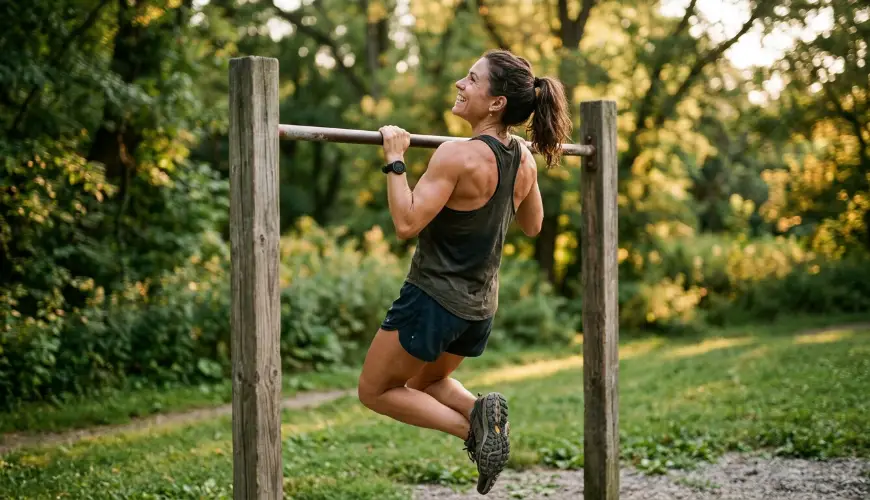
There is a widespread myth that women who want to be strong and fit must spend hours in the gym surrounded by heavy dumbbells and complex machines. The reality, however, is much simpler and yet fascinating – your own body is the most perfect training tool that exists. Calisthenics, i.e. exercise using only your own body weight, has been experiencing a huge boom in recent years, particularly among women who are looking for functional strength, a toned physique and mobility – all without a single dumbbell.
The word "calisthenics" comes from the Greek words kalos (beauty) and sthenos (strength). This etymology itself hints at what this style of exercise is about: a harmonious combination of aesthetics and physical fitness. It's not just about how the body looks, but above all about what it can do. And it is precisely this philosophy that resonates with many women who are tired of chasing unrealistic ideals and are looking for an approach to movement that is sustainable, joyful and truly beneficial.
Try our natural products

What calisthenics truly gives women
Take the example of Markéta, a thirty-year-old mother of two from Brno, who two years ago decided to stop paying for an expensive gym membership and started exercising at home. At first, she doubted whether push-ups, squats and pull-ups on a bar could offer her the same results as machines. After six months of regular training, she managed her first pull-up, and after a year, a series of ten clean pull-ups in a row – a feat she hadn't achieved even when she was going to the gym three times a week. "I never thought my body was capable of anything like that," she says. "And yet I didn't need anything other than a bar in the park and my own determination."
Markéta's story is not exceptional. Calisthenics for women represents a path to strength that is deeply functional – meaning it manifests in everyday life. Carrying children, hauling groceries, maintaining proper posture while sitting at a computer – all of this depends on the quality of the muscles that calisthenics systematically strengthens. This particularly concerns the core muscles, which form the foundation of all movement. A strong core is not just a matter of aesthetics – it is the foundation of a healthy spine and the prevention of back pain, which affects a large proportion of the adult population.
Research repeatedly confirms that bodyweight training can be just as effective as training with free weights, if it is properly structured and progressively more demanding. A study published in the Journal of Human Kinetics showed that calisthenic training leads to significant improvements in muscle strength, endurance and overall body composition. In other words – science is on the side of those who exercise without dumbbells.
One of the greatest benefits that is rarely talked about is the development of proprioception – i.e. awareness of your body's position in space. When you exercise with a dumbbell, the body focuses primarily on lifting and lowering the weight. In calisthenic exercise, the entire body must work together as one unit, coordinating movement, maintaining balance and stabilising joints. The result is movement intelligence that transfers to all other sports and to everyday life.
It is also important to mention the hormonal aspect. Calisthenics stimulates the production of growth hormone and testosterone – and this applies to women too, even though their levels of these hormones are naturally lower than in men. These hormones are key to building muscle mass, burning fat and overall recovery. Moreover, bodyweight exercise generally does not cause the extreme muscle mass gain that many women mistakenly fear – instead, it shapes the body into firm, elongated lines.
How to start and how to progress
The beauty of calisthenics is that it requires no equipment or prior experience. The basic exercises – push-ups, squats, lunges, planks and pull-ups – can be modified to suit complete beginners as well as advanced athletes. Progression is one of the most important principles of this training: each exercise has its own hierarchy of difficulty, which allows for gradual and safe strength development.
A beginner can, for example, start with a supported squat, gradually move on to a classic squat, then to a single-leg squat (known as a pistol squat) and finally to a jump squat. Each step in this progression brings new challenges and new feelings of success. It is precisely this measurable progress that is one of the reasons why calisthenics is so motivating – unlike lifting ever-heavier dumbbells, you see progress in what your body can do, not just in the numbers on the weight plate.
The pull-up is considered one of the most comprehensive tests of upper body strength. For many women it is initially unattainable, but that doesn't matter at all – there are a whole range of preparatory exercises, such as negative pull-ups (slow lowering from the top position), Australian rows or resistance band training. Systematic work towards the first pull-up is a transformative experience for many women – not just physically, but mentally too.
A training plan for a beginner doesn't need to be complicated. Three to four workouts per week, each lasting thirty to forty-five minutes, is perfectly sufficient. The key is consistency and correct technique. A poorly performed push-up strains the wrists and shoulders; a correctly performed one builds strength throughout the entire body. It therefore makes sense to spend time on the basics – and if possible, to consult technique with an expert or watch quality instructional videos.
As for training frequency, the body needs time to recover. Muscles grow and strengthen during rest phases, not during exercise itself. Sleep, adequate protein intake and hydration are therefore just as important as the training itself. Women who take a comprehensive interest in a healthy lifestyle – meaning not just exercise, but also nutrition and self-care – achieve the best results.
Calisthenics complements other physical activities beautifully. Yoga develops flexibility and conscious breathing, running strengthens the cardiovascular system, swimming engages the whole body in a different way. Calisthenic strength supports all these activities and improves their effectiveness. It is therefore not an exclusive system, but rather a solid foundation on which to build.
A major advantage is also financial and logistical accessibility. While a gym membership can cost hundreds of crowns per month and travelling there takes time, calisthenics requires nothing more than enough space, comfortable clothing and possibly a pull-up bar – which can be found in any park or purchased for home at a reasonable price. At a time when more and more people are interested in a sustainable lifestyle and minimising unnecessary expenses, this aspect of calisthenics is particularly appealing.
An interesting perspective is offered by the pioneer of modern calisthenics and physiotherapist Ido Portal, whose philosophy of movement states: "Movement is not just exercise – it is a way of existing in the world." This idea resonates particularly with women who are looking for a relationship with their own body that is not defined by numbers on the scales or kilograms on a barbell, but by how they feel, how they move and what they are capable of.
With the growing popularity of calisthenics, communities of women are also emerging who share progress, tips and motivation with one another. Online groups, outdoor training sessions in parks or calisthenics courses in studios – all of these options show that this is a trend with solid foundations that is definitely not just a passing fashion. The World Health Organization recommends that adults get at least 150 minutes of moderate-intensity physical activity per week, with strength training forming part of the exercise routine at least twice a week – and calisthenics meets these criteria completely naturally.
One of the most common questions women ask when starting calisthenics is: "Won't I get too muscular?" The answer is clear – no. Significant muscle mass gain requires specific hormonal conditions that women do not physiologically have to the same degree as men, as well as extremely intense training with a high volume. Calisthenics shapes, tones and empowers women – but it does not lead to a bulky physique unless that is an explicit goal and the subject of targeted effort.
Perhaps the most important thing that calisthenics offers women is a change in their relationship with their own body. In a culture that constantly judges women's bodies by how they look, calisthenics shifts the focus to what the body can do. The first pull-up, the first pistol squat, the first handstand – these are moments of pure triumph that have nothing to do with how much a woman weighs or what clothing size she wears. And it is precisely this perspective that is perhaps the most valuable gift that this style of exercise brings.