
Brown fat is activated by cold and speeds up metabolism
Most people hear the word "fat" and immediately think of something that needs to be gotten rid of. But nature is more inventive than it might seem. The human body contains a special type of adipose tissue that works in exactly the opposite way to the kind that accumulates around the waist – instead of storing energy, it actively burns it. It is called brown fat, or brown adipose tissue, and scientists have been paying increasing attention to it in recent years. The reason is simple: it is a natural metabolic engine that springs to life precisely when you are cold.
For a long time, it was assumed that brown adipose tissue was the exclusive domain of newborns and young children, who cannot yet maintain body temperature through muscle activity. It was not until 2009 that independent studies published in the prestigious New England Journal of Medicine brought a surprising finding: functional brown fat also occurs in adult humans, and in greater quantities than anyone had expected. Since then, research in this area has truly taken off, yielding insights that have the potential to change the way we think about weight loss, thermoregulation, and the prevention of metabolic diseases.
Try our natural products
What brown fat actually is and why it is different
To understand why brown fat is so exceptional, it is useful to compare it to its "white" counterpart. White adipose tissue serves primarily as an energy store – it deposits excess calories in the form of fat droplets and insulates the body. Brown adipose tissue functions in a diametrically different way. Its cells are packed with mitochondria – the cellular power plants – which contain a special protein called thermogenin (UCP1, uncoupling protein 1). This protein can "short-circuit" the normal energy production process so that heat is released instead of ATP. In other words, brown fat literally burns energy for the sole purpose of warming the body.
The characteristic brown colour of the tissue comes precisely from the density of mitochondria and its rich blood supply. The more mitochondria, the darker the colour and the higher the combustion capacity. In newborns, brown adipose tissue accounts for approximately five percent of total body weight and is concentrated mainly around the spine, kidneys, adrenal glands, and in the neck region. In adults, its quantity is smaller and highly variable between individuals, but it remains metabolically active.
Research conducted using PET-CT scans has shown that people with greater amounts of active brown fat tend to have a lower body mass index (BMI) and better insulin sensitivity. A study published in Nature Medicine in 2021 even suggested that people with a detectable amount of brown fat have a statistically lower risk of developing type 2 diabetes, heart disease, and hypertension. This is therefore not a marginal biochemical curiosity, but a tissue with potentially significant influence on overall health.
Also of interest is a third type of adipose tissue that sits figuratively between the two extremes – so-called beige fat, or brite (brown-in-white) fat. This type arises from the conversion of white fat cells in response to cold or physical activity, and its properties resemble those of brown fat. Scientists at Harvard Medical School have identified the key molecular signals that govern this conversion and are working intensively on how to harness this process therapeutically.
Cold as a trigger: why it pays to get a little chilly sometimes
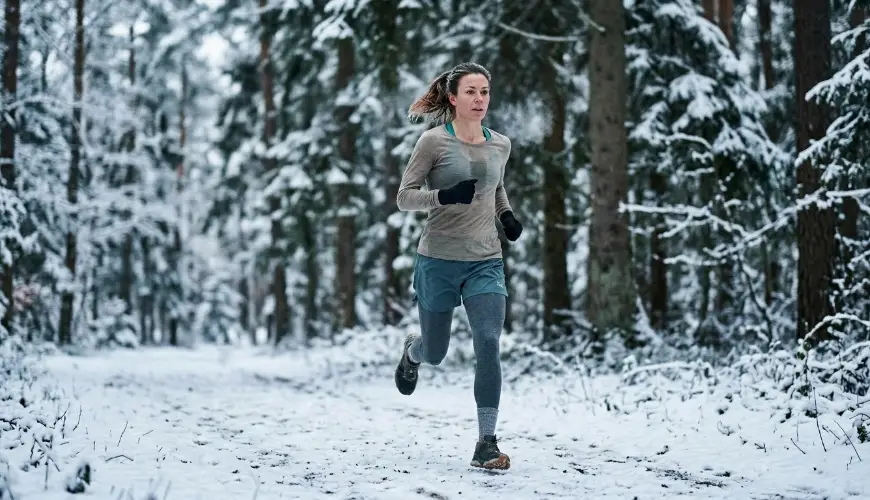
The connection between cold and the activation of brown fat is not coincidental – it is an evolutionary mechanism that helped our ancestors survive in conditions where central heating simply did not exist. As soon as the body detects a drop in ambient temperature, the hypothalamus sends a signal to the sympathetic nervous system, which activates brown adipose tissue via noradrenaline. The tissue immediately begins burning fatty acids and glucose to produce heat.
This is precisely the mechanism that researchers at Maastricht University investigated in a series of experiments in which volunteers spent several hours a day in a mildly cold environment (around 17 °C). After six weeks of such exposure, participants not only showed an increase in the amount of active brown fat, but also improved insulin sensitivity and reduced fasting blood sugar levels. The metabolic benefits of cold exposure are therefore not merely theoretical – they are measurable and clinically relevant.
But how much actual combustion capacity does brown fat realistically have? Estimates vary depending on the amount of active tissue and the intensity of cold, but research suggests that fully activated brown fat can burn approximately 200–300 kilocalories per day above resting expenditure in an adult. This is roughly equivalent to thirty minutes of brisk walking. On its own, this may sound modest, but in the context of long-term energy balance, it is a non-negligible contribution.
A practical everyday example can be found in the experience of people who regularly swim in cold water or practise cold hardening. Many of them report that after a few weeks of regular immersion in cold water, they begin to tolerate the cold better, shiver less, and feel more energised after a cold shower. Behind this subjective experience lies precisely the adaptation of brown adipose tissue – the body literally learns to burn more efficiently.
As the pioneer of brown fat research, Professor Jan Nedergaard of Stockholm University, wrote: "Brown fat is the only tissue in the body whose job is to waste energy – and that is precisely what makes it such an interesting therapeutic target."
How to naturally support brown fat activity
The question that logically follows is: can the amount and activity of brown fat be consciously influenced? The answer is – surprisingly – yes. And it does not necessarily mean a daily ice-cold shower, although that is one of the fastest methods.
The most thoroughly researched ways to support brown fat include:
- Mild and regular cold exposure – it is enough to lower the bedroom temperature to 18–19 °C, go out in cooler weather without excessive layering, or finish a shower with cold water for at least 30–60 seconds
- Regular exercise – physical activity, especially endurance training, promotes the production of the hormone irisin, which stimulates the conversion of white fat to beige fat
- Sleep – lack of sleep reduces the activity of brown adipose tissue, while high-quality and sufficient sleep supports its function
- A diet rich in certain compounds – capsaicin from chilli peppers, resveratrol from grapes, and curcumin from turmeric have demonstrated in laboratory studies the ability to activate thermogenic pathways similar to cold exposure
Melatonin, the sleep hormone whose levels naturally rise at night, deserves special mention. Studies in animal models have shown that melatonin stimulates the formation of beige fat and increases the expression of thermogenin UCP1. Direct translation to human physiology is still the subject of further research, but it is yet another argument in favour of regular and sufficiently long sleep.
It is also important to mention what suppresses brown fat activity. Overheating – that is, constantly staying in warm rooms, excessive layering of clothing, and avoiding any sensation of cold – leads to the gradual inactivation of brown adipose tissue. The modern lifestyle of heated offices, cars, and homes brings us comfort, but metabolically impoverishes us. Our ancestors were exposed to cold far more frequently, and their brown fat was likely far more active.
Researchers in nutritional science and metabolism are also increasingly interested in the gut microbiome and its influence on brown fat. It is becoming clear that certain strains of gut bacteria produce signalling molecules that affect thermogenesis. A healthy and diverse microbiome – supported by fermented foods, fibre, and probiotics – may therefore be an indirect ally in activating brown adipose tissue.
The future of brown fat research is fascinating. Pharmaceutical companies and academic institutions are intensively searching for molecules that could activate brown fat without the need for cold exposure – essentially a pill that would kick-start the body's natural combustion engine. Several candidate compounds are already in clinical testing, although the path from laboratory to pharmacy is always long and full of surprises.
In the meantime, it is worth taking advantage of what is freely available to us: a little cold, regular exercise, quality sleep, and a varied diet. Brown fat is no passing trend or marketing gimmick – it is a real biological tissue with demonstrable metabolic effects, simply waiting for us to give it the opportunity to work. Perhaps it is time to stop so assiduously shielding ourselves from every gust of cold air and let the body do what it has learned to do over millions of years of evolution.