

# How to Read Food Labels and Shop Better --- ## Why It Pays to Read the Ingredients List Many pe
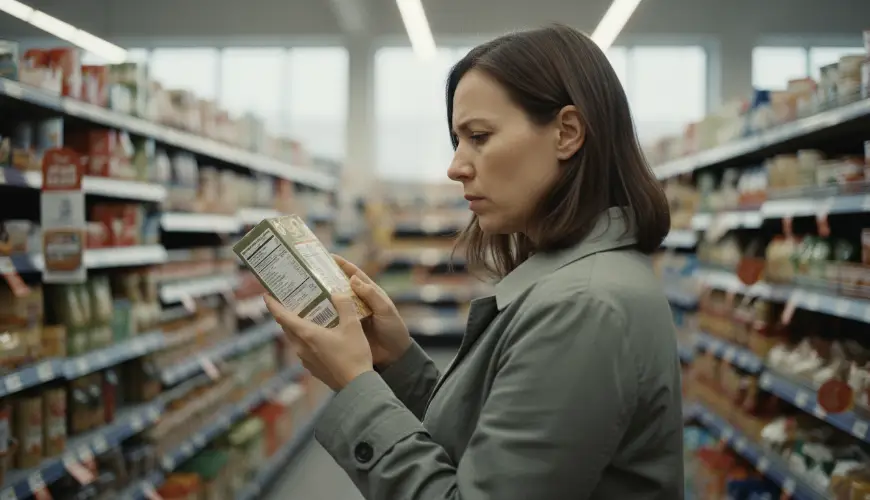
Each of us knows it. You're standing in a supermarket, holding a yogurt carton or a muesli bar, trying to decipher the small print on the back of the packaging. The letters blur together, the names sound like they're from a chemistry textbook, and you wonder: where do you even start? Reading food ingredient lists is a skill that is becoming increasingly important in today's world – and yet nobody teaches it at school. Nevertheless, it can significantly affect your health, wellbeing, and how you feel every day.
The World Health Organization repeatedly warns that diet composition has a direct impact on the risk of developing chronic diseases such as type 2 diabetes, cardiovascular disease, and obesity. And yet most people shop based on the picture on the front of the packaging rather than what it actually contains. "The front of the pack sells, the back of the pack tells the truth," say nutritionists around the world – and they're right.
Learning to navigate food ingredient lists doesn't mean becoming an expert in biochemistry. You just need to know what to look for. And that's exactly what this article is about.
Try our natural products



Why reading ingredient lists is so important
Before we get to specific ingredients, it's important to understand how an ingredient list actually works. According to European legislation, manufacturers must list ingredients in descending order – that is, from the ingredient present in the greatest quantity to the one present in the least. A seemingly simple principle that often surprises people in practice. If sugar is in first place, you immediately know what the product is mostly made of. If the first three ingredients are various forms of fat, sugar, or white flour, it's clear what type of food you're dealing with.
Let's take a real-life example: Jana, a thirty-year-old teacher from Brno, started paying attention to food ingredients two years ago after her doctor flagged elevated blood sugar levels. She stopped buying products labelled "light" or "no added sugar" based solely on the enticing label on the front, and started reading the actual ingredients. She discovered that many yogurts bearing the label "natural sweetness" contained more sugar than their classic counterparts. Today she shops differently – and her blood test results have improved.
This story is not exceptional. It is the experience of thousands of people who have decided to take their diet into their own hands. And the key to doing so is precisely the ability to read and understand the ingredient list on the packaging.
5 ingredients you should always watch out for
1. Added sugar – hidden under dozens of names
Sugar is probably the most cleverly disguised ingredient in the entire food industry. Manufacturers list it under so many different names that the average consumer has no chance of recognising them all. Glucose-fructose syrup, dextrose, maltose, sucrose, corn syrup, agave nectar, rice syrup, molasses – these are all different forms of sugar that can hide in a single product under several different names at once. If there are five or six such names in the ingredient list, the total amount of sugar in the product can be surprisingly high, even if none of them appears first on the list.
The World Health Organization recommends that added sugars should account for less than 10% of total daily energy intake, with less than 5% being ideal. For the average adult, this means approximately 25 grams, or six teaspoons of sugar per day. A single sweetened yogurt or fruit juice can easily exceed this limit.
When reading ingredient lists, therefore, watch not only whether sugar is listed, but also how many times and under what names it appears. The more different names for sugar, the greater the likelihood that the product contains a truly high amount of added sugars.
2. Hydrogenated and partially hydrogenated fats
Trans fatty acids, which are produced through the industrial hydrogenation of vegetable oils, are among the most widely discussed substances in the field of nutrition. The scientific consensus here is fairly clear: trans fatty acids raise levels of "bad" LDL cholesterol, lower levels of "good" HDL cholesterol, and contribute to the development of cardiovascular disease. The Harvard T.H. Chan School of Public Health identifies trans fatty acids as one of the most dangerous types of fat in the human diet.
In food ingredient lists, look for them under names such as hydrogenated vegetable fat, partially hydrogenated fat, hydrogenated oil, or partially hydrogenated oil. These ingredients are found primarily in cheap biscuits, crackers, crisps, margarines, and industrially produced baked goods. The good news is that in recent years many manufacturers have removed trans fatty acids from their products – but there are still food categories where they can be encountered.
3. Artificial colourings and preservatives labelled with E codes
Not all additives are dangerous – it's important to state that upfront. The European "E number" system encompasses both entirely safe substances and those about which legitimate questions regarding their health effects exist. Artificial colourings such as tartrazine (E102), quinoline yellow (E104), or Allura Red (E129) are, for example, banned in some countries or must be accompanied by a warning that they may have an adverse effect on activity and attention in children.
Similarly, preservatives such as sodium benzoate (E211) or nitrites (E250, E252), which are commonly added to cured meats and meat products, are the subject of scientific debate. Nitrites themselves are particularly problematic during heat processing, where they can react with proteins to form nitrosamines – substances that are potentially carcinogenic.
The general rule recommended by nutrition experts is simple: the shorter and more readable the ingredient list, the better. A product whose ingredients fit on three lines and contains ingredients you would recognise from your own kitchen is generally a better choice than a product with twenty items full of numerical codes.
4. Refined white flour and starches
Refined white flour is listed in food ingredients simply as "wheat flour" – without the qualifier "wholegrain" or "wholemeal". Through refining, the grain loses most of its fibre, B vitamins, zinc, magnesium, and other micronutrients. What remains is essentially pure starch with a high glycaemic index, which causes a rapid rise in blood sugar levels, typically followed by an equally rapid drop – and with it, fatigue, hunger, and cravings for more carbohydrates.
Wholegrain flour, rye flour, oats, or buckwheat are considerably more nutritious alternatives. When reading ingredient lists, a simple test applies: if the first ingredient is "wheat flour" without any further specification, it is most likely a refined product. The label "made with wholegrain flour" on the front of the packaging does not mean at all that wholegrain flour makes up the majority of the product – it could account for just a tiny percentage.
5. Salt and sodium – in amounts that may surprise you
The fifth ingredient worth watching out for is salt, or more specifically sodium. According to data from the Czech National Institute of Public Health, the average Czech person consumes significantly more salt than the recommended amount – and a large portion of this intake comes not from home cooking, but from industrially processed foods. Bread, cheeses, cured meats, instant soups, sauces, and crisps are among the biggest hidden sources of sodium in our diet.
On the packaging, look either for "salt" directly in the ingredient list, or for the sodium value in the nutritional information. Products with a salt content above 1.5 grams per 100 grams are considered highly salty. For comparison: one sachet of instant soup can contain almost an entire day's recommended sodium intake. High salt consumption is associated with elevated blood pressure and a higher risk of cardiovascular disease.
How to build a habit of reading ingredient lists
Knowing what to look for is the first step. But how do you make it a natural part of your shopping? The answer is simple: start slowly and focus on the food categories you buy most frequently. You don't need to read every label in the shop straight away – just pick three or four products you buy regularly and compare their ingredients with alternatives.
A useful tool can also be the Open Food Facts app, which contains a database of hundreds of thousands of foods and allows you to scan a product's barcode and instantly display its ingredients, nutritional values, and Nutri-Score rating. It is a non-profit project available for free, which can make navigating the supermarket significantly easier.
Another practical approach is the so-called five-ingredient rule – a general heuristic according to which products with five or fewer ingredients are generally less industrially processed than those with a long list of additives. Of course, it's not an absolute rule (olive oil has one ingredient and is excellent; some wholegrain breads have more ingredients but are still a nutritious choice), but as a first rough filter it works surprisingly well.
It is also important to learn to distinguish between what is written in large letters on the front of the packaging and what the product actually contains. Terms such as "natural", "traditional", "farmhouse", or "no artificial ingredients" are marketing terms that are not legally defined in any binding way and can conceal a less flattering reality. The only truly binding information is the ingredient list and the nutritional table – everything else is a commercial message.
Reading food ingredient lists is, in a sense, a form of 21st-century literacy. Just as we can read news critically and distinguish between verified information and misinformation, we should be able to read what we eat as well. The food industry spends enormous resources making products look healthier than they are – and the consumer's only defence is their own knowledge and attention. It's not complicated. It just takes a little practice and the willingness to turn the packaging over and read what's on the other side.