

Stretching in the morning or in the evening, or how to choose correctly
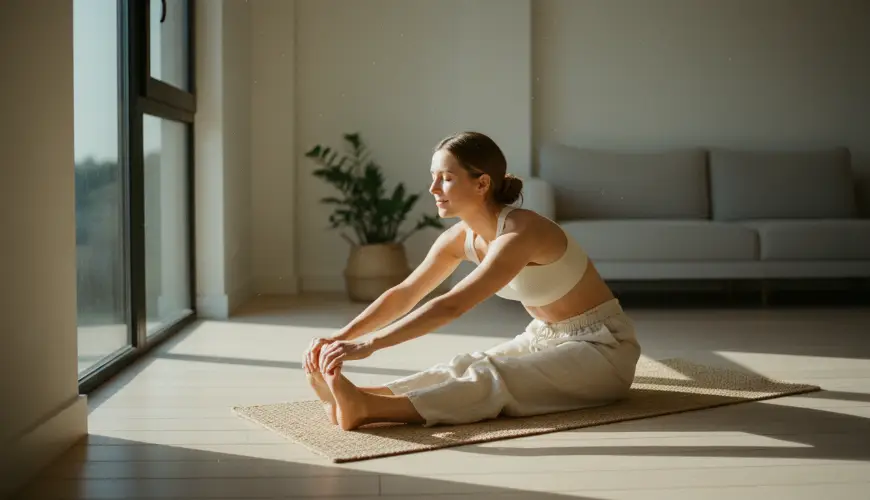
Few questions in the world of fitness and healthy living spark as much debate as whether it's better to stretch in the morning or in the evening. Every trainer, physiotherapist, and enthusiastic athlete has their own opinion on the matter, and yet they're all right to some extent. The answer isn't straightforward – it depends on what you want to achieve through stretching, what your daily rhythm looks like, and what state your body is currently in.
Stretching is one of the few physical activities that excludes no one. A student can do it before a morning lecture, and an elderly woman after an afternoon outing. Nevertheless, the way the body responds to stretching changes significantly throughout the day – and it's worth understanding exactly this difference.
Try our natural products





What happens to the body in the morning and why it matters
After a night spent in a horizontal position, the body wakes up in a state that differs fundamentally from its evening condition. Muscle temperature is lower, joints are less well-supplied with blood, and connective tissue tends to be stiffer. This phenomenon is well known to anyone who has tried to touch their toes immediately after waking up – the results are usually modest at best. Morning stiffness is not a symptom of illness or old age; it is a natural physiological response of the organism to rest.
From a scientific standpoint, this morning stiffness is explained partly by reduced production of synovial fluid, which lubricates the joints, and by lower body temperature, which affects the elasticity of muscle fibres. Research shows that body temperature reaches its peak in the late afternoon, around 4 to 6 p.m., and it is precisely then that muscles are most supple and best prepared for exertion.
This might suggest that morning stretching is a waste of time. But that would be too hasty a conclusion. Morning stretching has other, equally valuable benefits – you just need to know how to approach it. The key is to choose dynamic stretching rather than static holds, which are unsuitable for cold muscles and can lead to injury. Dynamic movements such as hip circles, slow lunges, or trunk rotations gently warm up the muscles, stimulate the circulatory system, and prepare the body for the day's activities.
Many people have grown fond of morning stretching precisely because it functions as a ritual that helps them transition from sleep to a wakeful state. It's not just a physical process – it's also a mental switch. A few minutes of conscious movement after waking can improve concentration, create a sense of control over the beginning day, and according to some studies, even positively influence mood through the release of endorphins. The American Academy of Sleep Medicine confirms that a movement routine immediately after waking can support the circadian rhythm and improve sleep quality in the nights that follow.
Evening stretching as a recovery tool
At the other end of the day stands evening stretching, which has an entirely different character and different physiological justification. After a full day of physical and mental exertion, muscles are tired, but at the same time warmed up and well-supplied with blood – meaning they are in an ideal state for deep stretching. Static stretching, in which a position is held for 30 to 60 seconds or longer, is not only safer in the evening, but also significantly more effective than in the morning.
Consider, for example, the story of Martina, a thirty-year-old teacher who suffered from chronic lower back pain. She tried stretching in the morning, but the results weren't coming. On the recommendation of a physiotherapist, she moved her stretching routine to the evening, just before bed, and after six weeks of regular practice she noticed a marked improvement in mobility and a reduction in pain. Her case is not exceptional – evening stretching focused on deep muscle release is a popular component of rehabilitation programmes around the world.
In the evening, the body naturally transitions into recovery mode. If we incorporate conscious stretching into this process, we help it work more efficiently. Releasing muscle tension before sleep reduces the activity of the sympathetic nervous system – the one that keeps us on alert – and instead activates the parasympathetic system, which is responsible for rest and recovery. The result is deeper, more restful sleep, faster restoration of muscle tissue, and an overall reduction of stress in the body.
This is where one of the greatest benefits of evening stretching lies, one that is often overlooked: it's not just about flexibility, but about the overall health of the nervous system. As physiotherapist and author of a book on movement medicine Kelly Starrett says: "Mobility is not a luxury – it is the foundation on which everything else rests." And evening is the ideal time for building this foundation.
When is stretching truly effective – and what makes the difference
Comparing morning and evening stretching purely in terms of effectiveness would be an oversimplification. It depends on what we mean by "effective." When it comes to increasing flexibility and range of motion, research clearly favours the evening. A study published in the Journal of Strength and Conditioning Research demonstrated that range of motion is statistically greater in the afternoon and evening hours than in the morning, regardless of the age or sex of the participants.
If, however, the goal is to prepare the body for performance, activate the nervous system, or establish a healthy morning ritual, then morning stretching also has its irreplaceable value. Different goals simply require different approaches – and that is the message everyone should take to heart.
There are, however, several principles that apply to both times of day, and adhering to them determines whether stretching will be beneficial or pointless:
- Consistency is more important than timing. Ten minutes of stretching every day will deliver significantly better results than an hour of stretching once a week, regardless of the time of day.
- Never stretch cold muscles intensively. In the morning, always start more gently and dynamically; leave static holds for when the body is warmed up.
- Breathing is part of stretching. Conscious, slow breathing during stretching helps muscles relax and enhances the effect of each position.
- Pain is not the goal. The line between a pleasant pull and a painful overstretch is thin – crossing it means risking injury.
A natural way to incorporate these principles into everyday life is through a combination of both approaches. A short dynamic routine in the morning that wakes up the body and mind – perhaps just five to ten minutes. In the evening, a longer, calm stretching session focused on the parts of the body that are most heavily loaded. Such a combination produces a synergistic effect that neither purely morning nor purely evening stretching can achieve on its own.
The choice of appropriate equipment also plays a non-negligible role. A quality yoga or stretching mat provides stability, cushions the hardness of the floor, and allows you to focus fully on the movement rather than on discomfort. Equally, comfortable clothing that doesn't restrict movement helps ensure that stretching ceases to be an obligation and becomes an enjoyable part of the day. It is precisely these seemingly minor details that determine whether stretching becomes a lasting habit.
It is also worth noting that the approach to stretching should be adapted to age and physical condition. Older individuals, for whom morning stiffness is more pronounced and lasts longer, may benefit from starting their morning routine very gently – for instance, by stretching while still lying in bed before getting up at all. This approach, sometimes referred to as "bed yoga" or morning mobilisation, is gentle on the joints while still effectively preparing the body for movement. Active athletes who train in the morning, on the other hand, should pay particular attention to warming up before stretching and to recovery stretching after training – ideally in the evening.
It is also important to distinguish between different types of stretching, because not all of them work the same way and not all are suitable for every time of day. Dynamic stretching – movement-based, rhythmic – is ideal as preparation before physical activity and is well-suited to the morning. Static stretching – holding a position without movement – is most effective after training or in the evening as part of relaxation. There is also PNF stretching (proprioceptive neuromuscular facilitation), which combines muscle lengthening and contraction and is considered one of the most effective methods of increasing flexibility – however, it is more suitable for advanced practitioners and ideally should be done under the guidance of a specialist.
The world of healthy living is increasingly moving towards a holistic view of movement – that is, towards perceiving stretching not as an isolated exercise, but as a natural part of everyday movement repertoire. Whether a person chooses morning or evening, what matters is that stretching ceases to be something done "occasionally, when I remember" and becomes a conscious, regular practice. The body will return this investment – with better mobility, less pain, higher quality sleep, and an overall greater resilience to the demands of everyday life.