

# What to do when you have pelvic pain while walking in late pregnancy Pelvic pain during walking i
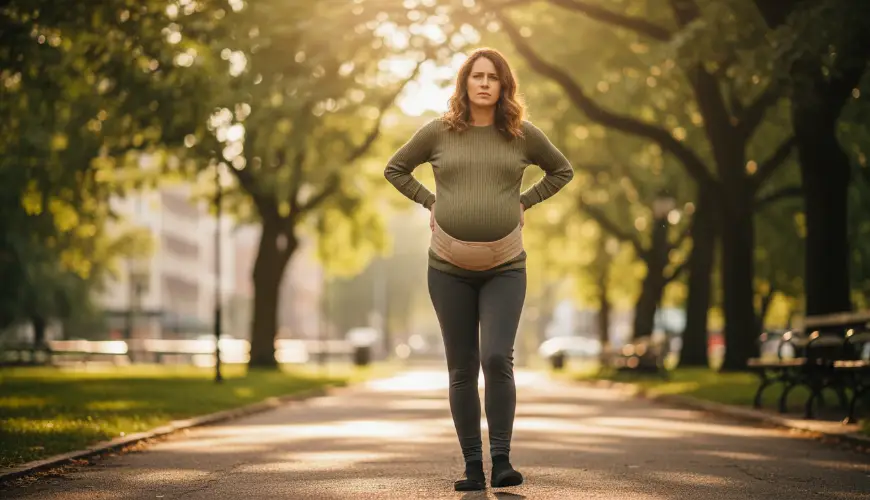
Walking, which just a few months ago posed no problem, suddenly becomes an unpleasant challenge.
Many pregnant women experience a feeling in the last trimester as if someone has clamped their pelvis in a vice – every step hurts, moving from the bed to the toilet becomes a small adventure, and the words "let's just go for a walk" prompt a knowing smile rather than enthusiasm. Pelvic pain when walking in late pregnancy is one of the most common physical complaints that trouble women at the end of pregnancy, and yet it is talked about surprisingly little.
The statistics speak clearly: according to estimates, as many as 50% of pregnant women suffer from some form of pelvic pain, with the intensity of symptoms ranging from mild discomfort to conditions that significantly restrict everyday movement. Yet a large proportion of women silently endure the pain with the conviction that "it's just how it is" and that everything will sort itself out after birth. However, understanding what is happening in the body, why the pain occurs, and what can be done about it can fundamentally transform the quality of the final weeks of pregnancy.
Try our natural products



What is happening in the body and why it hurts right now
The body of a pregnant woman undergoes a remarkable transformation throughout the entire pregnancy, but the final trimester brings changes that are literally felt with every step. A key role is played by the hormone relaxin, which the body begins to produce from the very first weeks of pregnancy, but whose effect fully manifests in the late stage of pregnancy. Relaxin loosens the ligaments and joints in the pelvic area so that the birth canal can adapt to the passage of the baby. This process is entirely natural and necessary – the problem arises, however, when the loosened joints lose their usual stability and the surrounding muscles are unable to fully compensate for this instability.
The most common source of problems is the symphysis – the cartilaginous joint at the front of the pelvis that connects the two pelvic bones. When relaxin causes its excessive loosening, a condition known as symphysis pubis dysfunction (SPD) develops. The woman then feels a sharp or dull pressure in the area of the pubic bone, which intensifies when walking, when turning over in bed, when getting into a car, or when stepping out of the shower. Similar problems can also be caused by the sacroiliac joint – the connection between the sacrum and the pelvic bone at the back – whose instability manifests as pain in the buttocks, lower back, or even radiating pain into the thighs.
The situation is further complicated by the rapidly growing belly. The body's centre of gravity shifts forward, the spine curves, the gluteal muscles and pelvic floor muscles work under constant pressure, and the entire musculoskeletal system tries to cope with uneven loading. It is therefore no wonder that even women who did not suffer from pelvic pain in the early months begin to feel it precisely at the end of pregnancy.
An illustrative real-life example: Markéta, a thirty-year-old who worked as a teacher and had walked without problems throughout her pregnancy, began to feel an unpleasant clicking and pain in the area of the symphysis with every step at week 34. At first she attributed it to fatigue, but the pain gradually increased to the point where she had to reduce her teaching and switch to remote work. It was only after visiting a physiotherapist specialising in the pelvic floor that she learned she had symphysis dysfunction and that there were specific exercises and aids that could help her significantly.
How to recognise pelvic pain and when to seek help
Not every pain in the pelvic or back area means the same thing, and not every case requires the same approach. It is important to be able to distinguish what the body is signalling and to know when it is time to consult a specialist. Pain associated with pelvic girdle dysfunction (PGP, pelvic girdle pain) typically manifests in the area of the pubic bone, groin, inner thighs, lower back, or buttocks. It worsens with one-sided loading – that is, precisely when walking, standing on one leg, or climbing stairs.
Distinguishing it from ordinary back pain or Braxton Hicks contractions is essential. If you feel the pain as rhythmic tightening, that is a different matter. But if you feel a persistent or movement-provoked pressure and pain in the pelvic area, it is very likely to be pelvic dysfunction. As stated by the National Health Service (NHS), pelvic pain in pregnancy is very common and, although it is not dangerous for the baby, it can be very limiting for the mother and deserves professional attention.
So when should you not hesitate and visit a doctor or physiotherapist? Whenever the pain significantly restricts movement, disrupts sleep, complicates everyday activities, or is rapidly worsening. A physiotherapist specialising in the pelvic floor and pregnancy can assess the condition of the pelvic joints, propose an individual exercise programme, and recommend suitable aids. An obstetrician or gynaecologist should be informed especially if the pain comes on suddenly and intensely, or if it is accompanied by other symptoms such as bleeding, fever, or swelling.
Practical ways to find relief and make movement easier
The good news is that there are a whole range of approaches that can significantly reduce pain and restore at least some of women's everyday mobility. The key is a combination of correct movement, suitable aids, and mindful care of the body.
Physiotherapy is the gold standard in this regard. A specialist can propose exercises focused on strengthening the deep stabilising system – that is, the muscles of the pelvic floor, diaphragm, and deep abdominal and back muscles, which form a natural "corset" for the spine and pelvis. These muscles cannot be strengthened overnight, but even a slight improvement in their function can translate into pain relief. Proven techniques also include mobilisation of the pelvic joints or soft tissue therapy, which the physiotherapist carries out directly in the clinic.
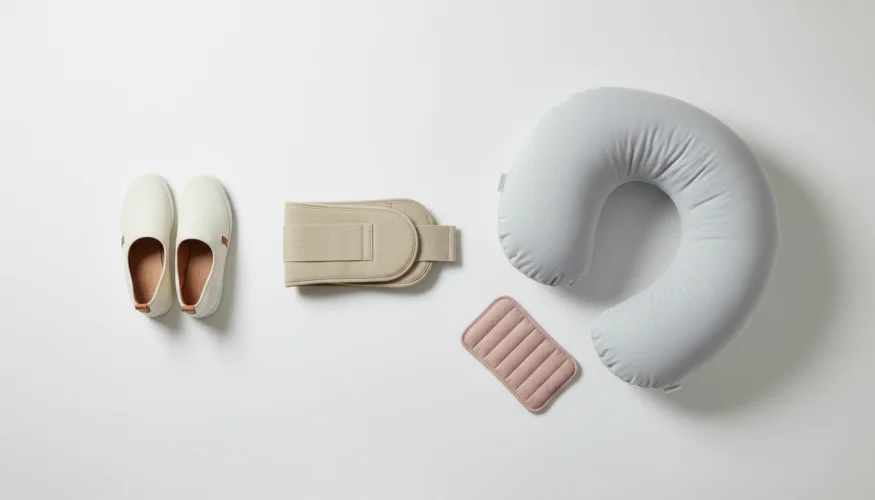
A pelvic belt or special pregnancy support belt is a simple but effective aid. These belts are worn over the area of the symphysis or over the entire pelvis and provide the joints with external stabilisation, temporarily replacing the missing support for the loosened ligaments. Correct fitting of the belt is crucial – if you are unsure how to use it, consult a physiotherapist or midwife.
In everyday movement, it helps to follow a few simple rules. When walking, it is advisable to shorten your stride and move more slowly – longer steps increase pressure on the symphysis. When getting into a car, it is better to sit sideways on the seat first and then bring both legs together inside. When turning over in bed, it is better to turn with knees together, as if the legs formed a single unit. These small adjustments to movement habits can significantly reduce the daily strain on the pelvic joints.
Heat in the form of a warm bath or a heat pad applied to the lower back or buttocks area can bring temporary relief from muscle tension. Conversely, prolonged standing in one place or, on the other hand, complete rest without movement tends to be counterproductive – movement in the right amount and executed correctly is more beneficial for the pelvic joints than complete rest.
Choice of footwear also plays a significant role. Heels of any height are unsuitable in late pregnancy, as they further shift the centre of gravity and increase pressure on the pelvic area. Flat shoes with good arch support and shock absorption are ideal – quality ergonomic footwear can be a real asset during this period. As with other areas of a healthy lifestyle, investing in the right products pays off in the form of greater comfort and less pain.
As physiotherapist and pelvic health expert Gráinne Donnelly says: "Pelvic pain in pregnancy is not something you just have to endure. It is a signal from the body that deserves attention and proper care." These words perfectly capture the attitude that should accompany every woman at the end of pregnancy – not resignation, but active interest in one's own body.
For women seeking a comprehensive approach to self-care in pregnancy, it may also be useful to focus on sleep quality, nutrition, and overall recovery. The right mattress or pregnancy pillow that supports the belly and knees can significantly improve night-time rest and thus the body's ability to cope with daily demands. A C-shaped or U-shaped pregnancy pillow is among the aids that many women with pelvic problems cannot praise highly enough.
It is also important to note that pelvic pain in pregnancy does not affect the course of labour or the health of the baby. Most women notice a significant improvement or complete disappearance of symptoms in the first weeks after birth, as relaxin levels decrease and the joints gradually return to their original stability. Nevertheless, it is advisable to continue with physiotherapy after birth and to pay attention to pelvic floor rehabilitation, as birth itself places a great strain on the pelvic area.
The final weeks of pregnancy are demanding – that is no secret. But pelvic pain when walking does not have to be an inevitable companion of every day. With the help of appropriately chosen physiotherapy, suitable aids, and small adjustments to everyday movement habits, this period can be managed considerably more comfortably – leaving energy for what truly matters: preparing for the arrival of a new life.