

Dopamine detox shows why the brain loves rewards that come immediately and effortlessly

In recent years, dopamine has become almost a pop culture term. It's discussed in connection with social media, productivity, and addictions, with phrases like dopamine overload, dopamine trap, or "fast dopamine" entering everyday language. But what exactly is dopamine, why is the brain so responsive to it, and where does a useful reward system turn into a subtle problem? And more importantly: is there something we can do about it without having to retreat to the mountains without a phone and pretend the modern world doesn't exist?
When someone mentions a “dopamine detox,” it sounds a bit like a fad. In reality, it's not about some magical "cleansing" of the brain. It's more about returning to balance: slowing down and taking a break from fast dopamine so that subtler sources of joy can be heard again—and so that one stops feeling like they constantly have to catch up, scroll, shop, or switch tasks.
Try our natural products


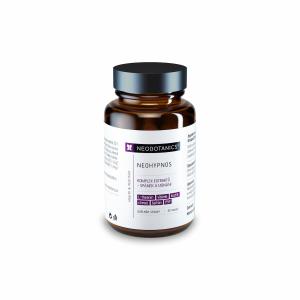
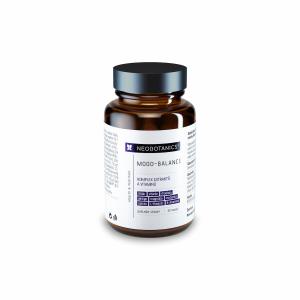
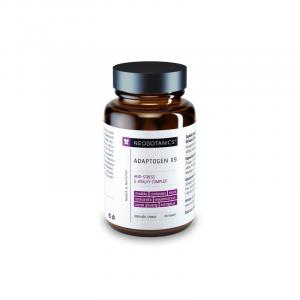

What Dopamine Is and Its Pitfalls
Dopamine is a neurotransmitter—a substance used by the brain to transmit signals. In media shorthand, it's often called the "happiness hormone," but that's inaccurate. Dopamine is more related to motivation, reward anticipation, learning, and what the brain deems important. Historically, it’s a system that protected us: when a person found food, water, or safety, the brain remembered it as "repeat this." Similarly, dopamine supports curiosity and the ability to learn—without it, building skills, discipline, or long-term interests would be difficult.
The problem arises when the brain is repeatedly fed with "rewards" that are quick, easy, and available at the click of a button. Social media, short videos, notifications, endless feeds, online shopping, gambling, porn, and even constant task-switching—all of this can create the feeling of "just a little reward." But the brain learns very quickly: it starts seeking what provides immediate impulse and slowly loses its sense for rewards that require time. This is one of the main pitfalls of dopamine in a modern environment: the dopamine system isn't "bad," it's just not built for a world with endless temptations.
When discussing dopamine overload, it generally refers to a state where a person is exposed to such a large number of stimuli for a long time that their attention span breaks down, internal unrest grows, and at the same time, the ability to enjoy ordinary things decreases. It's a paradox: there are many stimuli but little satisfaction. A person can easily slip into the mode of "just one more video," "just one more email," "just one more episode." And when they finally turn off, irritation or emptiness sets in.
A good foundation for broader context can be found in overviews of dopamine and its role in the brain on Encyclopaedia Britannica or a popularized explanation by Cleveland Clinic (both institutions are a solid start, although reality is always more complex than one article). It's important to stick to a simple idea: dopamine is not the enemy, but a compass. And when the compass is off, one might run, but often in the wrong direction.
“What we focus on grows.”
This sentence appears in various forms in psychology and mindfulness approaches. In the context of dopamine, it makes surprisingly practical sense: the brain strengthens circuits that we use most often. So if a day is composed of small "dopamine micro-rewards," it makes sense that the brain will ask for them more frequently.
The Dopamine Trap and Dopamine Overload in Practice: Why It's So Hard to "Just Turn Off"
The "dopamine trap" sounds dramatic, but it often looks quite ordinary. In the morning, a person reaches for their phone "just to check the time," then checks messages, the weather, and suddenly it's half an hour later. At work, it continues with quick task-switching, notifications pop up, and during lunch, a short video auto-plays into another. In the evening, fatigue spills over into mindless scrolling—and sleep is postponed "just ten more minutes." But those ten minutes repeat. And repeat.
In real life, it might look like this: in a household with children, it's common for a parent to feel they never stop. When peace finally arrives, the "reward" is the phone. But instead of resting, another dose of stimuli arrives. The parent may be on the couch, but the brain keeps running. The next day they wake up more tired, so they indulge in more coffee and more quick distractions. A cycle is created where fast dopamine acts as relief but long-term drains energy and interest in things that used to work: reading, walks, quiet cooking, conversation.
Dopamine overload often comes with a problem with "boredom." Boredom is not a mistake—it's a space where the brain processes stimuli, connects information, and restores attention capacity. When boredom is erased, so is the natural pause. And without a pause, fatigue, irritability, and sometimes the feeling that life is strangely flat accumulate.
Another tricky moment comes into play: the dopamine system is sensitive to expectation. It's not just about the reward itself, but the possibility that "something interesting might come." That’s why infinite scrolling works so well: the brain is always waiting for the next "something." And when it doesn’t come, frustration sets in—and more scroll. This mechanism can resemble addictive behavior, even if a person "isn't taking anything hard."
For insight into how addictive mechanisms work, it can be useful to look at resources focused on behavioral addictions, such as the materials from the National Institute on Drug Abuse (though primarily focused on drugs, the principles of reward and learning have overlaps). It's not about self-diagnosing but understanding that you can't lecture the brain with morality. It needs an environment and habits that lead it elsewhere.
Dopamine Detox: How to Escape the Dopamine Trap and Slow Down
"Dopamine detox" is sometimes presented as a radical challenge: no phone, no music, no good food, no conversations—just nothing. Such an extreme often ends with two days of suffering and a third day catching up. It's much more practical to understand dopamine detox as a temporary reduction of quick rewards and a return to activities that bring joy more slowly but steadily. The goal is not to "have no dopamine," because without dopamine, motivation and joy wouldn't work. The goal is to reduce dopamine noise and reset sensitivity to everyday life.
The basic question is: where is attention and energy escaping? Sometimes it's not just the phone. It can also be constant overeating sweets, evening alcohol "to unwind," or compulsive shopping that temporarily lifts the mood but then brings guilt. Dopamine overload is often a combination of several small habits.
And how to escape sustainably? A simple principle helps: don’t ban the whole world, but change the pace and availability.
Practical Steps That Make Sense Even in a Busy Week
- Slow down in the morning: the first half hour without social media and news. The phone can stay in another room or at least out of reach from the bed. The morning brain is sensitive, and what it consumes often sets the tone for the day.
- Set “windows” for fast dopamine: instead of scrolling throughout the day, have two short times (e.g., 15 minutes) for it. When the brain knows "it will be," it calms down more easily.
- Replace stimuli, not just reduce: walking, light exercise, cooking, cleaning with music, crafts, reading a few pages. Both body and brain need alternatives, or they’ll revert to the old ways.
- Calm the evening: the last hour before sleep without endless feeds. A warm shower, dim lights, a paper book, and a short stretch can help. Sleep is often the biggest “reset” that is underestimated.
- Design the environment: turn off unnecessary notifications, log out of apps, move social media off the main screen. It's not weakness—it's design.
One of the biggest myths says that one must rely on willpower. But willpower is a limited resource. It’s more effective to create conditions where desirable behavior is easier than the undesirable one. When a bowl of fruit is on the table and sweets are hidden high in the cupboard, decision-making looks different. Similarly, when the phone is out of the bedroom overnight, the morning dopamine loop breaks almost by itself.
Special attention should also be paid to what rest looks like. Many people feel they’re resting when they “do nothing” on the phone. But that often isn’t rest, rather more work for the brain. True slowing down is sometimes surprisingly ordinary: looking out the window, watering plants, stretching, making tea. Does it sound banal? That’s the point. When the brain is used to fireworks, an ordinary spark seems weak. But a spark can be felt again when the fireworks are turned off for a while.
Small things that fit into a more sustainable lifestyle can also contribute to dopamine "calming." For example, returning to slower household rituals: cooking with simple ingredients, using gentle cleaning products that don't turn home scents into a chemical funfair, or gradually simplifying the wardrobe towards sustainable pieces that combine well. Not because an eco-friendly household is a "dopamine cure," but because it supports a rhythm in which things are done more consciously and with less mental noise.
And what if the question arises: is it really necessary to deal with this when “everyone is doing it”? Maybe that’s exactly why. Dopamine overload is to some extent a civilization phenomenon. It doesn’t mean one should cut off from technology, but that it’s good to stop being just a passive recipient. Ideally, technology returns to its place: as a tool, not as the environment where most free time is spent.
When the dopamine system calms down, often one unexpected effect appears: some things start to be enjoyable again, even if they aren’t "fast." Reading stops being a two-page struggle, a walk isn’t a waste of time, and a conversation without looking at the phone comes back into fashion—at least at home. And that’s perhaps the most practical definition of how to escape the dopamine trap: not to win over oneself but to return to a life not composed only of micro-rewards.
In this sense, dopamine detox is not a one-time action but a gentle reset. It’s enough to start with one place where you can slow down and take a break from fast dopamine—perhaps in the morning, in the evening, or during a meal. And then watch what happens. Often it turns out that calm isn’t emptiness but space where you can breathe normally again.