
The marinade for chicken drumsticks with honey works great when you want a quick and fragrant dinner
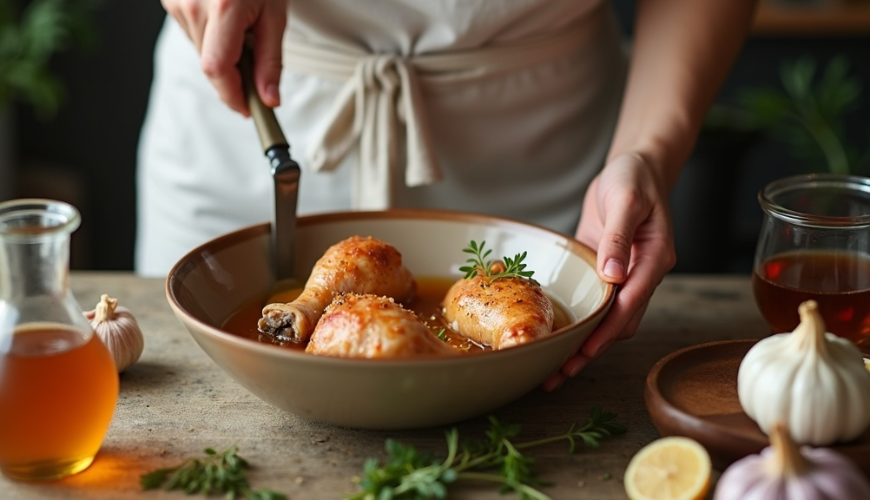
Crispy skin, juicy meat, and an aroma that draws in even those who "just happened to be passing by." Chicken drumsticks in the oven are one of those dishes that seem ordinary but can actually be surprisingly festive—just with the right seasoning and properly set timing. And that's where the marinade for chicken drumsticks comes in: a simple step that determines whether the meat will just be cooked or truly unforgettable.
You might wonder if marinating is even necessary since drumsticks themselves aren't dry. But marinade is more than just "wet seasoning." It's a way to infuse flavor into the meat, enhance the crispiness of the skin, and make your job easier—when everything's prepped in advance, all you have to do is pop the tray into the oven. Plus, who could resist the sweet, salty, and slightly spicy combination that honey marinade masters so well?
Why a Marinade for Chicken Drumsticks is Worth It (and What Honey Does)
A good marinade works on several levels simultaneously. Salt and aromatic components (garlic, herbs, spices) enhance the flavor of the meat, while fat or oil helps carry the aroma and prevents the surface from drying out. An acidic component (lemon, yogurt, vinegar) can slightly tenderize the meat, but with chicken drumsticks, it shouldn't be overdone—too much acid and too long marinating can create a "floury" texture on the surface. And then there's honey: it caramelizes beautifully during baking, adds color, and creates an enticing glaze.
A honey marinade for chicken drumsticks is excellent for oven baking because honey quickly takes on color in dry heat. However, it's important to monitor the temperature and time—if the oven is too hot from the start, the sugar in the honey might start to burn before the meat is cooked through. It's not rocket science, just a bit of kitchen tactics: start wisely and add heat at the end.
And one more thing often underestimated in households: when the marinade contains a sweetener, it's better to roast the drumsticks on a rack or baking paper with some space so they don't "stew" in their own juices. Crispy skin needs the circulation of hot air. Those with a convection oven have an advantage, but a conventional oven will do the job too if the drumsticks are turned once during baking.
For trustworthy recommendations on safe meat temperatures, it's worth sticking to verified sources. For example, the U.S. Department of Agriculture states that poultry is safe to eat once it reaches an internal temperature of 74 °C in the thickest part of the meat (without touching the bone): https://www.fsis.usda.gov/food-safety/safe-food-handling-and-preparation/food-safety-basics/safe-temperature-chart. While Czech kitchens often go by "feel," a meat thermometer can turn ordinary baking into certainty.
"The best recipe is the one that can be repeated even on a Wednesday evening when there's no energy for experiments."
And that's exactly the point: for the outcome to consistently succeed, the drumsticks remain juicy and have a nicely roasted surface.
Honey Marinade: A Recipe That Works Without Complications
When you hear recipe for honey marinade, many people imagine something sticky and overly sweet. In reality, you just need to balance honey with salt, acidity, and a touch of spice. The result isn't "dessert-like" but pleasantly rounded, with a slightly smoky and garlicky aftertaste.
Honey Marinade for Chicken Drumsticks – A Simple Recipe
For approximately 8 drumsticks (depending on size), this works well:
- 2–3 tablespoons of honey (liquid is more practical, but pasty works too)
- 2 tablespoons of quality soy sauce or tamari (adds saltiness and umami)
- 1–2 tablespoons of olive oil or another vegetable oil
- 2–3 cloves of garlic (crushed or finely chopped)
- 1 tablespoon of lemon juice or apple cider vinegar
- 1 teaspoon of sweet paprika (for color and mildness)
- 1/2 teaspoon of ground pepper
- Salt only as needed (soy sauce is usually salty)
- Optionally, a pinch of chili or ginger if you want the marinade to "pop"
Mix everything into a smooth mixture. It's good to pat the drumsticks dry with a paper towel beforehand so that the marinade adheres better and the skin crisps more easily later. Then mix the meat with the marinade in a bowl or sealable bag and let it rest.
How long to marinate? Ideally, at least 2–4 hours, but overnight in the fridge is fine too. If you're in a hurry, you'll get flavor even after 30–60 minutes, just not as intense. And if marinated overnight, it's worth letting the drumsticks sit at room temperature for 15 minutes before baking for more even cooking.
A common question: can the marinade be used as a sauce? If it has been in contact with raw chicken, it should always be briefly boiled to be safe. Practically, it's simpler to make a small portion of the marinade separately (without contact with the meat) and brush it on the drumsticks at the end.
Chicken Drumsticks in the Oven: How Long to Bake for Juicy and Crispy Results
The most searched question about this dish is surprisingly simple: how long to bake chicken drumsticks? The answer depends on the size, whether the drumsticks are from the fridge or already "thawed," and the type of oven. Nonetheless, there's a reliable range that works in most households.
For standard chicken drumsticks, baking at 200 °C usually takes around 35–45 minutes. If baking at 180 °C, the time shifts to approximately 45–55 minutes. And when the marinade contains honey, remember that the surface will color sooner—so color alone isn't a signal that it's done. What counts is cooking through to the bone.
Practical Baking Procedure in the Oven
Drumsticks are best baked on a tray lined with baking paper or on a rack over the tray to let the fat drip off. Preheat the oven, arrange the drumsticks with gaps, and bake so that the heat reaches all sides.
A proven method that suits honey marinade looks like this:
- Bake for 25–30 minutes at 190 °C (top/bottom heat) or 180 °C (convection).
- Turn the drumsticks and possibly brush with a bit of reserved marinade.
- Finish baking for another 15–20 minutes.
- In the last 3–5 minutes, you can switch to grilling (or increase the temperature) to give the skin a crispy finish—but monitor closely, as honey can darken quickly.
Overall, chicken drumsticks in the oven usually take 40–50 minutes, depending on size. If the drumsticks are really meaty, 55 minutes isn't uncommon. The best check is a poke into the thickest part: the juice should be clear, not pink. An even surer method is a thermometer—74 °C is the safety threshold, but for drumsticks, aiming for 78–82 °C is common because dark meat on the thigh stays juicy even at higher temperatures and "releases" better at the bone.
And what about crispy skin? A few small details help: pat the drumsticks dry before baking, don't overcrowd the tray, turn them once during baking, and don't let them "swim" in the juice the whole time. If you want to go a step further, you can lightly dust the drumsticks with sweet paprika and a pinch of salt before baking—it creates a thin layer that browns nicely.
A Real-Life Example: A Dinner That Saved the Day
In practice, drumsticks often prove to be the ideal "rescue" recipe when the day unexpectedly drags on. A typical scenario: the family comes home late, there's chicken drumsticks in the fridge, honey, garlic, and soy sauce in the pantry. The marinade is ready in five minutes, the meat is mixed in a bowl, and while the oven preheats, you can slice vegetables for a salad or prepare roasted potatoes on another tray. The aroma spreads through the apartment before the table is even set, and suddenly it doesn't feel like a "last resort," but like a planned dinner. That's what makes this recipe so pleasant: it's simple, but the result feels like more time was spent on it.
Common Mistakes That Extend Baking Time (or Dry Out the Meat)
When it comes to how long to bake chicken drumsticks, what to avoid also plays a role. Sometimes drumsticks take longer to bake simply because the oven isn't preheated or the tray is overcrowded, causing the meat to steam rather than roast. Other times, they are pulled out too soon because they are dark on top from the honey, but not cooked through at the bone. It also helps not to poke the meat repeatedly—the juice then escapes unnecessarily. One control poke at the end is enough.
If you want even crispier skin, consider a short drying in the oven without basting. Basting the drumsticks with water or broth is tempting, but often leads to soft skin. If juicy meat is the goal, the marinade and fat from the drumsticks will do most of the work themselves.
And since Ferwer focuses on healthier and more sustainable choices, it's worth mentioning that the quality of the meat makes a big difference. Chicken from a better farm generally has a firmer texture and more pronounced flavor, so it doesn't need an extreme amount of salt or "covering" spices. Often, less is enough for the result to feel complete.
Finally, there's just one small thing left that will decide the mood at the table: let the drumsticks rest for 5–10 minutes after baking. The juices settle in the meat and won't all pour out on the plate at the first cut. Then just serve—with roasted root vegetables, tray-baked potatoes, or a simple cabbage and apple salad. Want dinner to be quick, but still "something"? This is how it tastes.
Next time you open the fridge and a pack of drumsticks peeks out, it doesn't have to be just a plan to "throw something in the oven." With a well-balanced honey marinade, it can easily turn into a meal that fills the home with aroma and reminds you that even ordinary ingredients can be a small festive gesture.