
# When a Home Wastewater Treatment Plant is Truly Worth It
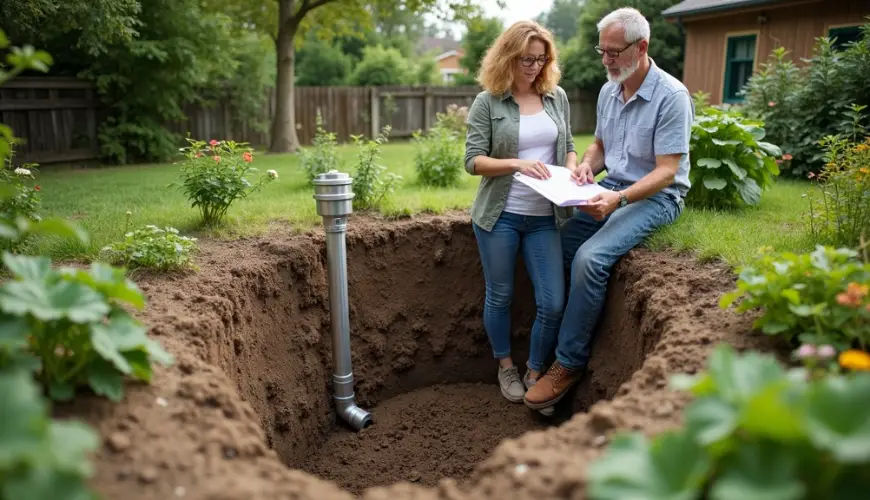
Every year, thousands of Czech households grapple with the question of how to handle wastewater. For those living in cities connected to the public sewer system, it is a more or less carefree topic. However, for owners of cottages, family homes on the outskirts of villages, or newly constructed properties in areas without a sewage network, this seemingly trivial matter can become a key decision affecting everyday life, the family budget, and the impact on nature. And it is precisely in such situations that people are increasingly talking about home wastewater treatment plants.
This is not a new concept. Biological wastewater treatment plants operate on principles that have been tested by decades of practice. What is changing, however, is the accessibility of the technology, its efficiency, and the growing awareness among people that the way a household handles wastewater has a direct impact on the quality of soil, groundwater, and local waterways. Nature forgives nothing – and what goes into the ground will sooner or later come back.
Try our natural products





How does a home treatment plant actually work?
To assess whether a treatment plant makes sense for a particular household, it is first useful to understand what such a plant actually does. Unlike a conventional septic tank, which merely captures wastewater and allows it to naturally settle, a biological home treatment plant actively cleans wastewater using microorganisms. These break down the organic matter contained in sewage, resulting in water that is clean enough at the outlet to be discharged directly into a watercourse under certain conditions, or used to water the garden.
The entire process takes place in a special tank, which is typically buried in the ground. Wastewater flows in from the household, passes through biological treatment, and then flows out through a filtration system. Modern home treatment plants are designed to require minimal operation – most of them work fully automatically and require only occasional inspection and sludge removal, generally once every one or two years. The detailed technical parameters and legislative framework for wastewater management in the Czech Republic are governed by Act No. 254/2001 Coll., the Water Act, which sets out, among other things, the obligations of property owners in areas without a sewer network.
It is also important to mention that the output quality of treated water from a home treatment plant must meet strict standards set by government regulation. Manufacturers therefore state the so-called treatment level, which expresses what percentage of pollutants is removed from the water. Quality treatment plants achieve efficiency of over 95%, a figure comparable to the results of large municipal treatment plants.
An interesting real-life example is provided by the Novák family from the Vysočina region, who built a family home in a small village without a sewer system. Initially, they considered a conventional septic tank, but after consulting with an expert, they decided on a home biological treatment plant. Today, three years after installation, they use the treated water to irrigate their garden and arrange a service inspection once a year. Their experience shows that investing in a treatment plant does not necessarily pay off immediately in financial terms, but it brings peace of mind and the assurance that the household operates in compliance with both the law and nature.
For whom does a wastewater treatment plant actually make sense?
This is where we get to the heart of the matter. Not every household needs a treatment plant or will benefit from one. However, there are groups of property owners for whom this investment is not only logical but often essential.
The most common candidate is a property owner in a village or area without a connection to the public sewer network. According to data from the Czech Statistical Office, approximately 15–20% of the population in the Czech Republic still lives in areas where public sewerage is absent or only planned. For these households, the choice is clear: either a septic tank or a treatment plant. And while a septic tank merely collects wastewater and needs to be emptied regularly (with the associated costs), a treatment plant actively cleans the water and significantly reduces the frequency and cost of service interventions.
The second group consists of owners of older septic tanks whose condition no longer meets current legislative requirements. Czech legislation has tightened in recent years, and many old concrete septic tanks do not meet the standards for groundwater protection. Their owners face a choice: repair or replace the old septic tank, or switch to a more modern solution in the form of a home treatment plant. Switching to a treatment plant tends to be more advantageous in the long term, as it eliminates the need for regular emptying and significantly reduces the risk of contaminating the surrounding soil and groundwater.
The third group consists of environmentally conscious property owners who want to minimise their impact on the environment. As environmental activist and author of books on sustainable living Klára Samková says: "The way we handle water at home is one of the most direct ways we can influence the health of the landscape around us." A home treatment plant not only enables responsible handling of wastewater, but in combination with other elements of a sustainable household – such as rainwater tanks or grey water recycling systems – creates a truly comprehensive approach to water management within a single property.
A treatment plant also makes sense for owners of recreational properties – chalets and cottages – where connection to the sewer system is not possible and where use is seasonal. Modern home treatment plants are designed to handle intermittent operation, where the household is not occupied continuously. The biological processes in the treatment plant do slow down during extended periods of inactivity, but they recover relatively quickly once operation resumes. For cottage owners who spend weekends and holidays at their property, a treatment plant therefore represents a convenient and lawful alternative to overflowing septic tanks.
Who, on the other hand, does a treatment plant not make much sense for? Clearly, for those who live in an apartment building or a family home connected to the public sewer network. In such a case, wastewater management is entirely the responsibility of the sewer operator, and the sewerage charge the household pays is the fee for this service. Installing a private treatment plant would not only be an unnecessary investment but also a technically complicated undertaking.
What to consider before making the investment?
The decision to purchase a home wastewater treatment plant is not a matter of one afternoon. It is an investment of tens of thousands of crowns that will affect how the household functions for many years to come. It is therefore worth devoting sufficient time and attention to preparation.
The first step should be to find out about local conditions and legislative requirements. Each municipality may have specific conditions for wastewater management, so it is advisable to consult the intention with the local building authority or the water management authority. The choice of a specific type of treatment plant depends on the number of people in the household, the geological composition of the land, the distance from watercourses, and other factors.
A key parameter is the so-called capacity of the treatment plant, which is expressed in PE – population equivalents. For a typical family of four, a treatment plant with a capacity of 4–6 PE is sufficient, but if occasional visitors or family expansion are anticipated, it is worth choosing a somewhat larger capacity. An undersized treatment plant cannot clean the water sufficiently, which can lead to problems with authorities and neighbours alike.
It is equally important to consider how the treated water will be discharged. There are essentially three options:
- Infiltration into the soil – suitable where the geological composition of the land permits
- Discharge into a watercourse – requires a permit from the water management authority and compliance with stricter purity standards
- Use for garden irrigation – economically advantageous, but hygiene rules must be observed
Another factor is servicing and the availability of spare parts. A home treatment plant is a technological device that requires regular maintenance. It is therefore sensible to choose a manufacturer or supplier who offers service contracts and has good references from existing customers. Reviews on independent platforms and recommendations from neighbours or acquaintances who already operate a treatment plant are invaluable in this regard.
The purchase price of a home treatment plant, depending on capacity, technology, and installation method, ranges from approximately 40,000 to 120,000 Czech crowns including installation. To this must be added the annual operating costs for electricity (treatment plants with forced aeration consume approximately 50–150 kWh per year) and service inspections. Compared to regular emptying of an overflowing tank – which in some areas can cost 10,000–15,000 crowns per year – the investment in a treatment plant can pay for itself relatively quickly. Moreover, in recent years both the state and European funds have supported the construction of household treatment plants through grant programmes, so it is worth keeping an eye on current calls for applications on the website of the State Environmental Fund.
A home wastewater treatment plant is not for everyone. But for those who live beyond the reach of the public sewer network, have an old and inadequate septic tank, or simply want to live more sustainably and in harmony with nature, it represents one of the most meaningful decisions they can make for their property. Clean water is not a given – and the way we treat it at home is reflected throughout the entire ecosystem around us.