

The plank is a simple exercise that strengthens the core when done correctly.
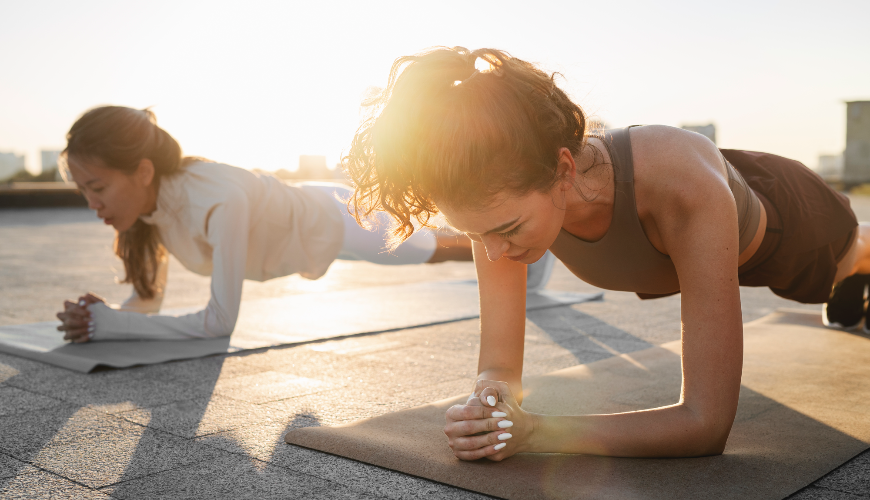
Plank, or the "plank" exercise, is one of those simple movements that appear inconspicuous but can surprise even seasoned athletes. It doesn't require any equipment, fits into a morning routine or a break between work calls, and is often touted as one of the most practical exercises for the core. However, its apparent simplicity can lead to mistakes: arched back, overloaded neck, held breath, or overly ambitious endurance. Then, instead of being a useful tool, it becomes a source of pain.
When you mention a plank, most people envision a static position on the forearms. In reality, it's more of a "quality test" than a competition for minutes. A well-executed plank is short, focused, and technically clean. A poorly executed plank can be long but doesn't offer much benefit to the body. And since the goal is healthy, functional movement, it's worth understanding what a plank is, what it's good for, who it's suitable for, how to do it correctly, how often to incorporate it, and what to watch out for.
Try our natural products
What is a plank and why has it become such a phenomenon
A plank is an isometric exercise – the body holds one position, and the muscles work without visible movement. In practice, this means it primarily strengthens the core: abdominal muscles, deeper stabilizing muscles around the spine, glutes, and the shoulder blade area. But it's not just about "abs for the beach." The plank teaches the body to keep the spine stable when under pressure and gravity – precisely what is useful in everyday life: carrying bags, lifting a child, sitting for long periods, or even running.
It's worth remembering a simple idea that physiotherapists often repeat: "It's not just about being strong in the gym but being stable in everyday movement." The plank is excellent in this regard because it connects multiple muscle groups at once and teaches them to work together.
If you want to place the plank in a broader context and understand why core stability is so important, a comprehensive resource on physical activity and health from the World Health Organization (WHO) can be helpful, reminding us of the crucial role regular physical activity plays in preventing musculoskeletal problems and lifestyle diseases. While the plank itself isn't a miracle, as part of a routine, it can achieve surprisingly much.
What is the plank good for and for whom is it suitable (and when to ease up)
The plank is most often recommended as an exercise for a "firm belly," but its benefits are more practical and broader. When performed correctly, it supports:
Spine and pelvis stability, which can help relieve overloaded lower back (especially if the issues are due to weak stabilization, not acute injury).
Posture, because it also engages the shoulder, scapula, and chest areas – parts that are often stiff from prolonged sitting.
More efficient movement in sports, whether it's running, swimming, yoga, or strength training. A stable core helps transfer force between the upper and lower body.
Body awareness, because in the plank, it quickly becomes clear where the body "escapes" – whether the hips drop, the shoulders are overloaded, or the breath is held.
For whom is the plank suitable? For most people, yes – but with one important caveat: it must match current fitness and health status. The plank can be excellently scaled from very easy variations to challenging versions, but there's no need to start "full throttle."
Caution is advised, especially for people with:
- Acute back pain or shooting pain down the leg,
- Wrist or shoulder issues (with palm variations),
- Significant diastasis (abdominal muscle separation) post-pregnancy,
- Untreated high blood pressure (due to breath holding and pressure).
This doesn't mean the plank is forbidden. It's just sensible to choose a lighter variation, shorter intervals, or consult a physiotherapist if there's a specific diagnosis in the background.
For a real-life example: in offices, "micro-breaks" for stretching are becoming common. One HR manager at a medium-sized company introduced a twice-daily two-minute block where the team stands, briefly releases the hips, and does 2–3 short planks for 20 seconds each. It wasn't about performance but about regularity. After a few weeks, people noticed less neck and shoulder pain – and, importantly, they found it easier to sit up straight at their computers during the day. That's the power of the plank: it's not a heroic feat, but a small habit.
How to perform a plank correctly: technique, breathing, and common mistakes
The most common plank is on the forearms. It's a good start because it puts less strain on the wrists. The key is to set the body so that the right muscles work – without overloading the lower back and neck.
Basic setup (forearm plank)
- Forearms are on the ground, elbows approximately under the shoulders. Hands can be relaxed on the ground or in a light "fist" position, depending on comfort.
- Legs are extended, with support on the toes. Initially, feet can be slightly apart for more stability.
- The body forms one long line from the crown of the head to the heels. It's not about a rigid "board," but firm, yet flexible stability.
- The pelvis isn't too high or too low. The most common mistake is a drop in the lower back, which overloads the lower back.
- Shoulder blades are active: shoulders don't "sink" to the ears. The neck is long, gaze directed at the ground a little ahead of the hands.
A key trick that helps most people: imagine the ribs gently "drawing in" towards the pelvis and the stomach tightening slightly, as if expecting a light punch to the belly. It's not about pulling the stomach in to the maximum, but about a solid core. At the same time, activate the glutes, as they help keep the pelvis in a neutral position.
Breathing: often underestimated
In the plank, it's easy to hold your breath. But this increases pressure and unnecessarily worsens the feeling of "suffocation." It's better to breathe calmly through the nose, possibly combining inhaling through the nose and exhaling through the mouth. A good guideline is: if smooth breathing can't be maintained, the plank is too long or too difficult.
Common mistakes to watch out for during the plank
- Arched lower back and "hanging" stomach – the body then doesn't work in a safe line, and the lower back takes unnecessary strain.
- Buttocks raised too high – looks like an inverted "V," the stomach gets a break, and the effect is reduced.
- Shoulders by the ears and dip between shoulder blades – overstrains the neck and shoulders, often causing tension in the trapezius muscles.
- Head pushed forward – strains the neck, as if trying to "look forward."
- Too long endurance – technique falls apart, and a good exercise becomes a struggle for survival.
In the plank, quality beats quantity. It's much more beneficial to do three short, clean intervals than one long one, where the last minute is spent in pain and with a drop in the lower back.
A practical checklist: quick check before starting
- Elbows under shoulders, neck long
- Ribs "closed", stomach firm, but breathing flows
- Glutes active, pelvis neutral
- Body in one line, without a dip in the lower back
- End in time: stop when the technique starts to break down
Variations for beginners and advanced
If the classic plank is too challenging, you can start more gently:
- Plank on knees (knees on the ground, rest of the body in line),
- Plank with support on a bench or table (body at an angle, less strain),
- Shorter intervals (e.g., 10–20 seconds) and more repetitions.
Conversely, if the basic plank is easy and stable, you can add:
- Plank on palms (higher demands on shoulders and stability),
- Side plank (great for oblique abdominal muscles and pelvic stability),
- Plank with weight shifting or lifting one leg (but only when the foundation is really solid).
The key is to increase difficulty gradually. With the plank, the body often improves quickly, but tendons, shoulders, and lower back need their time.
How often to do the plank and how to know it makes sense
The question "how often to do the plank" invites a simple answer like "every day." But frequency only makes sense if it's sustainable and done correctly. For most people, a reasonable base is 3–5 times a week, even in short blocks. You don't need to exercise for long – even 2–5 minutes of total plank time, divided into intervals, is enough.
A practical example that's often realistic:
- 3 sets of 20–40 seconds (depending on technique), 30–60 seconds rest,
- or 6 sets of 15–20 seconds, if the goal is to "teach the body the position" without breaking down.
If the plank is part of a broader workout, often less is enough. But if you're looking for a simple routine for days when time is tight, the plank is a good choice – especially in combination with walking and basic hip stretches.
What are good signs that the plank is working?
- The position is more stable and calmer, without trembling in the lower back,
- Breathing is smoother,
- The neck and shoulders are less strained,
- It's easier to maintain an upright sitting position and not "slouch" in the chair during the day.
And what signals that it's time to ease up or adjust the technique?
- Pain in the lower back (not just abdominal fatigue),
- Tingling, shooting, or sharp pain,
- Pressure and pain in the shoulders, worsening,
- Feeling the need to hold the breath.
It's good to remember that the plank isn't the only thing. For a healthy musculoskeletal system, it's worth combining stability with mobility and natural movement. In this regard, "ordinary walking" is an excellent "foundation of everything," supported by recommendations for the general population, such as in physical activity guidelines from the Centers for Disease Control and Prevention (CDC). The plank can be the cherry on top, but the cake is made of everyday movement.
There's also often a debate about whether it's better to hold the plank for one, two, or five minutes. The truth is that for general fitness, holding the plank technically clean for 30–60 seconds is usually more than enough. If endurance is the goal, the time can be extended, but it still holds that quality comes first, then length. Sometimes it's even more effective to move on to a more challenging variation (like the side plank) than to endlessly extend the basic position.
Ultimately, what's appealing about the plank is that it easily fits into a more sustainable lifestyle: no machines, no consumption, no complicated planning. All you need is a bit of space on the ground and the will to do something small but regular for your body. And it's that regularity, not perfection, that tends to pay off the most over time – with a firmer core, better posture, and the feeling that your back isn't always on the front line of every challenging day.