

# Why Breathing During Exercise Is More Important Than Technique
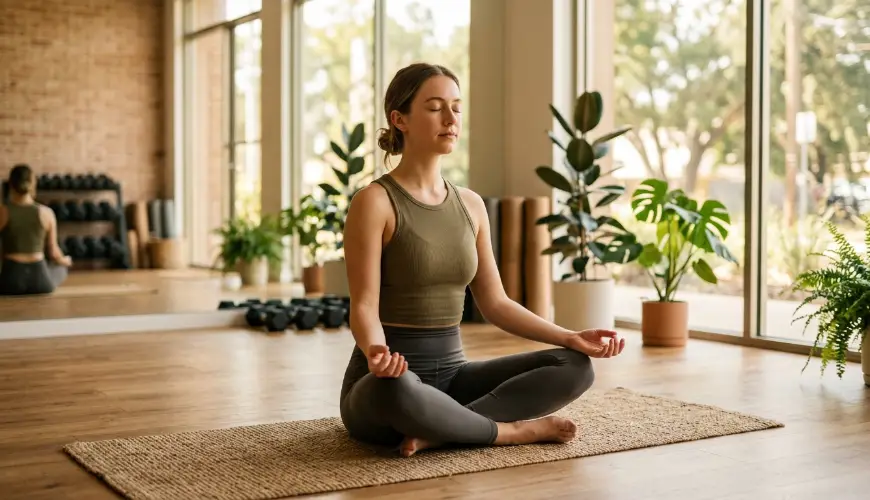
Anyone who has ever visited a gym or attended a yoga class has heard instructions about proper movement technique. How to hold your back, how to bend your knees, how to engage your core. Technique is undoubtedly important – it protects against injury and ensures that exercise actually works. But there is one factor that tends to be overlooked, and which may have an even more fundamental impact on performance, recovery, and the overall experience of movement. That factor is breathing.
This may sound surprising. After all, we breathe automatically throughout our lives, without thinking – so why should it suddenly be something that needs to be learned? Yet during physical exertion, automatic breathing can very easily be disrupted. People hold their breath during demanding moments, breathe shallowly into their chest, or are completely unaware that their breathing pattern is sabotaging their performance. And this applies regardless of how perfectly they otherwise master their movement technique.
Try our natural products





Breathing as the Foundation of Performance and Safety
To understand why this matters so much, we need to pause for a moment on physiology. Muscles need oxygen during exercise – everyone knows that. Fewer people realise, however, that the way we breathe directly affects how much oxygen actually reaches the working muscles. Shallow chest breathing activates only the upper portion of the lungs and delivers significantly less oxygen to the bloodstream than deep diaphragmatic breathing, which engages the entire respiratory apparatus. The result of shallow breathing is faster fatigue, poorer coordination, and a feeling that exercise is harder than it should be.
But there is another, less obvious aspect. Proper breathing directly affects the stability of the entire body. The diaphragm – the primary breathing muscle – is part of what is known as the deep spinal stabilisation system. When we breathe correctly and the diaphragm works as it should, intra-abdominal pressure automatically increases, protecting the spine under load. In other words: a good breathing pattern is a natural form of back protection, particularly during strength training, where the spine is placed under considerable stress. No belt or brace can fully replicate this effect.
Holding the breath during heavy exertion or strain is very common among exercisers. It is known as the Valsalva manoeuvre, and in its extreme form – where it is deliberately used by experienced strength athletes during maximal attempts – it may have its place. For the average exerciser, however, it poses a risk: it sharply raises blood pressure and places strain on the cardiovascular system. Neurologists and sports physicians therefore repeatedly warn that holding your breath during exercise is not a neutral habit, but a potential health risk – particularly for people with hypertension or heart conditions.
Interestingly, research shows a direct link between breathing patterns and mental state. Rapid, shallow breathing activates the sympathetic nervous system – the stress response. Conversely, slow, deep breathing stimulates the parasympathetic system and induces calm. This has practical implications during exercise: an athlete who breathes correctly is mentally calmer, concentrates better, and more easily gets through demanding phases of training. It is no coincidence that experienced athletes appear so composed during performance – their breath is part of that composure.
The renowned coach and physiotherapist Gray Cook, whose approaches to movement diagnostics are respected worldwide, expressed this very aptly: "Breathing is the first movement pattern. If it is dysfunctional, it will affect everything else."
How to Breathe Correctly – and Why the Type of Exercise Matters
Theory is one thing, practice another. So how should one breathe correctly during exercise? The answer is not entirely straightforward, because the optimal breathing pattern differs depending on the type of movement – breathing during strength training differs from breathing during running, and differs again during yoga or Pilates.
During strength training, the basic rule that every experienced trainer knows applies: exhale on exertion, inhale on release. Specifically, this means that during a squat, you exhale as you stand up – that is, during the most demanding phase of the movement. During a bench press, you exhale as you push the bar upward. This rule is not merely a convention – it has a solid physiological basis. Exhalation helps stabilise the trunk, reduces blood pressure, and coordinates muscle engagement. Beginners very often violate this rule, because in demanding moments they instinctively hold their breath. However, simply paying conscious attention to this aspect means it becomes automatic relatively quickly.
During aerobic exercise such as running, cycling, or swimming, the situation is somewhat different. Here the primary concern is not the timing of inhalation and exhalation within a movement cycle, but rather the overall depth and rhythm of breathing. A very common mistake is breathing only into the chest, which tends to occur at higher intensities. The correct alternative is diaphragmatic breathing – the abdomen expands on inhalation, not the chest. Try it now: place your hand on your belly and breathe in so that your hand rises. If your shoulders rise instead, you are breathing into your chest.
For runners, there is also the technique of rhythmic breathing, to which American coach Budd Coates devoted extensive attention in his book Running on Air. Coates recommends breathing in asymmetric rhythms – for example, inhaling for three steps and exhaling for two – so that the foot on which you land during exhalation alternates. The reason is that exhalation is the moment when the trunk is least stable, and if you always land on the same foot during exhalation, the risk of overload and injury increases.
Yoga and Pilates have their own well-developed philosophy regarding breathing. In yoga, the breath – pranayama – is considered the foundation of the entire practice, not a by-product of movement. Conscious breathing synchronised with movement deepens stretching, improves concentration, and helps release tension that would otherwise prevent full range of motion. Many people who come to yoga from the gym discover that their greatest obstacle is not muscle stiffness, but the inability to work consciously with the breath.
Consider Martina, a forty-three-year-old accountant who began exercising after years of sedentary work. She attended functional training classes three times a week, had decent technique, but was exhausted after every session and suffered from back pain. Her trainer noticed that she held her breath during every demanding exercise and breathed rapidly and shallowly after each set. All it took was focusing on diaphragmatic breathing and proper exhalation timing – and within three weeks, Martina reported that training no longer exhausted her as much and her back pain had significantly diminished. The movement technique had not changed. Only the breath had changed.
How to Start Working Consciously with Your Breath
The good news is that improving breathing habits requires no special equipment or hours of training. All it takes is awareness and regular practice. The foundation is learning diaphragmatic breathing outside of exercise – at rest, lying down, or sitting. According to the Mayo Clinic, just ten minutes of conscious diaphragmatic breathing per day is sufficient to improve breathing capacity and reduce the body's stress response.
The next step is to carry this awareness into movement. Start with simple exercises and pay attention to when and how you breathe. A loud exhale can help – many people are inhibited from breathing naturally during exercise by a kind of social self-consciousness, fearing they will be too audible. A loud exhale, however, not only helps release excess tension but also physically aids trunk stabilisation. It is no coincidence that tennis players emit a characteristic sound when striking the ball – it is not showmanship, but a functional part of the movement.
If you train with weights, try consciously reminding yourself before each set of the rule: exhale on exertion. At first this will require concentration, but after a few weeks it will become automatic. Similarly, when running or cycling, notice whether you are breathing into your belly or your chest – and if into your chest, consciously change it.
For those who want to go deeper, there are specialised approaches such as the Wim Hof method or the Buteyko technique, which work with breath as a tool for improving performance, resilience, and health. These methods have a scientific foundation and a growing community of supporters among both athletes and ordinary people. This is not alternative medicine in a dubious sense – it is systematic work with the physiology of breathing, backed by research.
It is worth noting that the quality of breathing also improves indirectly – through regular aerobic exercise, which strengthens the respiratory muscles and increases vital lung capacity, or through conscious attention to posture, since slouching and rounded back mechanically restrict diaphragm movement. Someone who sits at a computer all day and then goes to exercise carries with them a breathing restriction caused by their body position. Stretching the chest and strengthening the core muscles is therefore not merely a matter of aesthetics or strength – it is also the foundation for free, deep breathing.
Movement technique remains important and should certainly not be neglected. But if a person must choose what to focus on first during exercise, the answer is surprisingly simple: the breath. Correct breathing not only improves performance – it improves the entire relationship with movement, reduces the risk of injury, and makes exercise more enjoyable. And those are the reasons why people stick with movement over the long term.