

Mobility that improves movement and posture can be practiced in just a few minutes a day.
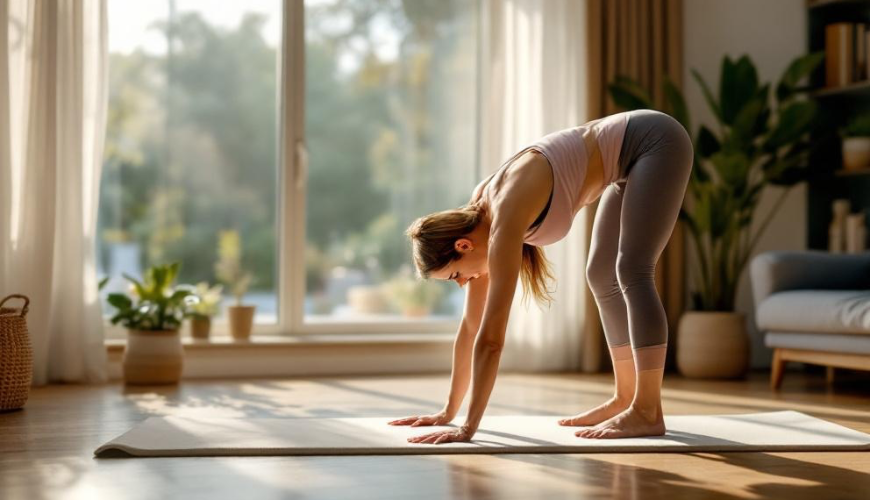
Mobility has been a buzzword in recent years: in gyms, physical therapy, and everyday conversations among people who just want to "not be stiff" after working at a computer. Despite this, there's still confusion surrounding it. Some people think of it as stretching, others as acrobatic flexibility, and still others as rehabilitation after an injury. In reality, mobility is the body's ability to move a joint through its required range so that the movement is smooth, controlled, and without unnecessary strain on surrounding tissues. This is precisely where it intersects with what's often missing in a regular daily routine: short, regular care for joints and movement patterns that we use repeatedly.
It may sound trivial, but the importance of mobility exercises often becomes apparent when something starts to grind. Suddenly, the shoulder won't allow the arm to go overhead, hips ache during a long walk, or the back "locks up" when tying shoelaces. Mobility isn't a luxury for athletes—it's a fundamental prerequisite for the body to move as it was designed to. This has a direct impact on health, comfort in everyday activities, and how safely and effectively we can perform other exercises.
Try our natural products


Why Mobility Determines How the Body Feels and Moves
When people hear "exercise mobility," many think of long static stretches at the end of a workout. But that's just a small part. Mobility is more about how the joint can move in real life—when walking up stairs, lifting groceries, turning your head in the car, or squatting down to a child on the floor. If the range is restricted somewhere, the body starts compensating elsewhere. This is where a chain of small compensations begins, which over time can turn into pain, overload, or "unexplained" fatigue.
It's good to remember the difference between mobility and flexibility. Flexibility is more passive—how far the tissue can be stretched. Mobility is active—how far the joint can move and whether the body can maintain control in that range. Hence, stability naturally complements mobility: the joint should move but not "slide" sideways where it shouldn't.
This combination has a significant impact on how movement will look both in and out of the gym. Proper execution of other exercises is often limited by mobility. A typical example: someone wants to do a squat, but the ankles won't let the knees move forward, the hips are stiff, and the chest can't straighten up. The body compensates: heels lift, knees fall inward, back rounds. It's not that the squat is a "bad exercise"—the body just can't get into it in a quality form. Similarly, with overhead press: if the thoracic spine and shoulders lack mobility, the lower back starts arching excessively, and the neck juts forward. The result is overload that appears as a "weak core," but the root may be in a stiff thorax and scapulae.
From a health perspective, mobility is also beneficial as it supports the natural "maintenance" of tissues. Gentle, regular movement in the joints aids blood circulation and nourishment of cartilage and tendons, releases tension, and improves body awareness. It's not a miraculous prevention of everything, but a sensible habit that often makes the difference between "barely managing" and "feeling good in one's body."
For trustworthy context, it's worth reading general recommendations on movement and prevention of musculoskeletal issues, such as those from the World Health Organization (WHO), which has long emphasized regular physical activity as a key health factor.
How to Exercise Mobility: Briefly, Often, and Wisely
The most common question is: how to exercise mobility so that it makes sense and doesn't become another "mandatory routine" that disappears from the calendar after a week? The answer is surprisingly simple: less time, more regularity. Mobility works excellently as a small daily hygiene—similar to brushing teeth. You don't wait for a problem but maintain it continuously.
In practice, it works well to link mobility with a specific time of day. In the morning after waking up, at noon after sitting, in the evening after returning home, or as a short preparation before a workout. Daily routine is stronger than motivation here. When mobility is "only when in the mood," it usually doesn't fit in. When it's three minutes after making tea, suddenly it works.
The execution style is also important. With mobility, it's often beneficial to think in these principles:
- Go into a comfortable range, not into pain. A stretch is okay, sharp pain is a stop sign.
- Breathe and don't hold your breath, as tension in breathing often means tension in the body.
- Slow and controlled, without jerking. Mobility isn't a contest for the greatest range but for quality.
- Alternate sides and notice differences. Asymmetry is common but deserves attention.
- A short daily dose is usually more effective than a long dose once a week.
And then there's another topic often underestimated in mobility: joint and body stability. It might seem that mobility means "release and stretch," but the body also needs support. Typically in shoulders, hips, and ankles. If the joint moves but the surrounding muscles can't stabilize it in range, overload can occur. Therefore, it's good to choose mobility exercises that simultaneously teach control—gentle pressure, active return, conscious core engagement.
A real-life example? Imagine someone who sits eight hours a day at a computer. In the evening, they go for a short run, but after a few kilometers, the front of the hips starts pulling, and the knees hurt. They try stretching the thighs more, but relief is short-lived. By adding a few minutes of work on ankle and hip mobility and simple stabilizing glute engagement to their routine, suddenly the stride calms, knees aren't as "overloaded," and running feels lighter. Not because mobility is magic, but because movement distributes correctly, instead of one place bearing all the strain.
Sometimes it's enough to remember a simple phrase often repeated in the world of movement: "The body always finds a way—the question is whether it's the right way." Mobility and stability help make that way safer and more sustainable in the long term.
A Few Simple Mobility Exercises for a Few Minutes a Day
Below is a short routine that can really be done in just a few minutes a day. It's designed to target areas commonly stiffened by modern lifestyles: the thoracic spine, hips, and ankles, plus gentle core stability. It can be done in the morning, after work, or before a workout. If chronic pain or post-injury conditions exist, it's wise to consult a physical therapist regarding suitability.
1) Thoracic Spine Mobility in Kneeling (Rotation)
Kneel on all fours, one hand on the nape. Exhale as the elbow slowly rotates toward the ceiling, inhale back down. The pelvis stays as still as possible, the movement comes from the chest.
This movement helps where it often "freezes" during sitting: the thoracic spine. When the chest doesn't move, it overloads the neck and lower back, and the shoulders often lose their natural path.
Repetitions: 5–8 slow repetitions on each side.
2) Ankle at the Wall (Knee Shift Forward)
Stand facing the wall, keeping the foot flat on the ground. Slowly shift the knee forward toward the wall without lifting the heel. If the knee touches the wall easily, move the foot slightly back.
Ankles are often overlooked but have a big impact on squats, uphill walking, and running. When the ankle doesn't allow, the knee and hip often "pay for it" with inappropriate compensation.
Repetitions: 8–10 slow weight shifts on each leg.
3) Hips: "90/90" Tilts (Gentle Control)
Sit on the ground, legs bent to the sides (both front and back leg at roughly right angles). Slowly tilt the knees to the other side. Use hands on the ground if needed.
This is one of the most pleasant ways to mobilize the hips without aggressive stretching. It also teaches awareness of where the hip moves freely and where stiffness exists.
Repetitions: 6–10 slow tilts on each side.
4) Backward Lunge with Reach (Hip + Thoracic Mobility)
From a lunge (back knee can be on the ground), gently tuck the pelvis to stretch the front of the hip of the back leg. Then reach the hand on the back leg's side up and slightly to the side as if "opening" the body.
This exercise is useful for people who sit a lot and feel tightness in the groin and hip flexors. Adding the reach also engages the chest and improves coordination.
Repetitions: 3–5 slow breaths and reaches on each side.
5) "Dead Bug" (Core Stability for Better Mobility)
Lie on your back, arms up, legs at right angles. Alternately lower the opposite arm and leg toward the ground so that the lower back remains naturally supported and the abdomen is active.
It might surprise you that stability is part of a mobility routine. But mobility without stability can be like a loose hinge without screws. The "Dead Bug" teaches the body to maintain the core so that hip and shoulder movements occur without lower back arching.
Repetitions: 6–10 slow repetitions on each side.
This set can be completed in 6–10 minutes, depending on how slowly you exercise and how much you focus on breathing. Breathing is often a quiet helper: if breathing starts to speed up or hold during an exercise, the body might be indicating that the range is too large or control is lacking.
Over the weeks, it's worth noticing subtle signals: is it easier to straighten up in the morning? Has the pulling in the shoulders disappeared when putting on a coat? Is the squat more stable without heel lifting? Mobility often improves subtly—not in leaps but gradually, as the body learns that the new range is safe and usable.
And what if there's even less time? Then it makes sense to choose a "micro routine": select two exercises that target the biggest weakness (like ankles and chest) and do them every day for two minutes. Even this can be the difference between a body that falls apart after sitting and one that quickly returns to comfort.
Mobility is simply not another obligation for perfect people. It's a practical skill that helps make movement more pleasant, safer, and more natural, and therefore encourages people to move more frequently and with less resistance. When a few minutes fit into the day to remind the joints of their work, the body usually reciprocates in the best possible way: with less stiffness, better coordination, and the feeling that it can function normally. And isn't that exactly what sustainable health is all about?