

Care for your feet and soles that will save you pain when you're on your feet all day
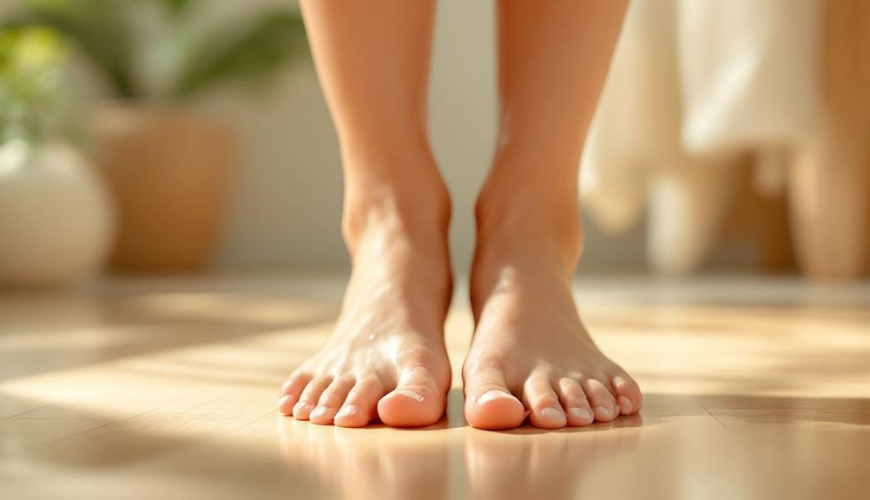
Feet handle more in a day than most people realize. They bear the body's weight, absorb impact, maintain stability, and still adapt to shoes that often give them minimal room. Yet foot and feet care easily ends up somewhere behind skincare or haircare in everyday routines. Perhaps because feet "aren't visible." But a few days in tight shoes, a long shift on your feet, or a trip in the heat is all it takes — and they'll remind you with a blister, cracked skin, or fatigue that shoots all the way up to the calves. And then the question arises: why care for your feet regularly when they seemingly "hold up somehow" even without it?
The answer is surprisingly practical. A regular, simple routine can prevent minor issues that otherwise turn into unpleasant problems: hardened skin starts cracking, nails become ingrown, small abrasions combined with moisture get irritated, and tired feet spill over into overall fatigue. Healthy feet also mean a more confident step, better stability, and often less back pain — because the body is an interconnected system. When the "foundation" gets stuck, the rest pays for it.
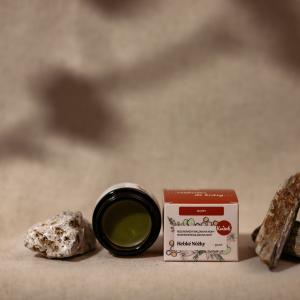
Try our natural products


Why Care for Your Feet Regularly (and Not Just When They Hurt)
The foot is a small biomechanical marvel: according to commonly cited anatomical data, it contains roughly 26 bones, 33 joints, and over 100 ligaments and muscles. It's not just a "sole" but a sophisticated structure that stretches, flexes, and transfers forces with every step. When it's not cared for over the long term, the effects show up not just cosmetically but functionally — stiffness, sensitivity, calluses, and changes in gait are more common than you might think.
Simple comfort matters too. Hardened skin isn't inherently "bad" — it's a defensive reaction to pressure and friction. The problem arises when it hardens too much and starts cracking. Dirt can then collect in the cracks, the skin stings, and walking becomes uncomfortable. It's similar with sweat: feet have a high density of sweat glands, so they perspire easily, and enclosed footwear creates an environment where yeasts and fungi thrive. It's no coincidence that, for example, the NHS describes athlete's foot (foot fungus) as a common problem encouraged by moisture and warmth in shoes.
And then there's another dimension that's often overlooked: regular care is also a form of mindfulness. When a person stops once a week and examines their feet and nails, they'll notice a blister early, the beginning of an ingrown nail, a small wound, or a change in nail color. For some people — especially those with diabetes or impaired circulation — such a check can be truly crucial; general recommendations for preventing complications are mentioned by authorities like the CDC. This isn't meant to scare — it's more of a reminder that the body gives signals, and feet are one of the places where they show up surprisingly early.
"Feet are the only pair you can't replace." That sentence sounds like a cliché, but when you wake up one morning with pain on every step, it starts to make sense.
How to Care for Your Feet in a Typical Week: A Simple Routine That Works
The good news is that caring for your feet doesn't have to mean an hour-long at-home pedicure and ten products. What works best is a short but regular routine that combines hygiene, hydration, gentle removal of hardened skin, and sensible nail care. Everything else is a "bonus" to add as needed and according to the season.
It starts with washing. Feet are often washed "in passing" — the shower runs over them, a towel passes by, and that's it. Yet the spaces between the toes are precisely where moisture lingers and where irritation can easily develop. It helps to wash your feet deliberately, gently, and most importantly to dry them really well afterward. If you're prone to fungal infections, it's worth having a separate towel just for your feet, or at least making sure it's always dry and clean.
The next step is hydration, but with a small trick: cream belongs on the soles and heels, even on the top of the foot, but it's better to skip the spaces between the toes, where unnecessary greasiness could trap moisture. In winter and transitional seasons, a richer cream often works well; in summer, a lighter texture that absorbs quickly is preferable. When heels are very dry, applying a thicker layer in the evening and putting on cotton socks helps — in the morning, the skin is noticeably softer. Regular hydration is just as important in foot care as it is for hands: it's not about a one-time rescue but about prevention.
Hardened skin deserves gentleness. Instead of aggressively "scraping it smooth," it's better to work gradually: after a bath or shower, when the skin is softened, use a pumice stone or gentle file and remove only what comes off easily. Excessive filing can paradoxically prompt the skin to defend itself and harden even more. Especially with corns and calluses, it's important to recognize that it's not just about the skin but about pressure — and that pressure is often caused by shoes or the way you walk.
Nails are a chapter of their own. Cutting them straight, not too short, and filing the corners just slightly is a simple rule that can reduce the risk of ingrown nails. When a nail is fraying, a gentle file works better than "tearing it off." And if a nail changes (color, thickness, crumbling), it's worth paying attention — sometimes it's the result of an injury, other times it's a fungal infection that's better addressed early.
A short massage can naturally be added to the routine. It doesn't have to be any professional technique: a few minutes of kneading the arch, heel, and toes can bring relief after a day on your feet. Especially when combined with simple calf stretches, since calves tend to be tight from prolonged sitting and from walking in shoes with higher heels. Relaxed calves often mean less pull on the foot and a more comfortable step.
And how often? In a normal routine, short washing and drying daily is usually enough, hydration as needed (for dry heels, every evening is fine), and gentle filing of hardened skin once a week or once every two weeks. It's not about perfection but about a rhythm that's realistic.
Foot and Feet Care Tips That Make the Biggest Difference
Sometimes a small change is all it takes and your feet "reward" you faster than you'd expect. Foot and feet care tips aren't just about creams and files — they're also about shoes, socks, and small habits throughout the day.
Imagine a typical situation: someone comes home from work in summer, their shoes are sweltering, their feet are swollen, and the first impulse at home is to kick off the shoes and leave it at that. But that's exactly when a small ritual helps. A quick rinse, thorough drying, a thin layer of cream on the heels, and briefly elevating the feet on a pillow. In real life, this might look something like this: after shopping and commuting on public transport, when your feet have been "cooking" all day, just ten minutes on the couch at home with your feet up noticeably reduces that heavy-legs feeling. When repeated several times a week, the difference is surprisingly lasting.
Socks have a big impact. Material that wicks moisture well and a cut that doesn't pinch are underestimated details. For more sensitive skin, seamless or finely stitched varieties that don't chafe are worth considering. And shoes? The ideal footwear isn't one universal pair — but it almost always holds true that feet appreciate enough room for the toes, a stable heel, and breathability. When shoes are rotated regularly, they have time to dry out, reducing the risk of odor and skin problems.
Simple blister prevention also helps: when you know that new shoes or a longer walk might cause rubbing, it's more practical to apply a protective bandage beforehand than to deal with a blister in the evening. For sports or hiking, it pays not to underestimate proper shoe size and socks designed for movement — not for "performance" but because of friction and moisture.
One single list that's easy to keep in mind:
- Wash and, most importantly, thoroughly dry the spaces between the toes, especially after exercise and in summer
- Moisturize heels and soles regularly, but don't apply cream between the toes
- File hardened skin gently and gradually, ideally after a bath
- Cut nails straight and don't trim them too short; just lightly file the corners
- Rotate and air out shoes; choose socks that keep feet as dry as possible
- When feet are tired, elevating them and a short massage of the arch and heel helps
When a problem keeps coming back, it's fair to admit that home care has its limits. Recurring deep cracks, a painful corn, an ingrown nail, or suspected fungal infection are better addressed with a professional — a podiatrist, dermatologist, or general practitioner. It's not a defeat, but rather a time-saver: what gets "overlooked" at home for weeks can be resolved quickly and safely in a clinic or pedicure salon.
And finally, a small thing that sounds almost trivial: feet often suffer simply because they're not given time to "breathe." When possible, it's pleasant to switch to breathable slippers at home, or to walk barefoot for a while on a clean floor or on grass. There's no need to make an ideology out of it, but natural foot movement is something that's missing when you're in rigid shoes all day.
Foot and feet care ultimately isn't another obligation on top of everything else — it's a quiet investment in comfort. When feet are at ease, your step is more confident, your body "fights back" less, and even an ordinary day feels a bit lighter. And anyone who's ever experienced how unpleasantly a cracked heel or a callus on the little toe can hurt knows that a few minutes a week is actually quite a good deal.