

Silent luxury or quiet luxury as a way of life without consumerism
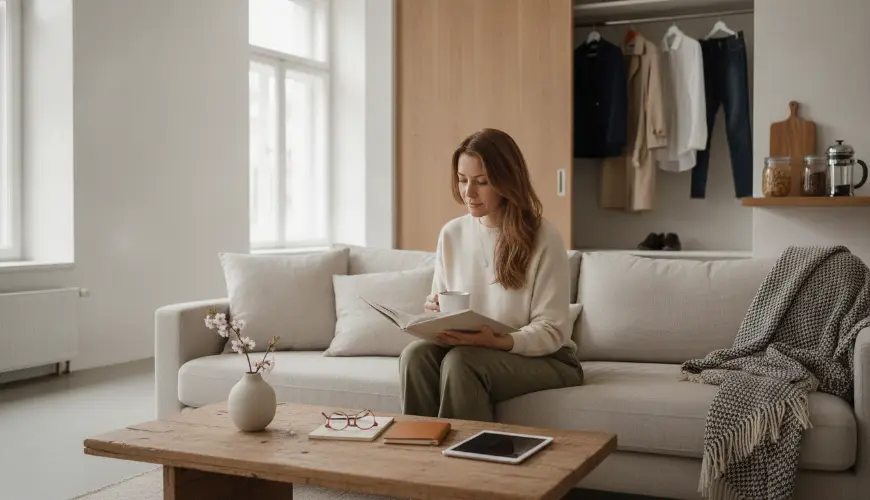
There is a way of life that requires neither ostentation nor self-denial. It is called quiet luxury – and in an era when social media is overflowing with advertisements for the latest trends and sales, it feels almost revolutionary. It is not about having less at all costs, but about having the right things – things that are quality, meaningful and built to last.
The concept of quiet luxury, which could be loosely translated as tichý luxus in Czech, has become one of the most discussed lifestyle topics in recent years. It is not merely a passing fashion trend. It is a reaction to decades of market oversaturation, fast fashion, disposable goods and constant pressure to consume. People are beginning to seek an alternative – and they are finding it in simplicity, quality and conscious choice.
What it truly means to live without unnecessary consumption
Consumption itself is not the problem. Buying things we need and that bring us joy is entirely natural. The problem is unnecessary consumption – impulse purchases, things bought simply because they were on sale, or products that end up in the bin before they have had a chance to serve their purpose. According to data from the European Environment Agency, excessive consumption is among the greatest contributors to environmental burden in Europe. And yet statistics show that more things do not mean more happiness.
Quiet luxury as a life philosophy is built on the opposite principle. Instead of many cheap things, it favours fewer things, but truly good ones. Instead of chasing trends, it builds on timelessness. Instead of ostentatious displays of wealth, it chooses understated elegance. It is an approach that for many decades was the domain of certain social strata, but today it is becoming accessible to anyone who decides to reassess their relationship with consumption.
Interestingly, this approach places no emphasis on price tags. Quiet luxury does not necessarily mean expensive things – it means things that are considered, well-crafted and chosen thoughtfully. The difference between a cheap and an expensive version of the same product is sometimes minimal, sometimes fundamental. The key is learning to distinguish between the two and not being swept away by marketing slogans.
Take an example from everyday life: Jana, a thirty-five-year-old graphic designer from Brno, realised three years ago that her wardrobe was full of clothes she barely wore. She had dozens of pieces from fast fashion chains that lost their shape and colour after two washes. She decided to fundamentally change her approach – she began buying less, but more mindfully. She invested in a few pieces of quality clothing made from sustainable materials, which she combines in various ways. Today she has a smaller wardrobe, but feels better dressed and has saved not only money, but also the time spent deciding what to wear.
Jana's story is not exceptional. More and more people are going through a similar transformation and discovering that less truly can be more.
Quiet luxury in practice: from wardrobe to home
The philosophy of quiet luxury naturally permeates various areas of everyday life. You can start anywhere – with clothing, food, household items or even how you spend your free time.
In the world of fashion, quiet luxury manifests itself in a preference for timeless cuts, neutral colours and quality materials. Instead of ten cheap T-shirts, three good ones are enough – ones that fit well, won't fade and will last for years. Sustainable fashion and quiet luxury go hand in hand in this regard – both philosophies share an emphasis on quality, ethical production and longevity. Brands that produce from organic cotton, recycled fibres or natural materials such as linen and wool offer exactly what this philosophy calls for.
In the home, quiet luxury manifests itself similarly. It is about prioritising things that are functional, aesthetically pleasing and environmentally friendly. Glass containers instead of plastic ones, bamboo brushes instead of disposable ones, natural cleaning products instead of aggressive chemicals. It is not about asceticism – it is about conscious choice that simultaneously reduces the household's ecological footprint. Research shows that transitioning to a more eco-friendly home has a demonstrably positive effect not only on the environment, but also on the subjective sense of wellbeing of its inhabitants.
Eating is another area where quiet luxury applies beautifully. Less food, but of higher quality. Seasonal and local ingredients instead of industrially processed products shipped from the other side of the world. Cooking at home as a ritual and a form of self-care, not as a necessary evil. Slow Sunday breakfasts, coffee prepared with care – these are the small everyday rituals that form the essence of quiet luxury. It is not about spending more, but about experiencing more.
Leisure time in the spirit of quiet luxury looks similar. Less digital noise, more presence. A walk in nature instead of an hour of scrolling on your phone. A book instead of yet another series. Meeting friends over a home-cooked dinner instead of a noisy restaurant. The philosopher and writer Henry David Thoreau expressed it more than a hundred and fifty years ago in words that are more relevant today than ever: "The price of anything is the amount of life you exchange for it."
This quote perfectly captures the heart of the entire philosophy. Every purchase is an exchange – and the question is whether what we receive for our money is worth the time and energy we had to expend to earn it.
The transition to quiet luxury need not be radical or immediate. On the contrary – changes that are too rapid and dramatic tend to be counterproductive. It is more about gradually reassessing habits and decisions. You can start with small steps: next time you want to buy something, wait three days. If after three days you still want the item and know what you will use it for, it is probably a meaningful purchase. If you have forgotten about it, the answer is clear.
Another useful tool is the so-called capsule wardrobe – a concept in which you put together a core set of clothing from quality, mutually combinable pieces. This approach, popularised by fashion stylist Susie Faux back in the 1970s, is today one of the most practical expressions of the less-is-more philosophy. A similar principle can be applied to the home, a book collection or kitchen equipment.
It is important to note that quiet luxury is not synonymous with minimalism in its strictest form. It does not mean living in an empty flat with one plate and two T-shirts. It means living with things you love and actually use – without the excess that burdens both the wallet and the mind. Psychologists are well acquainted with this phenomenon: an excess of things increases cognitive load and contributes to feelings of anxiety and dissatisfaction. Tidying and simplifying one's space, on the other hand, brings a sense of lightness and control.
An interesting perspective on the relationship between consumption and contentment is also offered by the report from the Wellbeing Economy Alliance, which has been tracking over the long term how different models of consumption affect quality of life. The conclusions are consistent: beyond a certain threshold of material security, further consumption ceases to contribute to happiness. What truly increases life satisfaction is relationships, meaningful activity, health and a sense of belonging – things that cannot be bought.
Quiet luxury is therefore not merely an aesthetic trend that will come and go with the next season. It is a deeper shift in values – from ownership to experience, from quantity to quality, from ostentation to authenticity. In an age when social media is full of perfectly styled outfits and haul videos in which influencers unbox dozens of purchased products at once, this approach feels like a quiet revolution.
And perhaps that is precisely why it is so appealing. It is not loud, it does not demand attention and it needs no audience. It is private, personal and deeply satisfying. Quiet luxury without unnecessary consumption is, ultimately, above all about freedom – freedom from market pressure, from comparing oneself to others and from the constant feeling that something is missing. And that is a kind of luxury that anyone who chooses to seek it can afford.