

Childhood obesity and ultra-processed foods go hand in hand
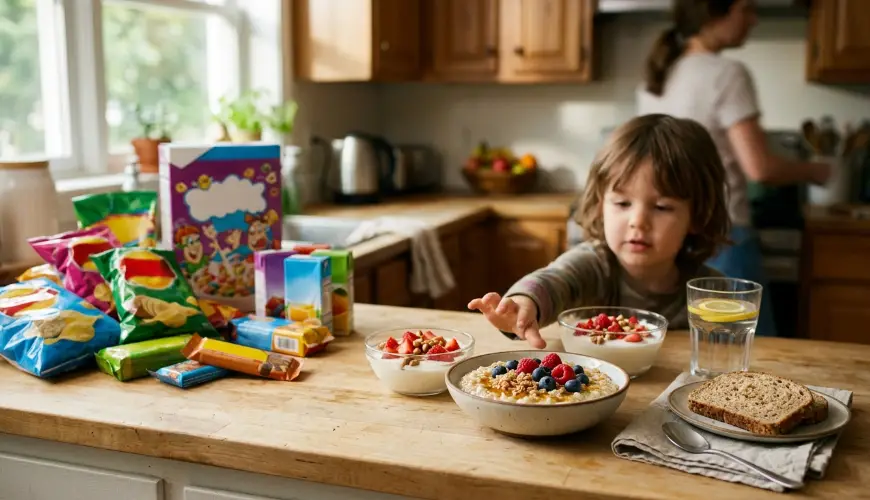
The number of children with overweight or obesity is growing at an alarming rate in the Czech Republic and across Europe. Yet behind this trend lies not just a lack of physical activity or genetic predisposition – an increasing number of experts are pointing the finger at one specific category of food that has become an absolute staple of the modern family diet over the past thirty years. We are talking about so-called ultra-processed foods, the consumption of which among children reaches up to 60% of total daily caloric intake in some countries. The connection between their consumption and childhood obesity is not merely speculation – it is confirmed by extensive studies from around the world.
Before we get into specific examples and solutions, however, it is worth clarifying what the term "ultra-processed foods" actually means. It is not enough to say they are "unhealthy food" – that would be an oversimplification. Scientists at the Brazilian University of São Paulo developed a classification system called NOVA, which divides foods into four groups according to the degree of industrial processing. The highest, fourth group – that is, ultra-processed foods – includes products containing substances not commonly found in a home kitchen: emulsifiers, stabilisers, artificial colourings, flavourings, modified starches, or various types of syrups. They are designed to be extremely palatable, cheap, and long-lasting – and it is precisely this combination that makes them dangerous from the perspective of children's nutrition.
Try our natural products



What children specifically eat and why it is a problem
When people hear the term "ultra-processed food," many parents picture fast food or crisps. The reality, however, is far more subtle. Problematic products are hidden even where we would least expect them. Flavoured yoghurts with fruit flavouring, which look like a healthy snack, can contain more sugar than a scoop of ice cream. Instant soups, cereals with colourful pieces, industrially produced muesli bars, ketchup, mayonnaise, processed cheese, hot dogs, or sugary drinks – all of these are products in the fourth NOVA classification group.
A practical example from a typical Czech family's ordinary day might look like this: in the morning, children have sweetened cereals with milk and wash them down with juice from a carton. For a snack, they get a muesli bar or a sweet yoghurt. Lunch in the school canteen is an exception, but after school comes a snack in the form of crisps or biscuits. For dinner, perhaps a frozen pizza or hot dogs with mustard. None of these meals seems like a disaster on its own – but together they form a diet in which at least four out of five meals belong to the category of ultra-processed foods.
Why is this so serious? These foods tend to disrupt the natural feeling of fullness. They contain combinations of fat, sugar, and salt that literally overwhelm the brain and lead to overeating – a mechanism described by scientists at the American National Institutes of Health (NIH) in a 2019 study. Research participants who ate ultra-processed foods consumed an average of 500 calories more per day than those who ate minimally processed food – even though both groups had free access to food. In children, whose regulatory mechanisms are still maturing, these effects are even more pronounced.
Added to this is the fact that ultra-processed foods are typically low in fibre, vitamins, and minerals, but rich in empty calories. A child eating this way can paradoxically be both obese and malnourished at the same time – a phenomenon experts refer to as "hidden hunger." The body receives energy in excess, but lacks the substances needed for the proper development of the brain, bones, and immune system.
The situation is further complicated by marketing. The food industry targets children with sophisticated precision – colourful packaging, favourite characters, slogans promising energy or adventure. Research by WHO repeatedly warns that advertising for unhealthy foods targeting children directly contributes to their unhealthy eating habits and should be regulated more strictly than is currently the case in most countries.
It is no coincidence that the rise in childhood obesity mirrors the rise in the availability and consumption of ultra-processed foods. According to data from the World Health Organization, approximately one in three school-age children in Europe is overweight or obese. In the Czech Republic, the figures are similar – and the trend is upward.
How to approach dietary change practically and without stress
As British chef and children's healthy eating activist Jamie Oliver once said: "Food is not just fuel. It's information. It tells your body how to function." These words aptly capture why the composition of one's diet matters more than it might seem at first glance. At the same time, radical changes rarely work – especially with children who are accustomed to certain tastes and approach every novelty with suspicion.
Children's nutrition experts agree that the most effective approach is gradual and gentle. There is no need to throw everything out of the fridge overnight and switch to organic food. Far more important is to gradually replace specific products with better alternatives while also involving children in the process of choosing and preparing food. A child who has made their own sandwich or helped cook a soup has a completely different relationship with food than one who receives a ready-made product from the microwave.
Specific steps might look like this:
- Replace sweetened cereals with oat flakes with pieces of fruit and a little honey – preparation takes three minutes and the result is comparably tasty
- Swap industrial muesli bars for a homemade version made from oats, nuts, and dried fruit, which contains no emulsifiers or artificial sweeteners
- Replace flavoured yoghurts with plain yoghurt, to which the child adds fresh fruit or a teaspoon of jam themselves – less sugar, no stabilisers
- Gradually displace sugary drinks and carton juices with water with slices of citrus or diluted homemade lemonade
- Limit frozen ready meals to exceptions and instead cook simple quick dinners – pasta with tomato sauce, eggs with wholegrain bread, or vegetable soup
The key word here is "gradually." Research shows that children's taste preferences are malleable – if a child is given the opportunity to taste a new food repeatedly and in a pleasant context, there is a good chance they will come to like it. A study published in the academic journal Appetite shows that it can take children 10 to 15 exposures to a new food before they begin to accept it positively. Patience is therefore an essential part of the entire process.
The environment in which children consume food also plays an important role. Shared family meals without screens in the background are one of the best-documented factors that reduce the risk of childhood obesity. A child who eats at the table with their parents eats more slowly, perceives the feeling of fullness more naturally, and is less prone to overeating. Conversely, eating in front of the television or a tablet creates conditions in which the brain pays no attention to what and how much the body is consuming.
Food shopping is another area where a family can make a big difference. A simple rule is to shop predominantly around the perimeter of the supermarket – that is where fresh produce, vegetables, fruit, dairy products, and meat tend to be. The centre of the store, with its endless shelves full of packaged products, is where the most ultra-processed foods await us. Reading the ingredients list on packaging can then be a surprisingly illuminating exercise – if the list contains more than five items and most of them sound like a chemistry laboratory, it is almost certainly a fourth-group product.
Parents do not have to go it alone. Many schools in the Czech Republic are participating in healthy eating programmes, school canteens are gradually improving the quality of their meals, and the market is seeing a growing number of products that are minimally processed yet practical for busy families. Online shops focused on a healthy lifestyle, such as Ferwer, offer alternatives to standard supermarket products – from organic foods to environmentally friendly snack options and foods free from unnecessary additives, which can form the basis of a healthier family diet.
Childhood obesity is not merely an aesthetic problem or a matter of personal parental failure. It is a systemic phenomenon rooted in the way the modern food industry operates and in the conditions under which food choices are made. At the same time, it is possible to make better decisions even within this system – and every small change in the family diet counts. Instead of perfection, it is enough to seek progress: a little more vegetables, a little fewer packaged snacks, a few more shared dinners. It is from such small steps that a healthier future is built – not only for children, but for the whole family.