
# How to Get Rid of Ants in an Apartment or House Using Natural Methods and Prevention

Anyone who has ever opened a kitchen cabinet and spotted a line of tiny bodies marching toward a forgotten drop of honey knows how unpleasant that feeling is. Ants in the home are not just an aesthetic problem – they can contaminate food, compromise hygiene, and in some cases even damage building materials. The question "how to get rid of ants in an apartment or house" therefore becomes one of the most frequently searched queries on the Czech internet every spring and summer. The good news is that solutions exist, and they don't necessarily mean a chemical arsenal.
Try our natural products
Why Ants Choose Your Home in Particular
Before one goes into battle, it pays to understand what attracts ants indoors in the first place. Ants are social insects with an extraordinarily developed sense of smell – they can detect even minute traces of sugars, fats, and proteins from a distance of several meters. Once a scout ant finds a food source, it leaves behind a pheromone trail that dozens to hundreds of other workers follow within a few hours. This is precisely why it seems like ants "show up overnight" – in reality, one of them was already there long ago, nobody just noticed it.
The most common species found in Czech households are the pharaoh ant (Monomorium pharaonis) and the black garden ant (Lasius niger). While the black garden ant usually nests outdoors and only enters the house in search of food, the pharaoh ant can build an entire colony in the warm environment of an apartment – right inside the walls, under floors, or behind the kitchen counter. This species tends to be the toughest nut to crack, because when disturbed improperly, its colony can split into several smaller ones, paradoxically multiplying the problem. Experts from the Czech Entomological Society point out that correct species identification is the first and most crucial step toward a successful solution.
But back to the causes. Three basic things draw ants into a household: food, water, and warmth. Crumbs on the floor, unwashed dishes in the sink, an open sugar bowl, overripe fruit on the table, but also moisture around leaking pipes – all of these are irresistible signals for ants. Interestingly, even a seemingly clean kitchen can attract ants if cooking takes place regularly and traces of fats and sugars remain on surfaces that the human eye cannot detect but an ant's sense of smell can.
Hana from Brno, who battled ants in her apartment in a prefab housing block for two years, described her experience like this: "At first I thought it would be enough to clean more. I mopped the floor three times a day, but they kept coming. It wasn't until I discovered they were crawling in from the ventilation shaft from the neighbors that I understood the problem was much bigger." Her story illustrates an important fact – ants in an apartment building are often a problem for the entire building, not just one household. If you're dealing with them in a housing block, it makes sense to reach out to your neighbors and potentially address the situation in a coordinated manner with the building management.
Now that it's clear why the ants came, it's time to look at how to make them leave. There is a whole range of approaches, from simple household tricks and natural repellents to professional pest control. Each has its place and purpose depending on the scale of the problem.
The first and most important step is eliminating food and water sources. It sounds trivial, but consistency in this regard can dramatically improve the situation. All food should be stored in hermetically sealed containers – jars, plastic boxes, or zip-lock bags. Crumbs need to be cleaned up immediately, not "later in the evening." The trash can should have a lid and be taken out daily. Pets shouldn't have a food bowl left out all day. And watch out for seeming trivialities too – a drop of juice on the countertop or a bit of jam on a lid can be reason enough for ants to make repeat visits.
The second step is sealing entry points. Ants get into apartments through gaps around windows, doors, pipes, electrical installations, or ventilation openings. Silicone sealant, acrylic caulk, or special sealing tapes can effectively block most of these entries. It's worth going through the apartment systematically and inspecting every corner, every transition between floor and wall, every spot where pipes enter the apartment. It's a bit like detective work, but the results are worth it.
Natural Methods That Work (and Those That Don't)
In the area of natural repellents, there's a lot of advice circulating, some of which has scientific backing and some of which belongs more to the realm of myths. Among the more effective options is vinegar – a 1:1 solution of vinegar and water used to wipe surfaces where ants walk disrupts pheromone trails and temporarily disorients them. Lemon juice has a similar effect. Both need to be applied repeatedly, as the effect wears off within a few hours.
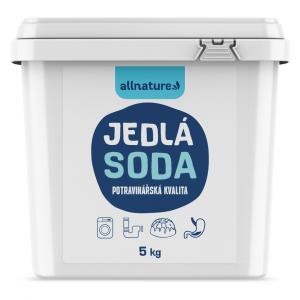
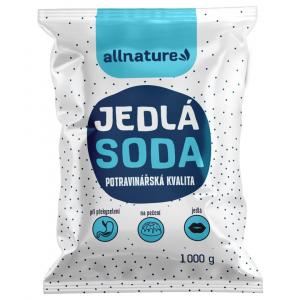
Baking soda with powdered sugar is another frequently recommended trick – the sugar attracts the ants and the baking soda causes them digestive problems after ingestion. However, the effectiveness of this method is limited because it only affects the workers that carry the mixture away, not the queen in the nest. And the queen is the key to the entire colony – as long as she lives and lays eggs, fighting ants is like mopping the floor with the tap running.
Cinnamon, cloves, peppermint, or essential oils are also often recommended. These substances do indeed have a repellent effect – ants dislike them and avoid them. The problem is that they don't eliminate them, they merely redirect them. If you sprinkle cinnamon in one spot, the ants will simply find another route. As a supplementary method, however, they make sense, especially if you want to deter ants from a specific area, such as the kitchen counter or pantry.
An interesting and environmentally friendly method is diatomaceous earth (diatomite) – a fine powder made from diatom fossils that damages the waxy layer on an insect's body and causes it to desiccate. Diatomaceous earth is non-toxic to humans and pets and can be applied into cracks, behind trim, and in other places where ants pass through. It is one of the few natural methods that has a genuinely lethal, not just repellent, effect. It's important to use food-grade diatomaceous earth, not the kind intended for pool filters, which is heat-treated and can be irritating.
As the American entomologist Edward O. Wilson, one of the most prominent ant experts in history, noted: "Ants are so successful because they cooperate. An individual is helpless, but a colony is a superorganism." This is precisely why, when fighting ants, you need to think about the entire colony, not just the individuals you can see.
If natural methods aren't enough and the ants keep coming back, it's time for gel baits with insecticide. These products work on a principle that addresses the problem at its root – workers carry the gel back to the nest, where they feed it to the queen and larvae, resulting in the gradual elimination of the entire colony. Products based on fipronil or imidacloprid are available on the Czech market and, when used correctly, are safe for households with children and pets if applied in inaccessible places. It's important not to use contact sprays at the same time as gel baits – sprays would kill the ants before they could carry the bait back to the nest, rendering the entire principle useless.
With the pharaoh ant, the situation is more complicated. This species, as already mentioned, responds to stress by splitting the colony – so-called budding. If a common insecticidal spray is used against it, the colony fragments and instead of one nest, five emerge. That's why experts strongly recommend professional pest control in the case of pharaoh ants. A certified pest control specialist can correctly identify the species, locate the nest, and choose an appropriate strategy that resolves the problem rather than making it worse.
An important part of the solution is also future prevention. Even after successfully getting rid of ants, it's advisable to follow several principles that minimize the risk of their return. Regular and thorough cleaning, especially in the kitchen, goes without saying. Food in sealed containers, no standing water, sealed gaps, and regular inspection of critical areas – that's the foundation. Some people successfully use natural repellent barriers – a strip of diatomaceous earth or a solution of peppermint essential oil around windows and doors, renewed once every few weeks.
It's worth mentioning that not every ant sighting is a reason to panic. If a few ants appear on the windowsill in spring, it may be a one-time occurrence related to their seasonal activity. It's enough to remove the cause (perhaps a flowering plant that's attracting them) and seal the spot where they entered. The problem arises when ants appear repeatedly, in larger numbers, and in multiple locations – that signals there's a nest nearby and the situation requires a systematic approach.
For those who prefer an ecological approach to the household, fighting ants is an opportunity to think about how our homes function as ecosystems. Instead of aggressive chemicals that burden the environment, excellent results can often be achieved through a combination of preventive measures, natural repellents, and targeted, more environmentally friendly products. This is an approach that is not only more considerate of nature but often more effective in the long term, because it addresses causes, not just symptoms.
Ants are fascinating creatures – many a company would envy their social organization, communication skills, and logistical abilities. But we can admire them in nature, in the forest, in the garden – not in the kitchen cabinet. With a bit of patience, the right information, and a consistent approach, however, it is possible to get rid of them without resorting to heavy chemicals. And if it turns out that the situation exceeds the possibilities of a DIY solution, there's no shame in calling a professional – sometimes that's actually the smartest and most economical thing one can do.