

Learn how to support the lymph with dry brushing
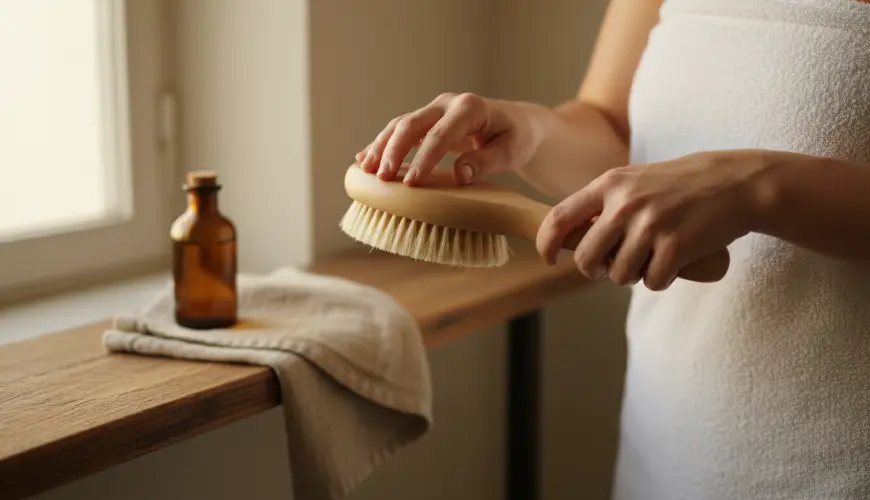
Every morning we wake up feeling like we want to do something good for our body. But between the morning coffee, preparing breakfast, and rushing to work, healthy rituals often fall by the wayside. And yet there is one simple technique that takes just five minutes, costs almost nothing, and can have a surprisingly profound effect on how we feel – dry body brushing. This ancient practice, rooted in Ayurvedic medicine and Japanese bathing traditions, has been making a comeback in recent years, and it's no wonder why.
The lymphatic system is one of the least discussed yet absolutely essential systems in the human body. Unlike the circulatory system, which is driven by the heart as a pump, lymph has no motor of its own. It relies entirely on muscle movement, breathing, and – as it turns out – external stimuli such as mechanical stimulation of the skin. When lymph flows slowly or accumulates somewhere, it manifests as swelling, fatigue, reduced immunity, or a feeling of heavy legs. It is therefore not merely a cosmetic issue, but a genuinely functional problem that affects overall health.
Try our natural products
What exactly is the lymphatic system and why does it matter
The lymphatic system forms a network of vessels, nodes, and organs that together drain excess fluid, waste substances, and pathogens from tissues. This fluid – lymph – travels to the lymph nodes, where immune cells examine it and neutralise any potential threats. The result is a cleaner internal environment in the body and a stronger defence against disease. According to the World Health Organization, a functional lymphatic system is a key component of the body's immune response, and its dysfunction can lead to a wide range of health complications.
The problem with the modern lifestyle is that we spend a large part of the day sitting down. Lymph moves precisely through muscle contractions – every step, every inhale and exhale gently "squeezes" the lymphatic vessels and helps the fluid flow in the right direction. If we sit for hours at a computer or in a car, lymph flow slows down. The result can be a feeling of bloating, swollen ankles, fatigue, or recurring colds. Dry brushing enters here as a simple yet effective tool to help lymph where movement alone is not enough.
Take Martina, a thirty-year-old graphic designer from Brno who works from home. She sits at her monitor all day, gets very little exercise, and in the winter months she is plagued by recurring tonsillitis and a feeling of swollen lymph nodes in her neck. A friend recommended she try dry brushing every morning before showering. After three weeks of regular practice, Martina reports feeling fresher, her skin is softer, and most importantly – since then, no viral illness has knocked her out for a whole week. Of course, this is not scientific proof, but there are thousands of similar experiences.
How to properly support your lymph with dry brushing
The technique of dry brushing is straightforward at its core, but the details matter. The correct direction of the brush strokes is absolutely crucial – we always brush towards the heart, as this mirrors the natural flow of lymph in the body. We start from the feet and work upwards along the legs, then from the palms up the arms towards the shoulders, and finally move on to the torso.
The strokes should be long, smooth, and with gentle pressure – not so strong as to irritate the skin to the point of redness, but sufficiently firm to stimulate it. As a guideline, the skin should be slightly pink and warm to the touch after brushing, not red or sensitive. The entire procedure takes approximately five to ten minutes, and it is sufficient to go over each area three to five times.
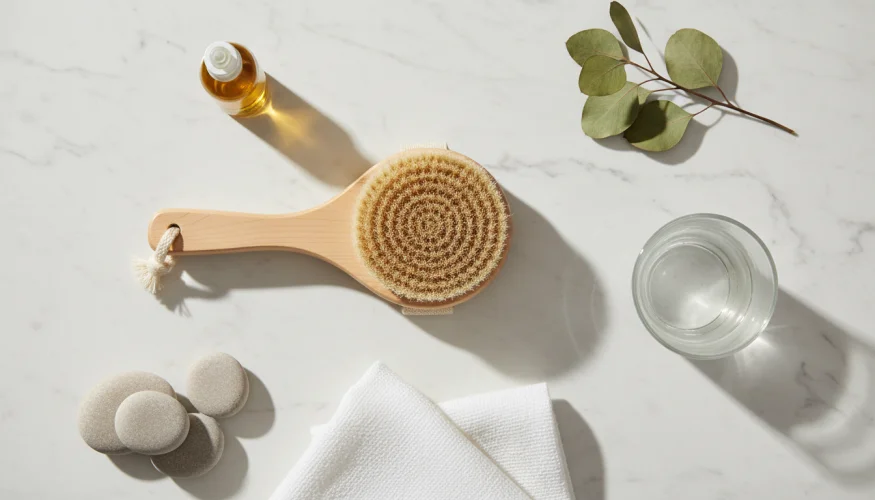
The brush should have natural bristles – ideally from agave, sisal, or boar hair – and medium firmness. A brush that is too soft will not stimulate the lymph sufficiently, while one that is too hard may irritate the skin. Brushing is always performed on dry skin before a shower or bath, never on wet skin. Moisture alters the mechanical properties of the skin and reduces the effectiveness of the procedure.
The specific step-by-step process looks like this:
- Start from the feet and brush towards the knees, then from the knees to the hips
- Move to the buttocks and lower back, directing strokes towards the spine and upwards
- Brush the abdomen in clockwise circular movements (following the movement of the intestines)
- Start the arms from the fingers, brushing over the wrists, forearms, and up to the armpits
- Brush the chest and décolletage towards the heart
- The neck and décolletage area very gently, as the skin here is more sensitive
After completing the brushing, it is ideal to step into the shower and finish with a brief cold stream of water – this contrast further promotes circulation and lymphatic movement. Then apply a quality body oil or moisturising cream to replenish the nourishment the skin needs.
How often should you brush? Ideally every day, but even three times a week produces visible results. The body gets accustomed to the stimulation and over time begins to "ask" for it on its own – much like a morning shower or brushing your teeth. It becomes a routine that naturally becomes part of self-care.
The science behind dry brushing and what to expect from it
It is important to be honest: direct scientific research focused specifically on dry brushing and the lymphatic system is still limited. However, there is a solid scientific basis for the mechanisms behind it. Mechanical stimulation of the skin demonstrably improves local blood circulation, and since lymphatic vessels run just beneath the skin and are closely connected to the capillary system, an effect on lymphatic flow is a logical consequence. Research published in the Journal of Clinical Oncology documents how manual lymphatic drainage – a professional massage working on a similar principle – demonstrably reduces lymphoedema in oncology patients.
Dry brushing is of course not the same as professional lymphatic drainage performed by a physiotherapist. But as an everyday supportive practice for a healthy person, it can play a meaningful role in overall body care. "The lymphatic system is the silent guardian of our health – it works continuously, but it needs our help," as the saying goes in natural medicine circles, and these words capture the essence of the matter better than many technical definitions.
Beyond supporting the lymph, dry brushing also offers other well-documented benefits. Regular mechanical exfoliation of dead skin cells leads to smoother, softer skin and better absorption of active ingredients from creams and oils. Many people report that after a few weeks of regular brushing, the small bumps on their arms – follicular keratosis – disappeared, or the texture of the skin on their thighs improved significantly. This is the effect of exfoliation, working gently but consistently.
Another notable benefit is the energising effect on the nervous system. Morning dry brushing activates the skin's receptors, sends signals to the brain, and kick-starts the body in a similar way to a cold shower – without having to endure an icy shock. For many people, it is a way to wake up naturally and without dependence on caffeine.
It is worth noting that dry brushing is not suitable for everyone without exception. People with eczema, psoriasis, very sensitive or damaged skin should be cautious and ideally consult a dermatologist. Likewise, pregnant women should discuss this practice with their doctor. Brushing should never be performed over inflamed areas, wounds, or severely irritated skin.
Caring for the lymphatic system is not a one-off matter, but rather a combination of everyday decisions – sufficient movement, quality sleep, adequate hydration, and mindful care of the body. Dry brushing fits naturally into this mosaic as one of the simplest and most accessible practices. You do not need expensive equipment or hours of free time. All it takes is five minutes, the right brush, and a little consistency – and your body will repay you with a sense of lightness, energy, and healthier skin.