

# How Generational Patterns Affect Women's Health ## Introduction Generational patterns – behavior
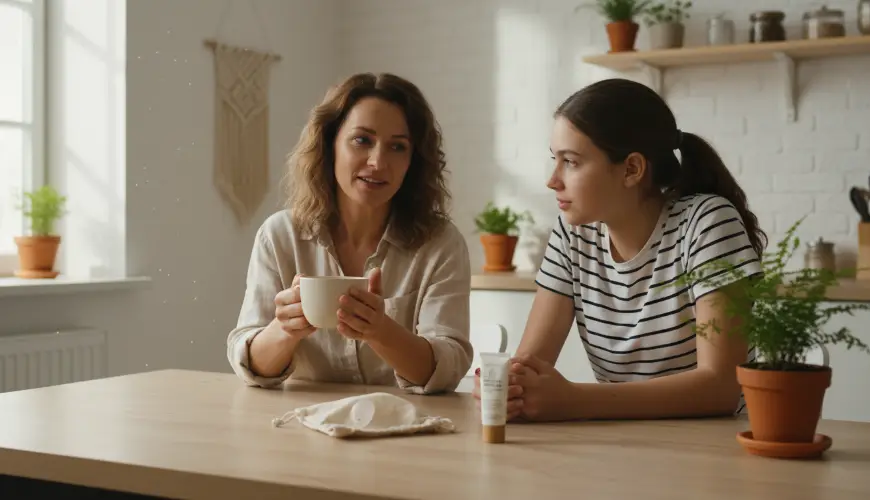
There is one inheritance that is not talked about as openly as eye color or a tendency toward high blood pressure. It is the inheritance of silence – unspoken symptoms, overlooked pain, and the belief passed down through generations that certain things simply belong to a woman's life and need not be addressed. Women's health is inherited from mothers not only biologically, but also culturally, emotionally, and through patterns of behavior we are not even aware of until one day we find ourselves repeating them.
Imagine a thirty-year-old woman who comes to her doctor with painful periods. When asked how long it has been going on, she replies: "My whole life, but I thought it was normal. My mother had it too." This conversation takes place every day in doctors' offices around the world and reflects a deep problem: the generational transmission of silence about women's health is just as powerful as the transmission of genetic information itself.
Try our natural products


What is inherited biologically and what culturally
Science today offers us a fascinating glimpse into how deeply health and illness are intertwined with our family history. From a biological perspective, we inherit mitochondrial DNA from our mothers – genetic material that is passed down exclusively through the maternal line and influences the energy metabolism of every cell in the body. Research shows that a number of gynecological conditions, such as endometriosis, polycystic ovary syndrome, or a tendency toward premature menopause, have a strong genetic component. According to data published in the journal Human Reproduction, daughters of women with endometriosis have up to seven times the risk of developing the condition themselves.
Yet genetics is only part of the story. Equally powerful – perhaps more so – is the cultural and emotional transmission. Girls observe their mothers and learn from them how to relate to their own bodies, how to talk about pain, how to respond to illness. If a mother works through pain without complaint, if she dismisses gynecological problems as "a woman's lot," if she never visits a doctor preventively but only when she truly cannot go on – her daughter stores this pattern deep in her memory as the norm. A mother's silence thus becomes a loud message: your body is not important enough to deserve your attention.
This topic is not new, but only in recent years has it been gaining broader awareness. Psychologist and researcher Resmaa Menakem, in his work on transgenerational trauma, describes how unresolved physical and emotional experiences are passed from generation to generation – and women's health is a particularly sensitive area in this context, having been systematically overlooked by both medicine and society for centuries.
It is also important to say that a mother's silence is not a failure – it is a natural consequence of the world in which she herself grew up. The generations of our grandmothers and mothers lived in a time when menstruation was not spoken of aloud, when pain during intercourse was considered normal, when hormonal fluctuations were dismissed with the phrase "it will pass." They passed on to us what they themselves had received: a guide to surviving, not a guide to caring for oneself.
How to break the generational silence
Change begins with naming. It is said that "what we name loses its power over us" – and in the context of women's health, this is literally true. The more women begin to speak openly about their symptoms, the more their daughters and granddaughters will grow up knowing that pain is not normal, that fatigue has a cause, that regular preventive care is a right, not a luxury.
In practice, this might look like a mother inviting her daughter into a conversation about the menstrual cycle before the girl experiences it herself – not as a biology lecture, but as a natural conversation about what will happen and how to take care of oneself. Or it might look like a middle-aged woman going for regular gynecological check-ups for the first time in her life and telling her daughters about it. A small gesture, a tremendous impact.
The choice of products and everyday habits also plays an important role in this process. Care for women's health does not begin in the doctor's office – it begins every day with the decisions we make for our bodies. The choice of menstrual products, the quality of food, movement, sleep, ways of managing stress – these are all areas where generational patterns manifest and where they can be consciously changed.
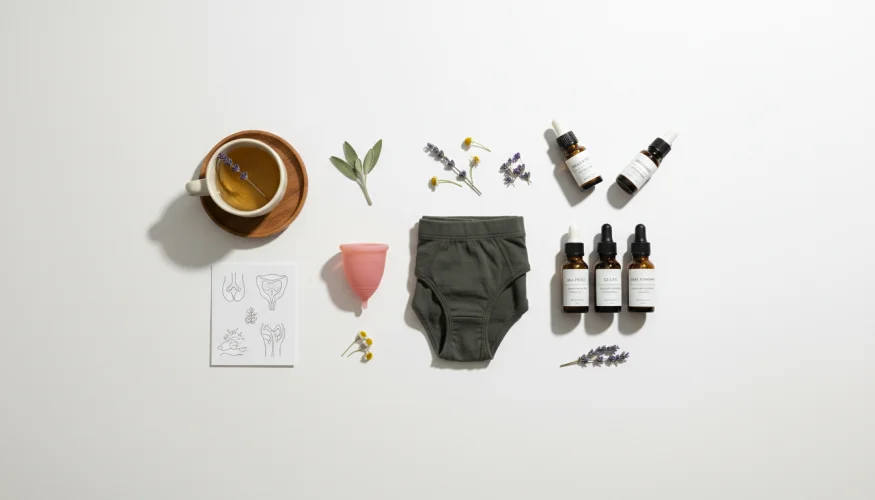
An interesting example is menstrual cups or period underwear, which are becoming increasingly widespread in the Czech Republic. For many women, switching to these alternative products is the first step toward getting to know their own bodies more deeply – toward stopping the perception of menstruation as something unpleasant that needs to be "dealt with" as quickly as possible, and beginning to understand it as a natural cycle worthy of attention. This shift in perception is precisely the kind of change that can be passed on to the next generation.
Equally, choosing cosmetics and hygiene products free of endocrine disruptors – substances that disrupt hormonal balance – is a decision with a direct impact on women's health. The World Health Organization warns that exposure to endocrine disruptors is associated with a range of gynecological conditions, fertility disorders, and an increased risk of certain types of cancer. Yet many women are still unaware of this connection, because their mothers were unaware of it too.
Self-care as an act of courage and love
There is one paradox that runs through women's health across generations: women are generally regarded as the caring sex, as those who look after others – and yet they are precisely the ones who most often neglect care for themselves. This equation is slowly changing, but it persists in many families as an unspoken rule: others first, then me – if there is any time left at all.
Caring for one's own health is not selfishness. It is the condition that makes caring for others possible and sustainable. And it is also one of the most powerful examples a mother can set for her daughter – not through words, but through action. A daughter who sees her mother attending regular medical appointments, consciously choosing what she eats and applies to her skin, allowing herself to rest without guilt, learns that this kind of care is normal and desirable.
In this context, there is growing interest in a holistic approach to health that encompasses not only medical care but also nutrition, movement, mental wellbeing, and conscious choices about everyday consumer products. Online shops focused on healthy living and ecological products have seen a marked increase in interest in recent years, particularly from women who are beginning to ask questions: What am I actually putting into my body? What am I applying to my skin? How do these choices affect my hormones, my energy, my wellbeing?
Switching to natural cosmetics, organic food, or ecological menstrual products is, for many women, simultaneously a transition toward deeper self-confidence and respect for their own bodies. And crucially – these women talk about their choices. They share them with friends, with their children, on social media. They are breaking the silence that their mothers – not out of ill will, but out of unawareness – passed on to them.
Nor can the dimension of mental health be overlooked, as it is inseparably connected to physical health. Anxiety, depression, burnout – these are states that recur with surprising regularity in female family lines, and yet they remain surrounded by stigma. A woman who decides to seek psychological help does more for her daughters than she may realize – she shows them that mental health is just as legitimate an area of care as physical health.
Research in epigenetics – the science that examines how environment and experience influence gene activity – furthermore suggests that changes in lifestyle and self-care can affect how genes are expressed in subsequent generations. In other words: the decisions we make for our health today are not merely our personal concern. They are part of the inheritance we pass on.
And so the circle closes. The health we inherit from our mothers is not fate – it is a starting point. Every woman has the ability to decide what she accepts from this inheritance, what she consciously transforms, and what she passes on differently. It can begin today, with a small step: an open conversation, a first visit to the doctor, a conscious choice of a product that respects both body and planet. Or simply by allowing herself to say aloud what hurts – without adding the words "but that's normal, my mother had it too."