

# Zero-waste menstruation works in practice too
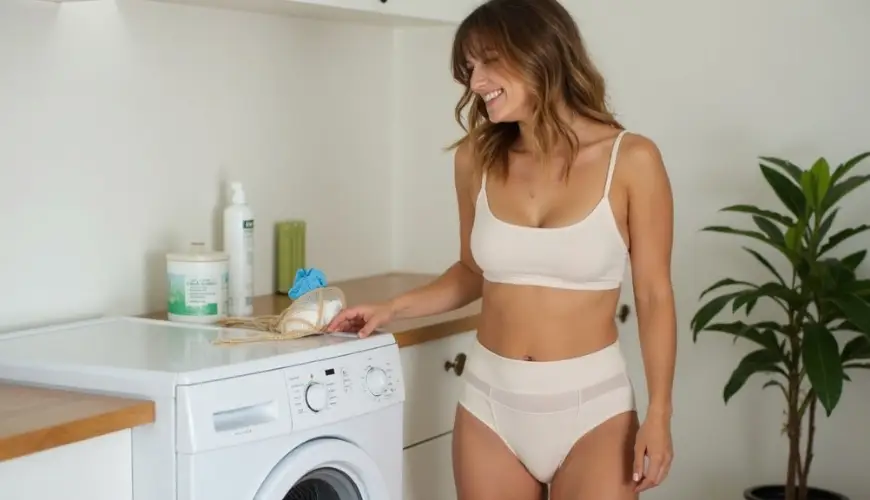
Every month, billions of disposable hygiene products end up in landfills around the world. Tampons, pads, their plastic packaging, and applicators – all of this represents an enormous burden on the planet, one that was barely discussed until recently. Yet sustainable menstruation is neither a novelty nor a passing trend. It's a return to a principle our grandmothers knew well: use things repeatedly, take care of them, and don't waste. Today, however, this approach comes in a much more comfortable and hygienic form – in the shape of menstrual cups, period underwear, and washable pads.
Let's take a look at how these alternatives work in everyday life, what to realistically expect from them, and why they're worth giving a chance – even if your motivation is "just" money.
Try our natural products
Why bother with sustainable menstruation at all
The average menstruating person uses an estimated ten to fifteen thousand disposable hygiene products over their lifetime. According to the Women's Environmental Network, menstrual waste makes up a significant portion of waste in sewage systems and landfills, with a single conventional pad containing up to 90% plastic and taking hundreds of years to decompose. These are numbers that demand reflection.
Beyond the ecological dimension, there's also the financial one. Disposable pads and tampons represent a recurring monthly expense that adds up to a surprisingly high amount over the years. Studies from the United Kingdom refer to so-called "period poverty" – where some women and girls cannot afford quality hygiene products at all. Switching to reusable alternatives typically pays for itself within a few months, a year at most.
And then there's the health aspect. Disposable products often contain bleaching chemicals, synthetic fragrances, and other substances that come into direct contact with one of the most sensitive areas of the body. Menstrual cups made from medical-grade silicone, cotton washable pads, or underwear made from certified materials significantly reduce this risk. It's no coincidence that gynaecologists are increasingly recommending these options – for example, the American College of Obstetricians and Gynecologists (ACOG) mentions menstrual cups as a safe alternative to tampons.
The entire concept of sustainable menstruation therefore rests on three pillars: less waste, less spending, and fewer chemicals in contact with the body. It sounds simple, yet many people hesitate because they don't know what it actually looks like in practice. That's precisely why we'll take a closer look at each of the main alternatives.
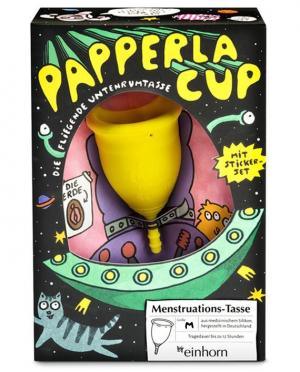
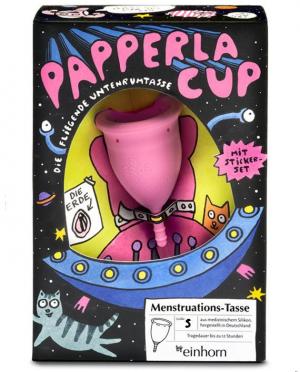
The menstrual cup is probably the best-known symbol of sustainable menstruation. It's a small, flexible receptacle – most commonly made from body-safe silicone – that is inserted into the vagina, where it collects menstrual blood. Unlike a tampon, it doesn't absorb blood but collects it, meaning it doesn't dry out the mucous membrane or disrupt the natural vaginal environment. Depending on the manufacturer and usage, a cup lasts five to ten years, with some brands claiming even longer lifespans.
In practice, the cup only needs to be emptied approximately two to three times a day – morning, evening, and possibly once during the day. During heavier bleeding, more frequently of course. After emptying, it simply needs to be rinsed with clean water and reinserted. At the end of the cycle, the cup is sterilised by boiling it in a pot of water for several minutes. The whole routine takes minimal time, and after an initial adjustment period, most users are very happy with it.
One of the most common concerns relates to insertion and removal. It's true that this requires a bit of practice. Before insertion, the cup is folded – there are several folding techniques – and after insertion, it opens up and creates suction that holds it in place. When removing it, it's important to first release the suction by squeezing the base of the cup. Most women get used to this process within two to three cycles. It helps to start with the cup at home, in a relaxed setting, perhaps on a weekend when there's no need to rush anywhere.
An interesting story comes from Kateřina from Brno, who switched to a cup three years ago after the birth of her second child. Initially, she was put off by the feeling that it would be complicated and unhygienic. "The first month, I kept the cup as a backup and still used tampons as well. The second month, I dared to use only the cup and discovered it was actually simpler. I don't have to think about whether I have enough tampons in my bag, I don't have to look for a bin in public toilets. I just empty it, rinse it, and that's it," she describes. Today, she estimates the cup saves her approximately two thousand Czech crowns a year.
However, the cup isn't for everyone. Some women find insertion uncomfortable, others have anatomical differences that prevent the cup from sitting comfortably. And it's precisely for them that other excellent alternatives exist.
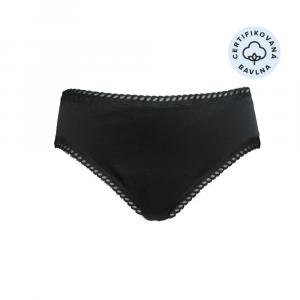
Period underwear represents perhaps the most comfortable path to sustainable menstruation. They look like regular underwear but have a special absorbent layer integrated directly into the gusset. This layer usually consists of several parts: the top layer wicks moisture away from the skin, the middle layer absorbs blood, and the bottom layer is impermeable to prevent leaks. Quality period underwear can hold a volume equivalent to one to three tampons, with some models designed for heavier bleeding holding even more.
Using them is completely intuitive – the underwear is simply put on like any other undergarment. After use, they are rinsed in cold water until the water runs clear, then washed in a washing machine at the temperature recommended by the manufacturer (usually 30 to 40 degrees, without fabric softener or bleach). They should be air-dried rather than tumble-dried to preserve the functionality of the impermeable layer.
For many women, period underwear is the ideal choice for lighter days of the cycle, for nighttime, or as a backup to a cup. The combination of a cup during the day and period underwear at night is, incidentally, one of the most popular strategies in the sustainable menstruation community. This approach covers practically all situations – from sports activities and office work to peaceful sleep without worrying about leaks.
When choosing period underwear, it's worth paying attention to the material composition. Ideal options are underwear made from certified organic cotton or with OEKO-TEX certification, which guarantees the absence of harmful substances. Some cheaper variants may contain PFAS – so-called "forever chemicals" – in the impermeable layer, so it's important to choose verified brands that have their products independently tested.
The third pillar of sustainable menstruation consists of washable cloth pads. They are the closest to what women are used to from the disposable world – the shape and principle of use are practically the same. The pad attaches to underwear using snaps or wings, and after use, it is replaced with a clean one. Used pads are rinsed in cold water and stored in a sealable bag or container until it's time for washing.
Cloth pads are made in various sizes and absorbencies – from panty liners for everyday use, through daytime and nighttime versions, to special postpartum pads. In terms of materials, the most common are cotton, bamboo fibre, or hemp, each with its own specific properties. Bamboo fibre, for example, is naturally antibacterial and highly absorbent, cotton is soft and breathable, while hemp is durable and long-lasting.
Try our natural products

How to make the switch to sustainable menstruation in practice
Probably the biggest mistake one can make when transitioning to sustainable menstrual products is trying to change everything at once. A much more sensible and psychologically comfortable approach is a gradual transition. Start with perhaps one washable pad for lighter days. Or try period underwear at night. And only once you've got used to it and gained confidence in the new product, expand its use to the entire cycle.
A practical starter kit might look something like this:
- One menstrual cup in the correct size (most manufacturers offer sizing guides based on age, childbirth history, and bleeding intensity)
- Two to three pairs of period underwear for nighttime and lighter days
- Three to five washable pads of varying absorbency as a backup or alternative
This basic kit costs approximately two to four thousand Czech crowns, which – as already mentioned – pays for itself within a few months. And it lasts for years.
As for hygiene, concerns about insufficient cleanliness are understandable but in reality unfounded. Menstrual blood is a sterile fluid, and with proper procedure – regular washing at adequate temperatures and sterilising the cup – there is no health risk. A study published in the journal The Lancet Public Health in 2019 confirmed that menstrual cups are a safe alternative to disposable products and are not associated with an increased risk of infections.
It's also important to mention travelling and situations away from home. In public toilets where there is no sink directly in the cubicle, it's enough to carry a small bottle of clean water for rinsing the cup. Used cloth pads can be stored in a waterproof bag and washed at home. Period underwear is probably the most practical option when travelling – they just need to be rinsed in the shower and hung up overnight.
As activist and author of Period Power Maisie Hill once said: "The way we take care of our menstruation is a reflection of how we take care of ourselves and the world around us." And there's a lot of truth in that. Choosing sustainable menstrual products isn't just an ecological gesture – it's an investment in your own comfort, health, and in a future where the planet won't be buried under disposable waste.
The transition to sustainable menstruation doesn't have to be a revolutionary overnight change. It can be a calm, gradual process in which each person finds the combination of products that suits them best. Some will fall in love with the cup and never go back to anything else. Some will combine underwear with cloth pads. And some might start simply by replacing disposable panty liners with washable ones – even that is a step in the right direction. Because sustainability isn't about perfection, but about conscious decision-making and the willingness to do things a little differently than before.