

# How Family Constellation Works in Practice and Who It's For ## What Is Family Constellation? Fam
There are therapeutic approaches that at first glance look like theatre, yet evoke deep emotional responses in people that they cannot rationally explain. Family constellation is one of them. Some consider it a breakthrough tool for self-discovery, others a pseudoscientific show with no verifiable basis. What truly lies behind this method, why has it gained so many followers around the world, and why does it simultaneously arouse so much scepticism?
Family constellation is a therapeutic method developed by German psychotherapist and philosopher Bert Hellinger during the 1970s and 1980s. Hellinger, who spent part of his life as a missionary in Africa and underwent training in psychoanalysis, Gestalt therapy and hypnotherapy, created an approach based on the belief that people are not isolated individuals, but part of larger systems – primarily family systems. According to him, these systems have their own dynamics, their own hidden rules and imbalances, which are passed down from generation to generation without their carriers being aware of it.
Try our natural products


How family constellation works in practice
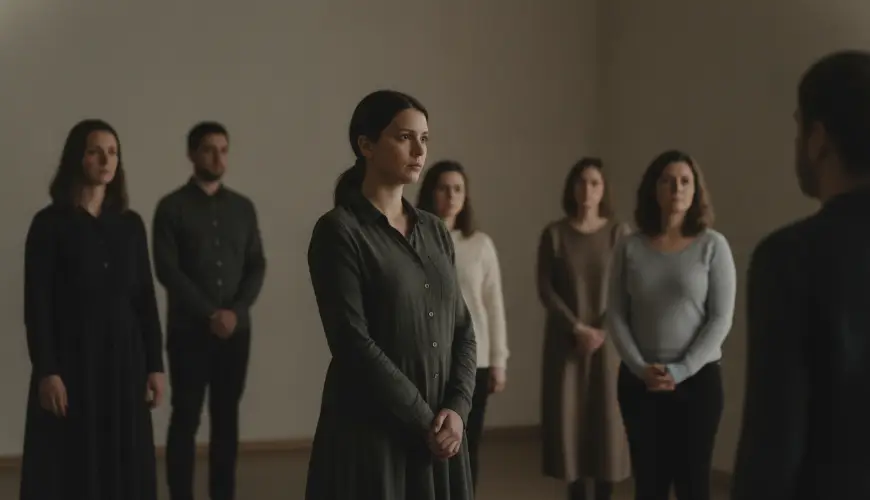
A session can take place either individually or in a group – and it is the group format that tends to be the most surprising and simultaneously the most fascinating. The client, referred to in the context of constellations as the "seeker", briefly describes their problem – this might involve recurring relationship patterns, inexplicable anxiety, chronic health issues, a sense of estrangement from family, or professional stagnation. The facilitator, who guides the process, then asks the seeker to select representatives for individual family members from among the participants present – and sometimes also for abstract concepts such as illness, fate or death.
These representatives are positioned in the space according to the seeker's intuition, rather than according to any predetermined scheme. And then something happens that surprises many observers and the representatives themselves: people who know nothing whatsoever about the family in question begin to experience emotions, physical sensations and impulses to move, which – as it turns out – correspond to actual family dynamics. The representative for a deceased grandfather may feel isolated and rejected. The representative for a mother may feel a heaviness in her chest and an urge to turn her back on her children. The facilitator observes these manifestations, conducts a dialogue and gradually seeks a so-called "healing image" – an arrangement in which the tension releases and the system as a whole appears harmonious.
It is precisely this part of the process – the spontaneous reactions of the representatives – that divides the method into two camps. Hellinger called this phenomenon "the knowing field" or "the family soul" and claimed that representatives connect to a kind of collective information field that transcends individual consciousness. Critics, on the other hand, point out that this is a combination of suggestibility, social cues, group dynamics and the ideomotor effect – that is, unconscious subtle movements triggered by expectations and the context of the situation.
It is worth noting that similar phenomena have been studied by scientists outside the field of constellations. Research in the area of so-called embodied cognition suggests that the body responds to social and spatial stimuli in ways we are not consciously aware of – which could partly explain why representatives behave in ways that resonate with the seeker's family history. This is not proof of a mystical field, but neither is it a trivial trick.
What the method actually does to a person
To understand why family constellation attracts hundreds of thousands of people each year, it is necessary to look beyond debates about mechanism and examine what happens at the level of experience. Many clients describe how, after a session, they understood for the first time why they behaved in ways that made no sense to them. A woman who repeatedly sought out emotionally unavailable partners may "see" in a constellation a pattern reaching back to her father or even to grandparents who experienced wartime trauma and were incapable of emotional connection. A man suffering from chronic fatigue and a sense of worthlessness may "encounter" in the process a forgotten sibling who died in childhood and whose existence was taboo within the family.
These moments of recognition – even if they represent only a metaphorical portrayal of inner beliefs – have demonstrable therapeutic potential. Narrative therapy and work with family systems are well-documented approaches whose effectiveness is confirmed by peer-reviewed studies. Family constellation works with similar themes, just through a dramatically different form.
Take as an example a real type of situation that facilitators describe very frequently: Jana, a woman in her forties from Prague, came to a group constellation with the feeling that she could never accept help from others. Any expression of care irritated her or triggered shame. The constellation revealed that her grandmother – a war orphan – had strictly forbidden herself from accepting anything, in order to survive at a time when depending on others meant being vulnerable. This pattern passed to her mother and then to Jana. The realisation that her reaction was not a personal failing but an inherited survival mechanism brought Jana relief that she described as "the first breath after years." Her therapist then recommended follow-up individual therapy – and that is an important point to which we will return.
Family constellation does not work solely with the direct family line. Hellinger's method also includes so-called "interrupted movements of love" – situations in which the natural flow of affection within a family was disrupted by death, rejection, adoption, miscarriage or other taboo events. According to Hellinger, these interrupted movements are passed on to subsequent generations, who then unconsciously repeat or "complete" what their ancestors were unable to experience. Whether one accepts this interpretation or not, working with family history and its traumas has a firm place in conventional psychology as well – for example in the concept of intergenerational trauma transmission, which is the subject of intensive scientific research.
The controversy surrounding the method, however, does not stem solely from questions of scientific verifiability. Hellinger himself came under serious criticism in his later years for his statements about the role of women in the family, about homosexuality and about victims of domestic violence. Part of his later work was described as authoritarian and dogmatic, even by experts who otherwise sympathised with the constellation method. This personal controversy spilled over onto the method itself, even though many facilitators today work with constellations in ways that differ significantly from Hellinger's original approach – integrating elements of systemic therapy, neuroscience, traumatology or mindfulness.
"Constellation is not a religion or a dogma. It is a tool, and like any tool, it depends on whose hands it is in," says one of the leading European facilitators, who trains therapists across the continent. This remark captures the dilemma facing every interested person: the quality of a session depends on the facilitator's education, ethics and experience to a far greater degree than with standardised therapeutic methods. There is no unified certification system, no binding global code of ethics, and training programmes vary in length, content and quality. This is a real risk that cannot be overlooked.
Nevertheless, interest in the method is growing. In the Czech Republic and Slovakia, there are dozens of active facilitators and group sessions are regularly booked out months in advance. Some of those interested are people who have undergone conventional psychotherapy and are looking for a complementary perspective. Some are those who, for various reasons, have not accessed or have rejected traditional therapy. And some are simply curious people brought along by chance or a friend's recommendation.
So for whom is family constellation suitable, and for whom is it not? Experts who integrate the method into a broader therapeutic framework generally agree that constellation can be a valuable complement to long-term therapeutic work, but not a substitute for it. People in acute psychotic crisis, with unstabilised dissociative disorders, or in immediate danger should primarily seek specialist psychiatric or psychological care. Constellation is neither a crisis intervention nor a diagnostic tool.
On the other hand, for people who feel "stuck" in recurring patterns and for whom conventional therapy has not brought sufficient relief, constellation may offer a different perspective – visual, physical and systemic all at once. Research is not yet sufficiently extensive or methodologically robust to allow the method to be unequivocally validated, but pilot studies – for example research published in German-speaking countries, where the method has the longest tradition – suggest positive effects particularly in the areas of family relationships and self-concept.
Family constellation will likely remain a controversial method for a long time to come. It stands at the boundary of therapy, ritual and theatre, and this boundary is uncomfortable for all those who seek clear categories. Science has so far been unable either to confirm or entirely refute it. People who have experienced it describe it as one of the most powerful encounters with themselves. People who reject it see danger in the uncritical acceptance of unscientific concepts. Both positions have their own logic – and perhaps it is precisely for this reason that family constellation continues in practice to attract so much attention, so many questions and such passionate debate.