

# Spices That Heal and How to Use Them Every Day
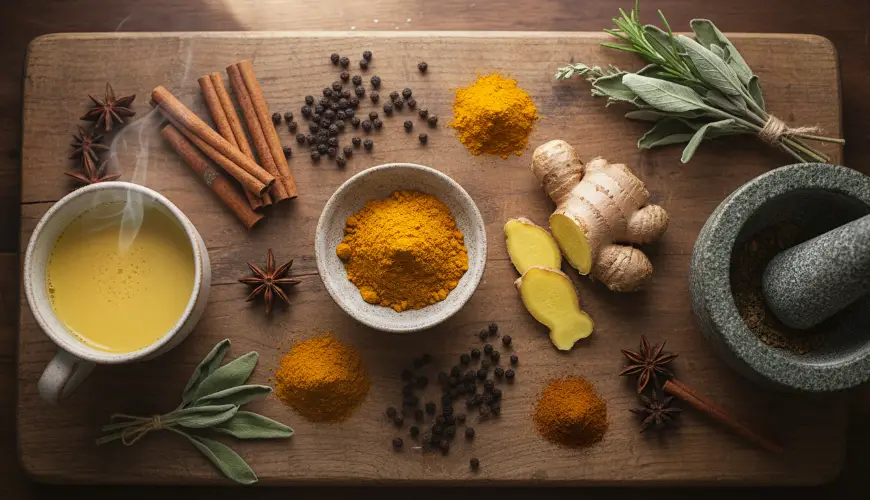
Every morning around the world, a small, almost invisible ritual takes place. Someone spoons a pinch of turmeric into a mug, another grates a piece of ginger into their tea, yet another sprinkles cinnamon over their oatmeal. These gestures are so natural that few people realize how deep the roots — both literally and figuratively — behind them go. Spices have not been merely a matter of taste for millennia. They were currency, medicine, and the subject of wars. And today, as modern science increasingly turns to traditional knowledge, it turns out that our grandmothers and ancient healers were right about many things.
The idea that spices can heal is no novelty of alternative medicine. The Ayurvedic tradition has worked with turmeric and black pepper for thousands of years, traditional Chinese medicine positions ginger as one of the most universal remedies, and cinnamon appears in ancient Egyptian papyri. What is new, however, is the growing body of scientific studies that confirm, refine, and sometimes surprisingly expand upon these experiences. Let's take a look at four spices that deserve a place of honor not only in the spice rack but also in the everyday diet.
Try our natural products


Turmeric and Ginger – The Golden Duo with Anti-Inflammatory Power
If there is a spice that has earned superfood status in the last decade, it is undoubtedly turmeric. Its brilliantly yellow powder, obtained from the rhizome of the plant Curcuma longa, contains a group of compounds called curcuminoids, the most significant of which is curcumin. Curcumin is the subject of hundreds of scientific studies, and its anti-inflammatory and antioxidant properties are now considered well-supported. According to a review study published in the journal Foods, curcumin demonstrably modulates inflammatory pathways in the body and may contribute to the prevention of chronic diseases, from cardiovascular problems to neurodegenerative disorders. A detailed overview of curcumin research is available in the National Center for Biotechnology Information database.
The catch, however, is that curcumin is very poorly absorbed from the digestive tract. The body simply breaks it down and excretes it quickly before it can have a significant effect. And this is precisely where black pepper enters the scene — but we'll get to that in a moment.
Turmeric can actually be incorporated into the diet surprisingly easily. You don't have to cook Indian curry (although that is, of course, an excellent choice). A pinch in your morning smoothie, in soup, in salad dressing, or in so-called "golden milk" — a traditional Ayurvedic drink made from plant-based milk, turmeric, a pinch of pepper, and a drop of honey — is all it takes. The flavor is subtle, earthy, and pleasantly warming.
Alongside turmeric stands its botanical relative — ginger. The rhizome of the plant Zingiber officinale has been at home in kitchens around the world for so long that we've stopped noticing how exceptional it is. Yet ginger is one of the most thoroughly researched spices of all. Its active compounds, primarily gingerols and shogaols, have demonstrably anti-inflammatory, antiemetic (anti-nausea), and antioxidant effects. Ginger is a clinically proven remedy for pregnancy-related nausea, helps with nausea after chemotherapy, and can alleviate muscle soreness after exercise.
One of the things that fascinates about ginger is its versatility. Fresh ginger has a sharper, more citrusy profile, while dried ginger is warmer and spicier. It can be grated into teas, soups, marinades, baked goods, and desserts. Anyone who has ever tried homemade ginger tea — simply a cup of hot water with a few slices of fresh ginger and a bit of lemon juice — knows how wonderfully it can soothe a sore throat or an unsettled stomach.
Interestingly, turmeric and ginger work excellently together in combination. Both spices have anti-inflammatory effects but through slightly different mechanisms, so their effects can complement each other. In Asian cuisine, they have been used together since time immemorial — and as it turns out, not by coincidence.
Cinnamon, Black Pepper, and the Art of Everyday Spicing
Cinnamon is a spice that most people associate with Christmas cookies and mulled wine. Its potential, however, extends far beyond the holiday table. There are two main types of cinnamon — Ceylon (Cinnamomum verum), considered "true" cinnamon, and cassia (Cinnamomum cassia), which is more common and cheaper. From a health perspective, it's important to know this difference because cassia contains significantly higher amounts of coumarin, a substance that in larger quantities puts strain on the liver.
But what does cinnamon offer? Above all, the ability to positively influence sugar metabolism. Several clinical studies suggest that regular consumption of cinnamon may contribute to better insulin sensitivity and lower fasting glucose levels. For people with a prediabetic condition or type 2 diabetes, this can be an interesting supplement — certainly not a replacement for treatment, but a meaningful element of an overall lifestyle. The American Diabetes Association does not yet recommend cinnamon as a standard treatment, but neither does it dismiss its potential.
Cinnamon is also rich in antioxidants — in some comparative studies, it even surpasses garlic or oregano. And its aroma? It has a demonstrably positive effect on mood and cognitive function. Just think about how you feel when you walk into a kitchen where an apple cake with a touch of cinnamon is being baked.
In everyday cooking, cinnamon has a surprisingly wide range of uses. It doesn't have to be just sweet — in Moroccan and Middle Eastern cuisine, it is commonly added to braised meat, lentil soups, or vegetable tagines. A pinch of cinnamon in coffee or cocoa gives the drink depth and warmth without making it overly sweet.
And finally, black pepper — a spice so ubiquitous that most people take it for granted. Yet black pepper conceals one of the most remarkable substances in the entire realm of spices: piperine. This alkaloid compound is responsible not only for pepper's characteristic pungency but above all for its ability to dramatically increase the bioavailability of other substances. The best-known interaction is with curcumin — a study published in Planta Medica demonstrated that piperine increases the absorption of curcumin by an incredible 2,000%. Without a pinch of pepper, most curcumin passes through the digestive tract practically unused.
But piperine doesn't just help curcumin. It increases the absorption of a whole range of nutrients including B vitamins, beta-carotene, and selenium. On its own, it also has antioxidant and anti-inflammatory properties, and according to some studies, it may positively influence digestion by stimulating the production of gastric juices.
The practical advice is simple: whenever you cook with turmeric, add a pinch of freshly ground black pepper as well. It won't change the flavor of the dish, but it will fundamentally change its nutritional value. It's one of those rare cases where a simple kitchen habit can have a measurable health impact.
As Hippocrates said — and the quote has been repeated so often it has become a cliché, yet it hasn't lost its validity: "Let food be thy medicine and medicine be thy food." In the case of spices, this holds literally true.
Of course, common sense must prevail. Spices are not miracle cures, and no pinch of turmeric can replace a balanced diet, exercise, adequate sleep, and medical care when needed. But as part of a thoughtful approach to nutrition, turmeric, ginger, cinnamon, and black pepper can play a truly significant role. It's not about heaping piles of powder onto your food in the hope that all ailments will disappear. It's about realizing that everyday cooking is an opportunity — an opportunity to give the body not only energy but also substances that help it maintain balance.
Take, for example, Marie from Brno, who after turning fifty began having problems with her joints and overall inflammation in her body. Her doctor recommended an anti-inflammatory diet and, among other things, mentioned turmeric with ginger. Marie started every morning with golden milk, added fresh ginger to her soups, and sprinkled a pinch of pepper on everything that contained turmeric. After several months, she noticed that her joints hurt less, she slept better, and she felt more vital overall. This isn't a scientific study of one person — it's a story that many people who have decided to pay attention to what they eat know well.
What is most beautiful about the whole story of spices is their accessibility. These aren't expensive dietary supplements in capsules, nor exotic superfoods flown in from the other side of the world. Turmeric, ginger, cinnamon, and black pepper are spices you can find in every shop, at every market, in every kitchen. They cost just a few coins and last for months. All you need to do is start using them consciously.
For those who want to go a step further, it's worth investing in high-quality, organic spices without additives and preservatives. The difference in flavor and in the content of active compounds between cheap spices from a discount store and a carefully processed product is often striking. Freshly ground black pepper smells and tastes completely different from pre-ground powder that has sat on a shelf for months. Ceylon cinnamon has a more delicate, more complex profile than common cassia. And fresh ginger root is incomparable to dried powder — although the latter has its place too.
In closing, one more aspect is worth mentioning that is often overlooked in discussions about healthy eating: the joy of cooking. We don't add spices to food just so we feel better. We add them because food smells, tastes, and delights us because of them. The golden color of turmeric on a plate, the sharp freshness of ginger in a winter tea, the warming sweetness of cinnamon in morning oatmeal, the bold pungency of freshly ground pepper on fresh bread with olive oil — these are all small sensory experiences that make everyday eating richer. And if they also contribute to health, all the better. Spices that heal don't have to be bitter medicine. They can be the most pleasant part of the entire day.