

Try the recipe for a nutritious quinoa bowl
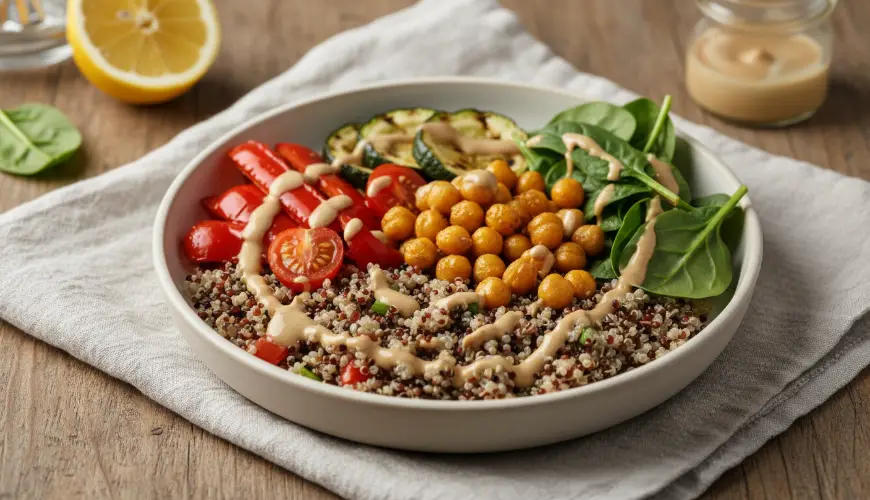
Quinoa holds a special place among healthy foods. On one hand, dietitians and nutritionists recommend it as one of the most complete plant-based sources of protein; on the other hand, many people genuinely dislike it. Too bitter, too earthy, too... strange. If you belong to the second group, or you're cooking for someone who automatically wrinkles their nose at the mere mention of the word "quinoa", we have good news for you. There is a way to prepare it so that it becomes a truly delicious base for a hearty bowl - and not just a healthy obligation you force yourself to eat.
Before we get to the recipe itself, however, it's worth understanding why quinoa so often disappoints. The answer lies in its natural coating. Quinoa contains compounds called saponins, which serve in nature as a natural defence of the seed against pests. For the human palate, however, they are unpleasantly bitter, and it is precisely this bitter undertone that puts many people off at the very first taste. The good news is that this can be dealt with very easily - and proper preparation almost completely eliminates the problem.
Try our natural products


Why quinoa is actually worth it
Before someone decides to dismiss quinoa entirely, a few facts might convince them. Quinoa is one of the few plant foods that contains all nine essential amino acids, making it a so-called complete protein - a property that is otherwise more typical of animal products. According to the Harvard T.H. Chan School of Public Health, one cup of cooked quinoa contains approximately 8 grams of protein, 5 grams of fibre, and a range of important minerals including magnesium, iron, and zinc.
For people who are reducing their meat consumption, for vegans, vegetarians, or simply for anyone looking for a more nutritious alternative to white rice or pasta, quinoa is truly hard to beat. And yet it is so easily ruined by poor preparation. That is precisely why it is worth paying attention to every step - from the first rinse to the final seasoning.
Consider Markéta, a thirty-year-old graphic designer from Brno, who decided two years ago to eat more plant-based food. Quinoa initially put her off - she cooked it following the basic instructions on the packet, without rinsing, without seasoning, and the result was, in her own words, "like eating damp cardboard with a hint of herbs". It was only when she tried the method described below that she changed her mind. Today she prepares it every week and serves it to guests who have no idea what it contains - and they praise it.
The secret lies in the preparation, not in the quinoa itself
The key step that most people skip is rinsing the quinoa thoroughly under cold running water for at least two minutes. This simple action removes most of the saponins and with them the unpleasant bitterness. Even better results come from soaking the quinoa for twenty to thirty minutes before cooking and then rinsing it - the grains then cook more evenly and have a pleasant, slightly nutty flavour.
The second secret is cooking in good stock instead of water. Vegetable or chicken stock gives quinoa a depth of flavour it can never achieve in water. The ratio is simple: one part quinoa to two parts stock. Add a pinch of salt, cover with a lid, bring to the boil, then leave on a low heat for ten to twelve minutes until the stock is absorbed. Then remove from the heat and leave to rest for five minutes - and only then fluff gently with a fork. The result is light, separate grains with a pleasant texture that look and taste nothing like porridge.
The third step that makes an enormous difference is toasting the dry quinoa in a dry pan before cooking. Just two to three minutes over medium heat, stirring constantly, until it begins to give off a gentle nutty aroma. This step is optional, but the result is worth it - the quinoa develops a significantly more complex flavour and loses its bland quality.
Recipe for a nutritious quinoa bowl
Once the base is prepared correctly, endless possibilities open up. The following recipe is designed to appeal even to the most stubborn quinoa sceptics - it combines contrasting textures, bold flavours, and a rich sauce that holds the whole bowl together.
For two portions you will need:
- 160 g quinoa (ideally white or tricolour)
- 400 ml vegetable stock
- 1 tin of chickpeas (400 g, drained and rinsed)
- 1 large sweet pepper (red or yellow)
- 1 small courgette
- a handful of cherry tomatoes
- 2 tablespoons olive oil
- 1 teaspoon ground cumin
- 1 teaspoon smoked paprika
- salt and black pepper to taste
- a handful of fresh spinach or rocket
For the tahini sauce: 3 tablespoons tahini, juice of half a lemon, 1 clove of garlic (crushed), 1 tablespoon soy sauce, and 1 tablespoon water to thin.
The quinoa is prepared using the method described above - rinsed, toasted in a dry pan, cooked in stock, and left to rest. While it cooks, cut the pepper and courgette into smaller pieces, add the chickpeas, and toss everything in a bowl with olive oil, cumin, smoked paprika, salt, and pepper. Spread this mixture on a baking tray and roast in an oven preheated to 200 °C for approximately twenty minutes, until the vegetables are lightly caramelised at the edges. Roasting is key here - raw or steamed vegetables would not give the bowl the right character.
The tahini sauce is prepared simply by mixing all the ingredients together. If it is too thick, add a little water a teaspoon at a time until it reaches the consistency of thick yoghurt. This sauce is the heart of the entire recipe - tahini brings creaminess and richness, lemon brings freshness, garlic brings depth, and soy sauce adds an umami note that elevates the whole bowl to another level.
Assembling the bowl then takes just a few seconds: quinoa forms the base, the roasted vegetables and chickpeas are piled on top, a handful of fresh spinach or rocket is added, and everything is drizzled with the tahini sauce. Those who wish can also add pickled red onion, toasted pumpkin seeds, or a spoonful of hummus on the side.
As British chef Yotam Ottolenghi, whose approach to vegetables and legumes has inspired a generation of cooks, once said: "Food must be beautiful, but it must also surprise - otherwise you'll only eat it once." It is precisely this principle of surprise that explains why the bowl described above works even for people who would otherwise reject quinoa. The combination of roasted vegetables, creamy sauce, and fluffy grains creates an experience that is complex and satisfying - and entirely plant-based.
Another advantage of this recipe is its flexibility. The chickpeas can be replaced with roasted tofu, cooked lentils, or chicken for those who don't follow a plant-based diet. The vegetables can be varied according to the season - in winter, roasted pumpkin or beetroot works wonderfully, in spring asparagus and peas, in summer courgette and sweetcorn. The quinoa remains the constant, but everything around it adapts. This versatility makes it an excellent base for so-called "meal prep" - preparing food several days in advance. Cooked quinoa keeps in the fridge for up to five days and combines easily with a variety of accompaniments.
It is also worth noting that quinoa is naturally gluten-free, making it an ideal choice for people with coeliac disease or gluten sensitivity. Unlike many gluten-free alternatives, it does not come across as dry or bland - provided it is properly prepared. It is precisely this combination of nutritional value, accessibility, and culinary flexibility that explains why quinoa has firmly established itself in kitchens around the world in recent years, from South American families who have been eating it for centuries to modern city restaurants.
For those who want to incorporate quinoa into their diet gradually and without pressure, this recipe is the ideal starting point. It is not a health food you force yourself to eat with your eyes closed. It is a bowl you reach for again - and that is precisely the difference that matters.