

Try door expander exercises instead of the gym
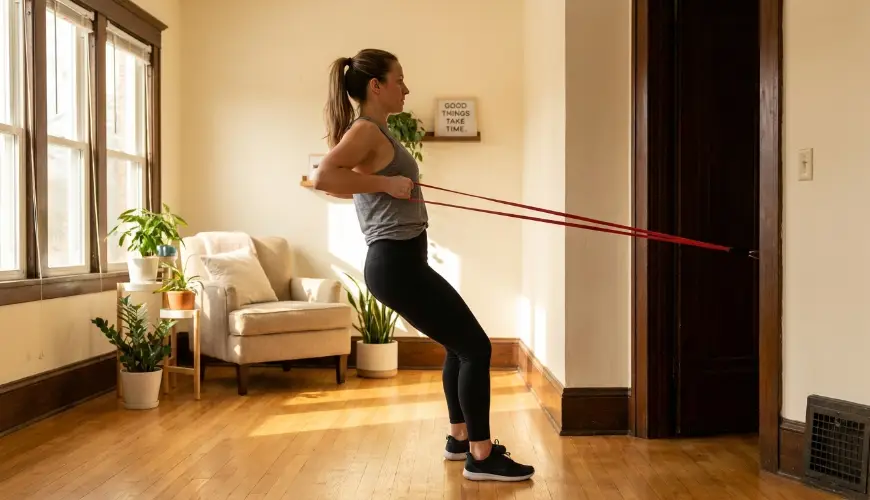
Modern life brings constant pressure on time. Between work, family, and everyday responsibilities, it seems that hours at the gym are a luxury that most people simply cannot afford. And yet, the desire for movement, strength, and a healthy body hasn't gone anywhere. This is precisely where one of the smartest fitness inventions of recent years comes into play – the door expander, a small tool with enormous potential that can transform an ordinary home workout into a full-fledged exercise session.
You might wonder how a piece of rubber attached to a door can replace an entire gym. The answer lies in the principle of resistance training, which sports scientists have long considered one of the most effective methods for building strength and endurance. Studies published in the Journal of Human Kinetics, for example, repeatedly confirm that exercising with elastic resistance bands delivers comparable results to training with free weights – and at a significantly lower risk of injury.
Try our natural products


Why the door expander is so exceptional
The key to understanding its value is simplicity. A door expander consists of resistance bands of varying stiffness and a special anchor point that attaches to a door frame. The entire setup typically weighs less than a kilogram, fits in a backpack pocket, and installs in thirty seconds. This makes it an ideal companion not only for home workouts, but also for travel, working from home, or for those living in small apartments without space for large fitness equipment.
Unlike dumbbells or weight machines, the expander offers constant resistance throughout the entire range of motion. The more you stretch it, the more force you must exert. This progressive load forces muscles to work differently than during classic strength training and activates deep stabilising muscle groups that often engage only marginally when training with free weights. The result is not only visible strength, but also better coordination, balance, and overall body stability.
Consider Martina, a thirty-four-year-old mother of two who works from home and long believed that regular exercise was an unattainable luxury for her. After getting a door expander, she began working out every morning before her children woke up. All she needed was fifteen minutes, a bedroom door frame, and determination. After six weeks, she reported not only losing several centimetres around her waist, but above all significantly better energy and mood throughout the day. Her story is not exceptional – it is a typical example of what happens when the right tool meets a smart approach to training.
It is also important that exercising with an expander is gentle on the joints. While heavy dumbbells can strain knees, shoulders, or the spine if performed incorrectly, elastic resistance adapts to the body's natural movement. This is particularly appreciated by beginners, older exercisers, or people in recovery from injury.
How to put together a complete workout in 15 minutes
Fifteen minutes may sound like little, but with the right approach, it is absolutely sufficient time for a quality full-body workout. The secret is combining the principles of circuit training with minimal rest between exercises. Each exercise lasts approximately forty-five seconds, with a fifteen-second break between them. A circuit structured this way works through the entire body systematically and without wasting time.
It is advisable to begin the workout with a chest row, which activates the back muscles, biceps, and rear shoulders. Simply grasp both handles, lean slightly forward, and pull the bands toward you while keeping your elbows close to your body. This movement mimics the motion of a rower and is one of the best exercises for proper posture – especially important for those who spend hours sitting at a computer.
This flows naturally into a chest press, the equivalent of a classic bench press. The expander is anchored at chest height and the exerciser pushes the handles forward away from it. The pectoralis major, front of the shoulders, and triceps are engaged. This is followed by squats with a resistance band, in which you stand on the middle of the expander and hold the ends in your hands at shoulder height. The squat thus combines leg strengthening with core activation and is a cornerstone of every functional workout.
The fourth exercise is a lunge with rotation, in which the expander is anchored at waist height. The exerciser performs a side or forward lunge while simultaneously rotating the torso away from the anchor point. This exercise is exceptionally effective at working the deep core muscles and hips while engaging the body as a whole. The fifth exercise – overhead tricep extension – targets the triceps and upper back. The expander is anchored high above the head and the exerciser pulls the handles down behind the back or toward the hips.
The sixth and final circuit exercise is a bicep curl, in which you stand on the middle of the expander and raise the handles toward your shoulders. It is a classic isolation exercise, but in combination with the rest of the circuit it becomes an excellent finisher for the upper body. The entire circuit can be completed two or three times depending on fitness level – two circuits with minimal rest correspond to approximately twelve to fourteen minutes of intense training, leaving a little time at the end for a brief stretch.
As American physiologist and functional training pioneer Gray Cook said: "Movement is a fundamental human need. It's not about how much time you dedicate to it, but how meaningfully you use it." This very philosophy underlies the popularity of short but intense workouts, which are gaining ever more followers around the world.
When putting together a training plan, it is essential to think about gradually increasing resistance. Most door expanders are sold in sets with bands of varying stiffness – typically ranging from light through medium to heavy resistance. Beginners should start with the lightest option and only move on to stronger resistance once they have mastered the correct technique. This approach not only protects against injury, but also ensures that muscles are constantly faced with a new challenge and continue to develop.
Proper breathing is also an indispensable part of training. The general rule is: exhale during exertion and inhale during the return to the starting position. During a chest row, you therefore exhale as you pull the handles toward you; during a squat, you exhale as you straighten up. Proper breathing not only increases the effectiveness of the exercise, but also stabilises intra-abdominal pressure and protects the spine.
For those who want to go even further, exercising with a door expander offers the possibility of incorporating unilateral movements, i.e. exercises performed with one arm or one leg. Unilateral training reveals and gradually corrects muscle imbalances that develop through everyday activities – such as carrying a bag on one shoulder or sitting for long periods in an unbalanced position. These asymmetries are one of the main causes of back and shoulder pain that a large proportion of the adult population struggles with.
As for training frequency, the American College of Sports Medicine recommends at least two to three strength training sessions per week for healthy adults, with adequate rest in between. A fifteen-minute workout with a door expander easily meets this recommendation and, moreover, does not require recovery as demanding as that needed after a heavy strength training session at the gym.
A major advantage is also that the expander can be used not only for strength training, but also for rehabilitation. Physiotherapists make extensive use of it when restoring shoulder function after surgery, strengthening the knee joint, or treating lumbar spine pain. If you suffer from chronic musculoskeletal complaints, it is therefore advisable to consult a specialist when drawing up an exercise plan – the expander can then be a valuable part of rehabilitation, not merely a fitness tool.
The door expander thus proves to be a truly versatile tool. It takes up no space in the home, does not cost thousands, requires no professional installation or regular maintenance. And yet – when used correctly – it can offer a workout that fully substitutes for a visit to the gym. At a time when a healthy lifestyle is becoming a conscious choice for an ever-growing number of people, this kind of approach to exercise is precisely what makes sense: effective, accessible, and sustainable.
Whether you are a beginner just finding your way to regular exercise, or an experienced athlete looking for a practical training solution while travelling, working out with a door expander can offer you more than you might expect. Fifteen minutes a day, proper technique, and a little patience – that is all you need.