

Find out why your feet hurt even though you haven't done anything strenuous all day
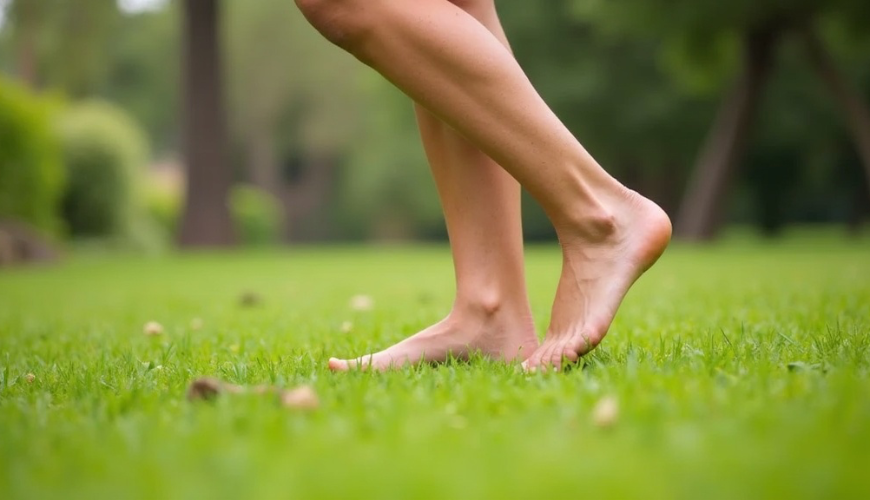
Most of us know the feeling. You come home from work, sit down on the couch, and only then realize how much your feet hurt. Yet you didn't run a marathon, go on a hike, or spend the whole day moving furniture. Foot pain seemingly without reason is a surprisingly common problem that affects people across all age groups, and yet it's rarely talked about. Many dismiss it with a wave of the hand – "it must be fatigue" – and don't give it another thought. But feet are the foundation of the entire musculoskeletal system, and when they suffer, sooner or later the whole body feels it.
That's exactly why it's worth pausing for a moment to consider why our feet actually hurt and what we can do about it without immediately reaching for medication or spending hours in waiting rooms.
Try our natural products

What's behind foot pain when there's no obvious reason
The human foot is a fascinating structure. It contains 26 bones, 33 joints, and more than a hundred muscles, tendons, and ligaments – all in a relatively small space that must bear the entire body's weight every day. According to the American Podiatric Medical Association, the average person walks roughly 150,000 kilometers in their lifetime, which corresponds to approximately four times the circumference of the Earth. With that kind of load, it's no wonder something speaks up from time to time.
The problem arises, however, when pain comes seemingly out of nowhere. A person has no injury, didn't stumble, didn't overexert themselves – and yet their feet hurt. In such cases, the cause is often hidden in everyday habits we don't even think about.
One of the most common culprits is unsuitable footwear. And it doesn't necessarily have to be high heels or overly tight shoes. It's enough that the footwear lacks adequate arch support, is too flat, or is worn for too long without being replaced. Unfortunately, modern fashion trends often prioritize appearance over function, so many people spend entire days in shoes that don't suit their feet at all. Research published in the Journal of Foot and Ankle Research has repeatedly confirmed that poorly chosen footwear is one of the main factors contributing to chronic foot pain, particularly in women.
Another surprisingly common reason is prolonged standing or sitting. Both are stressful for the feet, albeit in different ways. Prolonged standing leads to overloading of the soles, calves, and joints, while sedentary work worsens blood circulation in the lower extremities, leading to swelling, feelings of heaviness, and dull pain. Paradoxically, feet can hurt both from too much activity and from a lack of movement.
An often overlooked cause is also excess weight. Every extra kilogram means additional strain on the joints, tendons, and muscles of the feet. According to experts at the Cleveland Clinic, during walking, a force equivalent to approximately 1.5 times body weight acts on the feet, and during running, as much as three times. At higher body weight, these numbers naturally increase even further, and the feet work under significantly greater pressure than they are designed for.
We must not forget plantar fasciitis, which is inflammation of the thick band of connective tissue on the underside of the foot. It typically manifests as sharp heel pain, especially in the morning after waking up or after prolonged sitting. Many people are unaware of this condition for a long time and attribute the pain to fatigue. Yet it is one of the most common causes of foot pain overall and can be managed quite well when addressed early.
Other possible causes include flat feet, hallux valgus (bunion), Achilles tendinitis, or peripheral circulation problems. In older people, osteoarthritis of the small joints of the foot may play a role, while in diabetics, neuropathy – nerve damage that manifests as tingling, burning, or dull pain – can be a factor. This is precisely why it's important not to underestimate persistent problems and to seek professional help when in doubt.
Interestingly, foot pain can also have its roots higher up in the body. Problems with the hips, pelvis, or lumbar spine can radiate all the way down to the lower extremities. The body functions as an interconnected chain, and when one link doesn't work properly, other parts take over the compensation – often the feet. A person then looks for the problem down below, while the actual cause lies somewhere entirely different.
The story of Mrs. Jana, a forty-year-old accountant from Brno, illustrates this quite eloquently. For several months, she was troubled by pain in her right foot that gradually worsened. She went through several pairs of shoes, tried various insoles, but nothing helped. Only a visit to a physiotherapist revealed that the cause was a muscle imbalance in the pelvic area, which led to uneven loading of the right foot. After a series of targeted exercises, the pain subsided without any treatment to the foot itself.
This case demonstrates an important point: foot pain is often a symptom, not the problem itself. And that's precisely why it makes no sense to address only the consequences – one needs to search for the real cause.
How to relieve foot pain and prevent it
The good news is that in many cases, foot pain can be alleviated or entirely prevented with relatively simple measures. These aren't miracle methods but systematic care that over time becomes a habit.
The foundation of everything is quality footwear. And that doesn't necessarily mean the most expensive kind, but rather shoes that match the shape of the foot, provide adequate arch support, and have a reasonably cushioned sole. When choosing shoes, it's ideal to seek advice at a specialized store or from an orthopedist, especially if one suffers from flat feet or other deformities. It also pays to replace shoes regularly – worn-out footwear loses its supportive properties even if it still looks fine on the outside.
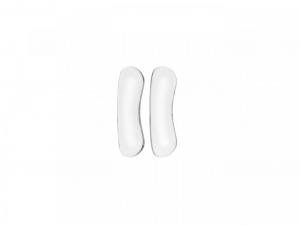
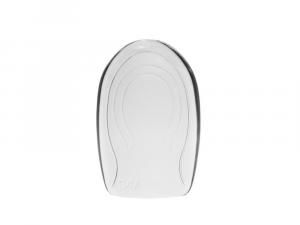
Orthopedic insoles can be another great help. Whether they are custom-made insoles or quality prefabricated options, the right insole can significantly change the distribution of pressure on the foot and relieve overloaded structures. Many people are surprised at what a difference such a seemingly small change can make.
Regular movement and targeted exercise also play an important role. Feet need to be strong and flexible to handle everyday strain. And it really takes very little – a few minutes a day dedicated to simple exercises can have a significant effect. Proven exercises include:
- Picking up small objects (marbles, a towel) with the toes to strengthen the small muscles of the foot
- Rising onto tiptoes and slowly lowering back down to strengthen the calves and Achilles tendon
- Rolling the foot over a tennis ball or special massage roller to release the plantar fascia
- Stretching the calves and feet against a wall or on a step
- Walking barefoot on various surfaces (grass, sand, pebbles) to stimulate proprioceptors
Massages and foot baths are a pleasant way to find relief after a demanding day. A warm bath with added magnesium salt (Epsom salt) helps relax muscles and reduce swelling. Foot massage itself – whether with your own hands or using aids – improves blood flow and releases tension in the tissues. As Sebastian Kneipp, a pioneer of hydrotherapy, once said: "The shortest path to health leads through water and herbal baths." And for feet, this is doubly true.
Those who spend hours at a computer or stand all day behind a counter should regularly take breaks with movement. A short walk, stretching, or simple exercise is enough – anything that gets the blood circulating again and prevents stagnation in the lower extremities. Elevation of the legs, meaning raising them above heart level, is another effective way to support venous return and reduce swelling at the end of the day.
Compression socks or knee-highs can be an excellent solution for those who stand a lot or travel. Compression therapy improves blood circulation in the lower extremities and reduces the risk of swelling and the feeling of heavy legs. Compression stockings used to be associated mainly with older people, but today they are available in modern designs and materials that are comfortable even for all-day wear.
Maintaining a healthy weight should not be overlooked either. As already mentioned, every extra kilogram represents additional strain on the feet. A balanced diet rich in anti-inflammatory nutrients – omega-3 fatty acids, antioxidants, vitamin D, and magnesium – can also help reduce inflammatory processes in the body that often underlie chronic pain.
And then there's one aspect that many overlook: caring for overall posture and postural habits. The way we stand, walk, and sit has a direct impact on how our feet are loaded. Poor posture, a forward head position, rounded back, or uneven weight distribution – all of this is reflected in the lower extremities. Regular visits to a physiotherapist who can identify and correct muscle imbalances can be an investment that pays off many times over.
Of course, there are situations where home care is not enough and it's necessary to see a doctor. If foot pain persists for more than a few weeks, worsens, or is accompanied by swelling, redness, changes in skin color, tingling, or loss of sensation, a professional examination is definitely warranted. Early diagnosis can reveal more serious problems – from stress fractures to vascular diseases to systemic conditions such as diabetes or rheumatoid arthritis.
Foot pain is simply a topic that deserves more attention than we usually give it. Our feet carry us throughout our entire lives, and yet we often think about them only when they let us know something is wrong. Yet it takes relatively little – suitable footwear, regular movement, targeted exercise, and a bit of daily care – and our feet will repay us with comfort, mobility, and a life without unnecessary pain. Because whoever has healthy feet essentially has a healthy foundation for everything else.