

The 5-Minute Rule Will Change Your Relationship with Order at Home
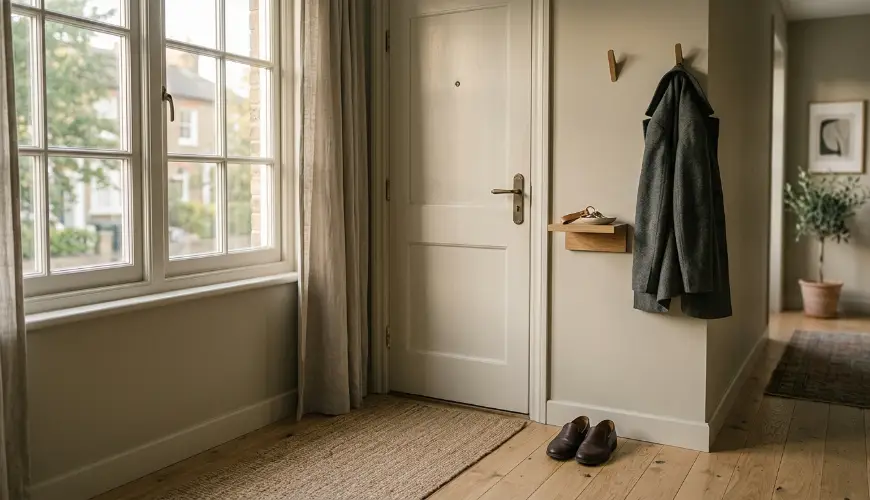
Everyone knows it. You come home after a long day, throw your coat over a chair, put your keys on the table, leave your shoes in the middle of the hallway. The next day another layer is added – a coffee mug, a newspaper, a receipt from the shop. Within a week, an innocent little pile becomes a mountain of things whose origins you can no longer even remember. Then the weekend comes, and instead of resting you spend hours tidying up everything that has gradually accumulated. Does that sound familiar?
It is precisely for these situations that the so-called 5-minute rule exists – a simple principle that can fundamentally change the way you approach tidiness at home. It is not some revolutionary method from the latest productivity book, nor an expensive phone app. It is something far more basic: a change in small everyday habits that, taken together, produces surprisingly large results.
Try our natural products






What exactly the 5-minute rule means
The essence is straightforward. If a task takes you less than five minutes, do it right now, not later. Do you see a dirty mug? Take it to the sink and wash it. Have you taken off your shoes? Put them away immediately. Has the post arrived? Open it, throw away what you don't need, file what is important. It sounds almost too simple to work – and yet that is precisely where its power lies.
The principle originally comes from the field of time management. It was first systematically described by David Allen in his book Getting Things Done, where he presented it as a tool for managing work tasks. Over time, however, it became clear that it works equally well – if not better – in the home environment. When you stop putting off small things, they never become a big problem.
Psychologists explain this phenomenon through the concept of so-called behavioural inertia. Once you lie down on the sofa with the justification of "I'll do that in a moment", the brain remembers this behaviour as acceptable. Every subsequent act of procrastination then comes more easily. Conversely, when you build a habit of immediate action, it becomes an automatic response that requires no special decision-making or willpower.
Consider Markéta, a thirty-four-year-old teacher from Brno, who shared her experience on one of the Czech discussion forums about housekeeping. She had struggled with mess her entire life, despite regularly attempting major weekend cleans. These always took her several hours and left her exhausted. Then she tried the 5-minute rule. "At first it seemed absurd to me to stop and wash a mug when I was rushing to a meeting. But after two weeks I found that the flat was somehow... always clean. Without me consciously tidying," she described. The big weekend clean turned into an occasional light refresh of the space.
Why mess actually bothers us more than we think
Before we get to the practical side of things, it is worth understanding why tidiness at home is actually important – and it is not just about aesthetics. Research repeatedly shows that a chaotic environment raises levels of cortisol, the stress hormone. A study published in the journal Personality and Social Psychology Bulletin found that women who described their home as messy showed higher levels of stress and depressive moods than those who perceived it as tidy and cosy.
Mess also significantly affects concentration. Every scattered object in the field of vision is a small visual stimulus for the brain that requires processing. The cumulative effect of dozens of such stimuli throughout the day is fatigue, distraction, and a feeling that we somehow have "too much going on". It is no wonder that after a big tidy-up people feel lighter not only physically but also mentally – as if their head had been cleared.
And then there is another dimension that is rarely talked about: mess costs us time. According to various estimates, the average person spends roughly 2.5 days a year looking for things they have lost at home. Keys, glasses, a charger, an important document – all of these go missing precisely when things do not have fixed places. The 5-minute rule addresses this problem at its root, because its natural consequence is that every item goes to its place immediately after use.
How to introduce the rule into everyday life
The theory is fine, but practice is a different matter. So how do you actually implement the 5-minute rule without it becoming yet another item on the to-do list that adds stress rather than reducing it?
The first step is to become aware of so-called trigger moments – times when we most often leave things in the wrong places. For most people these are arriving home, preparing food, the morning routine, and the moments before sleep. It is enough to focus precisely on these moments and consciously ask yourself a simple question: Will this take me less than five minutes? If so, I'll do it now.
The second step is to ensure that things have logical and easily accessible places. The rule does not work if putting something away is complicated. Shoes will automatically be kicked against the wall if the shoe rack stands in a distant storage room and opening it requires moving other things. Simplify your storage system – the fewer steps putting something away requires, the more naturally it will happen.
The third step is to accept that the rule works cumulatively, not instantly. It is not the case that you introduce it on the first day and on the second day the home is perfectly tidy. It is about a gradual change in habits that becomes apparent over weeks. Behavioural scientists say that forming a new habit takes an average of 66 days, a figure derived from a University College London study. So be patient with yourself if it does not work one hundred percent at first.
It also helps to involve the whole household in the rule. If you live with a partner, children, or housemates, your efforts alone are not enough. The key is not criticism or pressure, but sharing the principle in a way that makes sense to each person individually. Children, for example, are helped by having things within reach and by tidying being a game rather than a punishment. A partner may be helped by knowing that thanks to the rule they will save hours of weekend cleaning that can be spent differently.
There is one more practical trick that many people consider key: a bedtime reset routine. Every evening, just before you go to bed, spend ten minutes walking through the home and returning things to their places. In the morning you wake up to a clean space, which psychologically sets the whole day differently. It is not a big clean – it is just a quick reset that prevents accumulation.
It is interesting how the 5-minute rule naturally corresponds with the principles of minimalism and conscious consumption. When you regularly put things in their places, you naturally begin to notice what you have too much of. Things that have no place where they belong are generally things you do not need. As Marie Kondō, the Japanese home organisation expert, says: "A home should be a place that welcomes you back with calm." And that calm is contributed to both by having fewer things and by a rule that prevents them from being scattered chaotically around the entire flat.
In the context of a sustainable lifestyle, tidiness at home has yet another dimension. People who live in an organised space less often buy things they already have – simply because they know what they own and where it is. Impulsive buying behaviour is thus reduced, which is one of the greatest sources of unnecessary waste and unnecessary expenditure. A sustainable household therefore does not begin only with buying eco-friendly products – it begins with a conscious relationship with the things we already have.
The 5-minute rule also has a surprising impact on the overall feeling of life at home. A flat or house that is continuously in order becomes a place you look forward to returning to – not a place that greets you with reproaches and a list of tasks. This feeling is difficult to quantify, but those who have experienced it rarely return to old patterns.
There is no need to buy any special organisers, pay for productivity courses, or read dozens of books about tidying. It is enough to consciously pick up your coat the next time you come home and hang it on the hook. Take the mug to the sink. Put the shoes away. Five minutes that change everything.