

What we thought about pregnancy and motherhood and what surprised us
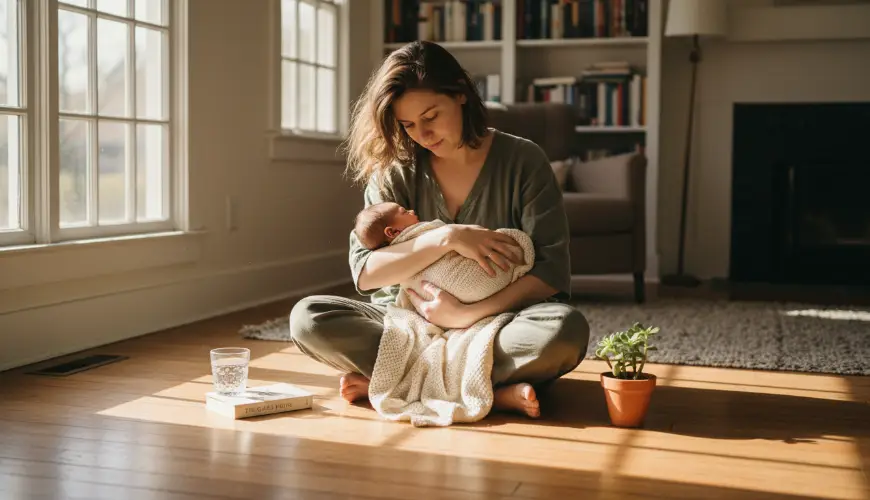
Every woman who finds herself holding a pregnancy test comes with an entire suitcase of expectations. Some come from films, some from mothers and friends, and some women conjure up themselves in those quiet moments when they paint the future in the most beautiful colours. And then reality arrives – not necessarily cruel, but certainly different from what anyone imagined. Pregnancy and motherhood are among the most intense life experiences a woman can have, and yet a whole host of myths, half-truths, and things that simply aren't spoken about aloud surround them.
This article is not about idealising motherhood or making it frightening. It is about what women thought before pregnancy, what they expected – and what ultimately truly surprised them.
Try our natural products






The expectations women bring to pregnancy
The cultural image of a pregnant woman is surprisingly uniform. Glowing skin, a round belly, a blissful smile. A woman who is finally "radiant." This idea is so widespread that expectant mothers themselves accept it as a kind of standard to aspire to. But the reality of the first trimester looks completely different for many women – nausea, exhaustion, irritability, and the feeling that their body has stopped listening.
Nausea in pregnancy is by no means an exception. According to data published in the specialist journal American Journal of Obstetrics and Gynecology, up to 80% of pregnant women experience some form of pregnancy nausea. Yet it is talked about as something marginal that will "pass". For many women, this is the first major clash between what they thought and what they actually experience – and at the same time the first signal that pregnancy will be different from what they expected.
Alongside physical expectations, there are also emotional ones. Many women assume that pregnancy will bring immediate happiness, euphoria, a sense of fulfilment. And sometimes it does – but not always immediately, not always lastingly, and not always without a shadow of doubt. It is perfectly normal to feel anxiety, fear, or ambivalence during pregnancy. Psychologist and author of books on perinatal health Aurélie Athan has long pointed out that society does not know how to deal well with the fact that pregnancy can be joyful and demanding at the same time – and that both of these things can coexist.
Many women also thought that pregnancy would be a time when they would finally "have peace" – peace from work, from obligations, from pressure. Maternity leave seemed to them like a kind of reward, a long pause full of reading books and afternoon walks. This idea is understandable, but it rarely matches what actually comes.
What women truly did not expect
One of the most frequently mentioned surprises is the complete change in perception of one's own body. Women who had spent their whole lives trying to control their weight, their diet, their appearance suddenly find themselves in a situation where the body takes the reins on its own. The belly grows, breasts change, skin reacts differently. And while some find this liberating, for others it is deeply destabilising. The relationship with one's own body undergoes a transformation during pregnancy that cannot be fully prepared for.
The second major surprise is often fatigue – and not only in the first trimester. Women thought they would be tired, but did not anticipate how total this fatigue could be. It is not sleepiness that passes after a cup of coffee. It is deep physical exhaustion that affects the ability to work, think, and communicate. And after birth it is only just beginning – a newborn sleeps in short intervals, and the sleep deprivation of the first weeks of motherhood is for most women one of the most demanding things they have ever experienced.
Let us imagine Markéta, a young graphic designer from Brno, who carefully prepared a plan for the first months with her baby before giving birth. She read several books, completed an antenatal course, bought organic nappies and bamboo clothing. Yet she says that the first three months after birth completely surprised her. "I thought I would be tired, but I would manage. But nobody told me how much you stop being yourself. I stopped knowing what I wanted, what I felt, what I needed. It was as if my identity had gone into standby for a while." Markéta's testimony is not exceptional – it is typical.
It is precisely this loss of identity, or its radical reconstruction, that is another phenomenon which has only begun to be discussed more openly in recent years. Experts have named this process matrescence – it is the psychological and physical transformation of a woman into a mother, which in its intensity is comparable to puberty. Yet it is barely discussed in society, and so women experience this transformation without a name for it, without context, and without support. Research published in the journal Trends in Cognitive Sciences shows that a woman's brain undergoes demonstrable structural changes in the period around childbirth – and these changes persist for years.
Another topic that women did not expect is the relationship with their partner. Before having a child, many couples thought that a baby would strengthen their relationship, deepen it, give it new meaning. And yes, it can. But it is also one of the most demanding periods for a relationship. Responsibilities increase, time for each other decreases, communication narrows to logistics, and sleep becomes a rare commodity. Partners can feel like housemates with a work contract – and it is important to know that this too is a normal phase, not a failure.

Motherhood as everyday practice – far from Instagram images
Social media has done a great deal for the image of motherhood – and not always for the better. Instagram full of perfectly put-together mothers with a coffee in hand and a smiling baby in their arms has created a new kind of pressure: the pressure to look like a happy mother. Women thus face not only the real demands of motherhood, but also the feeling that they are doing it wrong because their everyday reality looks different.
Yet everyday motherhood is first and foremost about repetition. About changing nappies, breastfeeding, settling the baby to sleep, breastfeeding again, changing nappies again. About finding a balance between the needs of the child and one's own needs – learning not to suppress those needs is itself a lifelong task. Motherhood is not a state, it is a practice – and like any practice, it consists of good days and those when you are simply surviving.
As paediatrician and author Perri Klass said: "Being a good mother does not mean being a perfect mother. It means being a good enough mother – and that is enough." This thought, though simple, is truly liberating for many women.
One of the things women also did not expect is how intensely their own childhood awakens within them through motherhood. Memories, behavioural patterns, unresolved things from the past – all of this suddenly surfaces with surprising force. Psychotherapists speak of the arrival of a child as one of the most powerful triggers of personal growth, but also personal crisis. It is no coincidence that it is precisely during the period of motherhood that many women seek therapy for the first time or begin to consciously work on themselves.
Closely related to this is the topic of postnatal depression and anxiety, which is still spoken about far too little. According to the World Health Organisation, up to 13% of women worldwide suffer from postnatal depression – and these are only diagnosed cases. Many women suffer through their feelings in silence, because they are ashamed to admit that motherhood is not the happiness they imagined. Admitting that things are hard is not weakness. It is the beginning of the journey back to oneself.
It is also interesting how motherhood transforms women's relationship with their own bodies in the long term. Many women who had spent their whole lives struggling with body image described how, after giving birth – paradoxically – they began to perceive their body with greater gratitude. A body that was able to bring life into the world suddenly appears different. Not necessarily "more beautiful" in the conventional sense, but stronger, more valuable, more worthy of respect. This transformation comes slowly and not for every woman – but it is real and documented.
And what about self-care? Women thought before motherhood that they would find time for themselves. That they would keep their rituals – a morning coffee in peace, exercise, reading, skincare. The reality of the first months is that there is almost nothing left for oneself. And this is precisely where a conscious decision plays a role – the decision that self-care is not a luxury, but a necessity. Whether it is ecological products for body care after birth, comfortable yet sustainably produced breastfeeding clothing, or simply five minutes a day when a woman reminds herself that she exists beyond the role of mother.
Pregnancy and motherhood are experiences that cannot be fully described or passed on. They can only be lived – with openness, patience, and a willingness to let go of old expectations. Women who enter this period with realistic expectations and sufficient support – whether from a partner, family, friends, or professionals – are significantly better placed to go through this transformation healthily and whole. It is not about having everything under control. It is about being present – even in the moments when that is hard.