
Cranberry mors warms you up better than tea
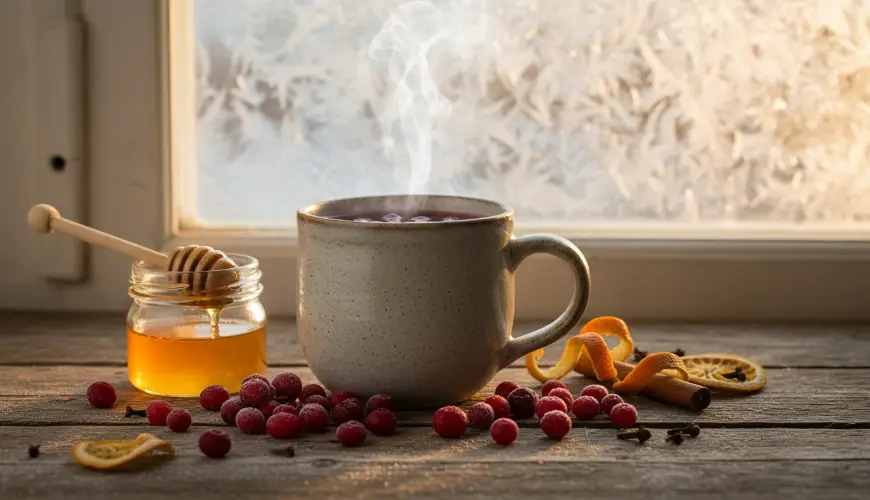
When snow falls outside and windows frost over, the human body naturally craves warmth. Not everyone reaches for coffee or tea, though – those familiar with Russian and Scandinavian cuisine know there is a drink that combines pleasant warmth, bold flavour and genuine nutritional value. It is called mors, and in recent years it has been finding its way into Central European households seeking an alternative to sweetened fizzy drinks or industrially produced juices.
Mors is essentially a traditional Slavic fruit drink prepared from berry fruit, most commonly cranberries, water and honey or sugar. In its summer form it is served chilled, as a refreshing alternative to lemonade. Once winter arrives, however, its hot variant comes into its own – thicker, more aromatic and full of substances the body genuinely needs during the cold months. Hot cranberry mors is not merely a social media trend. It is a drink with a history stretching back centuries, which to this day holds a firm place on Russian, Finnish and Baltic tables.
Try our natural products




Where mors comes from and why we return to it
Historical records of mors date back at least to the Middle Ages. Russian chronicles mention fruit-based cooked drinks made from wild berries as part of the everyday diet of both common people and nobility. Cranberries were available across virtually all of Siberia and northern Europe, were easy to harvest and, thanks to their high benzoic acid content, preserved naturally – they could be stored throughout the entire winter without complex processing. This made them an ideal ingredient for preparing a nutritious drink at a time when fresh fruit was a rarity.
Today we return to mors for somewhat different reasons. We live in an era overwhelmed by the supply of industrially produced drinks full of artificial colourings, preservatives and refined sugar. Mors, by contrast, offers simplicity – a minimum of ingredients, a clear origin of raw materials and a flavour that is not artificially created but genuine. For those interested in a healthy lifestyle and mindful consumption, it is a natural choice.
It is no coincidence that interest in traditional fermented and cooked drinks is growing in parallel with advances in nutritional science. Research from Harvard and other leading institutions repeatedly shows that natural foods with a high content of antioxidants and vitamins play a key role in preventing a range of lifestyle diseases. Cranberries, meanwhile, rank among the fruits with one of the highest antioxidant contents of all.
What makes cranberry mors so exceptional
Cranberries are small but nutritionally extraordinary. They contain vitamin C, vitamin E, vitamin K1, manganese and a whole range of polyphenols, particularly proanthocyanidins – compounds that are the subject of intensive scientific research in connection with the prevention of urinary tract infections, inflammation and cardiovascular disease. Studies published in the journal Advances in Nutrition confirm that regular consumption of cranberries has a demonstrably positive effect on urinary system health and overall immune function.
Yet hot mors is not only about health benefits. It is also about the experience. Imagine a winter Friday evening – the temperature outside drops below zero, you are sitting at a table with a mug of steaming drink whose aroma blends the tartness of cranberries with the warm sweetness of honey and the subtle bitterness of orange peel. This is exactly what classic home-prepared mountain mors looks like, as grandmothers in Karelia or the Finnish countryside know it. This drink possesses an ability that few modern products can replicate – it can slow down time.
Preparing mors is, moreover, surprisingly simple. The basic method involves crushing fresh or frozen cranberries, setting the juice aside, and simmering the pulp in water for approximately ten to fifteen minutes. The liquid is then strained, combined with the reserved juice and sweetened with honey or raw cane sugar. The key principle is that part of the fruit is not cooked – this preserves heat-sensitive vitamins and enzymes that would otherwise be destroyed by boiling. It is precisely this combination of a cooked and a raw component that gives mors its characteristic flavour and nutritional value.
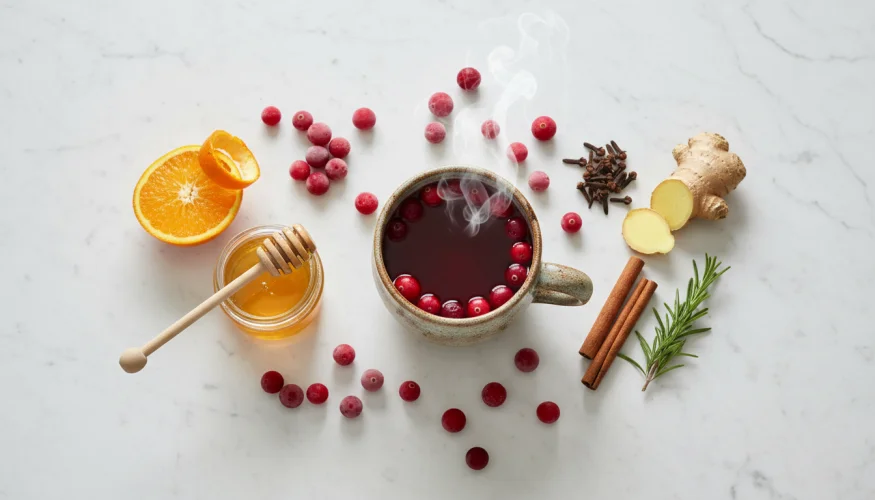
There are countless variations. Some people add slices of ginger for an extra warming effect, others season with cinnamon or cloves, while others experiment with sea buckthorn or rosehip. Each of these additions has its own rationale – ginger promotes circulation and digestion, rosehip contributes an additional dose of vitamin C, sea buckthorn brings omega-7 fatty acids, which are genuinely valuable for winter skin care. A hot cranberry drink can thus serve simultaneously as a functional complement to everyday nutrition, not merely as a pleasant ritual.
As Finnish writer and nature lover Arto Paasilinna once observed: "The North taught us that warmth is not merely a matter of temperature – it is a matter of will and the right drink at the right moment." This thought perfectly captures why mors has survived centuries and continues to find new admirers.
How to incorporate mors into a winter ritual
Mors works best as part of a mindful evening ritual – what the Danes call hygge and the Finns kalsarikänni, the art of being at home, warm and at ease. This is not some fashionable philosophy. It is a natural human instinct to seek refuge in simple things when winter reigns outside. And a warm drink made from quality natural ingredients is one of the most accessible ways to treat yourself to that feeling.
A good example is a family from Prague who, three years ago, decided to reduce their consumption of industrial drinks and replace them with home-made alternatives. They started with kombucha, then moved on to fermented lemonades and eventually discovered mors. Today they prepare it every week, vary the flavours according to the season and buy cranberries either fresh from local farms or frozen – which is a perfectly comparable alternative from a nutritional standpoint, since freezing does not destroy most of the valuable compounds. They say that mors helped them replace mulled wine, which they previously drank as their only warm winter drink – and in doing so they gave up the alcohol without giving up the ritual.
It is precisely this aspect – the ritual – that is perhaps the most important. Preparing mors takes roughly twenty minutes and requires standing at the stove, attentiveness and a little patience. In an age when we are accustomed to instant solutions and ready-made products, this slow process is itself a value. It helps to disconnect from screens, slow down and pay attention to something tangibly simple.
For those who want to start but lack the time or access to fresh cranberries, quality natural concentrates and dried variants also exist that can be used as a base. When choosing, it is important to check the ingredient list – an ideal product should contain only fruit with no added preservatives or artificial sweeteners. In today's healthy lifestyle market, a wide range of ingredients suitable for home-made mors can be found, from organic frozen cranberries to raw honey and unroasted orange peel.
It is worth noting that mors pairs beautifully with other superfoods that have been on the rise in recent years. Adding a teaspoon of sea buckthorn macerate or rosehip powder can transform the resulting drink into a truly vitamin-packed cocktail. Those who prefer a sweeter version can reach for raw cane sugar or date paste instead of white sugar – the result will still be natural, but with a lower glycaemic index.
Interestingly, mors has also found a place in gastronomy. Modern restaurants in Helsinki or Tallinn include it on their drinks menus as an alternative to alcoholic aperitifs or as part of a non-alcoholic food pairing. Its natural tartness and intense colour make it a visually striking drink that holds its own even on a festive table. Served in a glass mug with a slice of orange and a sprig of rosemary, it looks just as elegant as expensive cocktails – and yet it is prepared from three or four ingredients that most households already have on hand.
It is also important to mention the sustainability dimension. Cranberries are a relatively local crop in northern Europe and the mountain regions of Central Europe. Their harvesting or cultivation requires neither exotic conditions nor long transport routes. For those interested in reducing the ecological footprint of their diet, mors made from locally sourced cranberries is a logical choice – natural, nutritious and with minimal environmental impact.
Winter lasts a long time, and it is good to have a drink at hand that can transform it from an unpleasant period of waiting for spring into a time of slow pleasure. Mors – whether in its classic Russian form, a Nordic variation or a home improvisation using whatever happens to be available – achieves this better than most. It is a drink that needs no marketing or fashionable label. Taste it once at the right moment and you will understand why it has survived for centuries.