
Thumb or Pacifier Sucking: When to Stop and How to Do It

A small child with a pacifier in their mouth or thumb at their lips – this is a sight almost every parent knows. It's a natural reflex that brings children calm and a sense of security. However, what is completely normal and even desirable in infancy can over time turn into a habit that requires patience, consistency, and a little ingenuity to overcome. The question of when and how to stop thumb sucking or pacifier use troubles many parents – and the right answer isn't always simple.
Sucking is a biologically programmed reflex in newborns. It helps them take in food, but also serves an important calming function. When a child sucks their thumb or a pacifier, the parasympathetic part of the nervous system is activated, inducing calm and reducing stress. This is why small children calm down so quickly once they get a pacifier or find their own thumb. From this perspective, it is entirely healthy behaviour that there is no point in suppressing before the child is ready.
Try our natural products





Pacifier and thumb sucking: how do they differ?
Although a pacifier and thumb sucking may seem to serve the same function, from a practical standpoint they differ quite significantly – particularly in how easily each habit can be stopped. A pacifier has one key advantage: a parent can simply take it away from the child or gradually limit its use. The thumb is part of the child's body, which makes the situation more complicated. The child has access to it at all times and in all places – at night, at nursery, in the car – and the parent has minimal control over this.
In terms of their effect on dental development, both habits are fairly similar. Long-term sucking – whether of the thumb or a pacifier – can affect tooth alignment, palate shape, and bite. However, the intensity and duration of the habit are the key factors. Children who suck a pacifier or thumb only occasionally and stop before the age of four tend to experience minimal or no such changes, and the teeth usually self-correct after the permanent teeth come through. The situation is different when the habit persists into school age – orthodontic intervention may then be necessary.
Paediatricians and dentists generally agree that the ideal time to wean from a pacifier is between the ages of two and four. The World Health Organization recommends breastfeeding until two years of age and beyond, and the need for sucking naturally decreases as the child matures and finds other ways to self-soothe. If a child is still sucking a pacifier or thumb at four years of age, it is advisable to consult a paediatrician or dentist about whether the situation needs to be actively addressed.
Parents also sometimes ask whether it is better not to introduce a pacifier at all, or whether it is preferable to a thumb-sucking habit. Interestingly, some studies suggest that using a pacifier at sleep time may reduce the risk of sudden infant death syndrome (SIDS), which is why the American Academy of Pediatrics supports its moderate use during the first year of life. At the same time, it cautions that a pacifier should not be introduced before breastfeeding is well established – it is generally recommended to wait at least three to four weeks after birth.
How to wean: practical strategies that work
When the time comes to say goodbye to a pacifier or thumb, parents face a challenging task. The key to success is an approach that takes into account the child's age, temperament, and the family's overall situation. Suddenly taking away a pacifier without any preparation may work for some children, but in others it can cause significant stress, sleep disturbances, and behavioural difficulties. This is why most experts recommend a gradual and gentle approach.
One of the most effective methods is gradual restriction. Parents begin by allowing the pacifier only at bedtime or during moments of significant distress, then gradually limit it to night-time hours only, before eliminating it altogether. This approach gives the child time to adapt and find other ways to self-soothe – such as cuddling a favourite toy, rhythmic rocking, or listening to calming music.
For older children, roughly from the age of three onwards, symbolic rituals also work well. A popular method is the so-called "pacifier fairy" or "pacifier goblin" – the child consciously gives away or sends off the pacifier in exchange for a small gift or experience. This method works because the child actively participates in the decision and does not feel that something has been forcibly taken from them. It is important to prepare the child in advance, talk with them about why it is time to stop, and frame the whole process as a positive step – something that "big children" do.
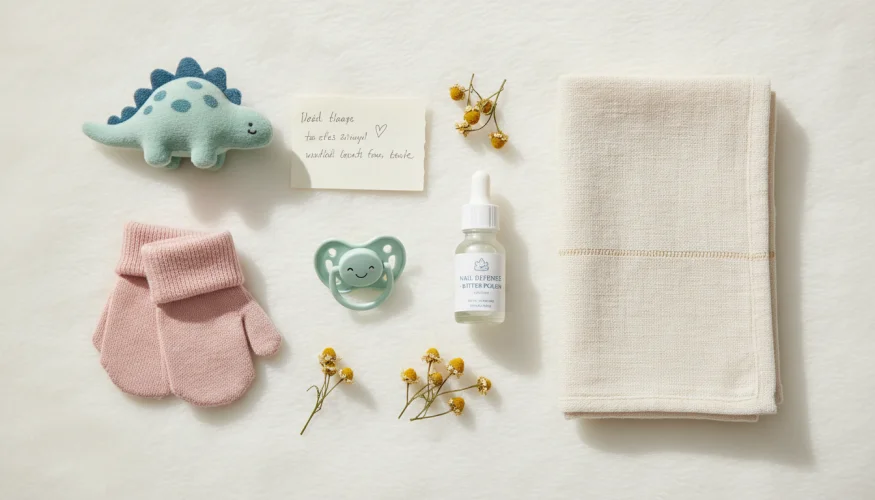
Take Klára, for example, the mother of four-year-old Filip. Filip had been dependent on his pacifier since birth, and every attempt to take it away ended in dramatic crying and restlessness. Klára decided to try the "pacifier fairy" method. Together with Filip, they wrote a letter, placed the pacifier inside, and in the morning a small dinosaur – Filip's dream toy – was lying in its place. Although Filip woke up on the first night asking for his pacifier, Klára remained consistent and offered him a cuddle instead. Within a week, Filip was calm and had stopped asking about the pacifier on his own.
Thumb sucking is a more complex case, as the child cannot simply "put down" their thumb. Different strategies are helpful here. One option is a plaster or special glove that reminds the child not to put their thumb in their mouth. There are also bitter nail polishes designed specifically for this purpose – their taste discourages the child from sucking without causing any harm. These products are widely available in pharmacies and are safe for children. With older children, it is important to involve them in the process – talk with them about why they want to stop, and celebrate each thumb-free day as a small victory.
The situations in which the child most frequently reaches for their thumb or pacifier also play a significant role. Very often these are moments of boredom, tiredness, or stress. If parents can identify these triggers, they can offer alternatives – for example, an engaging activity for the hands, such as modelling clay, drawing, or puzzles. A child whose hands are busy has no room for thumb sucking.
It is also important to recognise that pressure and punishment never work well. Research in developmental psychology repeatedly shows that negative reinforcement – punishing undesired behaviour – tends to increase anxiety in young children, which is itself a trigger for sucking. In other words, the more we stress a child about thumb sucking, the more they suck their thumb. Gentle consistency, praise for progress, and patience are far more effective tools.
It sometimes happens that a child who has already stopped using a pacifier or sucking their thumb returns to the habit. This is usually a reaction to a change in their life – starting nursery, the birth of a sibling, moving house, or any other situation that creates uncertainty for the child. In such cases, there is no reason to panic. It is a natural regression mechanism and usually resolves on its own once the child adapts to the new situation. A parent can help by giving the child more attention, physical contact, and reassurance of safety.
As paediatrician and author T. Berry Brazelton, one of the most influential child development experts of the 20th century, once said: "Children do things in their own time. Our job as parents is not to push them, but to be there when they are ready." These words apply equally to weaning from a pacifier or thumb – appropriate encouragement and support, yes, but respect for the child's own pace is equally important.
Parents should also remember to attend regular dental check-ups. A child's first dental visit should take place no later than their first birthday, or when the first tooth comes through. The dentist can then monitor on an ongoing basis whether the sucking habit is affecting dental development, and recommend early orthodontic treatment if necessary. The sooner a problem is identified, the easier and less costly it is to address.
It is important to recognise that thumb sucking or pacifier use is not a sign of poor parenting or parental failure. It is a natural developmental phenomenon that most children outgrow on their own – usually between the ages of three and four. The parent's role is to be a source of support, to offer alternatives, and to gently guide the situation when necessary. Every child is different, and what works for one may not work for another. Flexibility, empathy, and a willingness to try different approaches are the most valuable things a parent can offer their child throughout this process.
Weaning from a pacifier or thumb is one of the many small milestones that children and parents navigate together. And just like other challenges that come with parenthood – this one will come to an end. With a little patience and the right strategy, sooner than parents might think.