

Smartwatches can be a great assistant if you don't rely on them too much and also pay attention to y
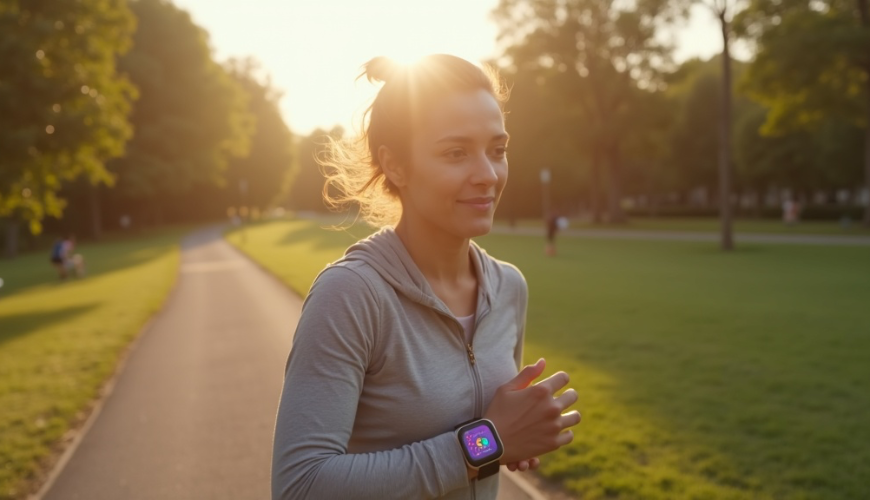
Smartwatches have become almost a standard part of everyday gear within a few years. They measure steps, heart rate, sleep, stress, and sometimes even blood oxygenation or heart rate variability (HRV). For many people, they serve as motivation for movement and as a subtle coach that reminds them that their body needs stretching, calmer breathing, or an earlier bedtime. However, along with this comes a peculiar paradox: the more data a person has, the easier it becomes to doubt what they feel. It sometimes happens that the watch reports fatigue, but the person subjectively feels great—or vice versa, the numbers appear "normal", yet inside there's emptiness, irritability, and a heavy head.
It's essentially a modern variant of the old question: whom to trust more—the device or one's own body? The healthiest answer is usually somewhere in the middle. Applications and technology can be good servants but bad masters, especially when they become the sole source of truth. The purpose of smartwatches is not to overwrite intuition but to supplement it. And when it succeeds, they can be a great helper not only for sports but also for everyday well-being.
Try our natural products
Smartwatches Measure but Don't Understand: Why Algorithms Clash with Reality
Smartwatches and apps use algorithms. It sounds technical, but in practice, it means a simple thing: the device collects signals (heart rate, movement, sometimes skin temperature), recalculates them according to certain rules, and the result is a number or recommendation. In an ideal world, it works great. However, human life is not a lab test.
Algorithms often rely on averages and probabilities. They can capture trends well—like when someone is consistently inactive, stays up late, or repeatedly shows elevated resting heart rate. However, they do not take into account other external and internal factors as experienced by the specific individual. Sometimes it's a limitation of the sensors, other times it's the calculations themselves, which simply have to be universal to work for millions of users.
Just a few common situations make it clear why watches and reality diverge:
- After a demanding day at work, the body may be "charged" with stress, but the mind is happy because something went well. The watch sees a higher heart rate or worse HRV and evaluates it as fatigue. Yet the person may feel in good shape—just energized.
- Conversely, after a weekend without activity, the numbers may look nice (calm, no fluctuations), but subjectively there is lethargy and reluctance. The body is not tired from exertion but "stiff."
- For women, the cycle comes into play, affecting temperature, heart rate, sleep, and perception of exertion. Some apps try to estimate this but often only partially.
- Hydration, alcohol, heavy food late in the evening, travel, heat, an impending virus, allergies, long sitting, mental stress—all can change the signals that the watch captures, and it doesn't always mean "bad."
It's important to remember that watches are smart primarily in that they can collect data. Not that they automatically understand the context. And context is everything with the body.
Even reputable health institutions point out that wearables can be useful for tracking trends and promoting healthy behavior, but they should not replace medical diagnostics or personal judgment. For basic orientation and broader contexts, it is worth reading information from Mayo Clinic about smartwatches and health metrics.
When Numbers Don't Match Feelings: What to Do When the Watch Shows Fatigue but the Person Feels Good (and Vice Versa)
Many people know this: waking up in the morning, feeling eager to go out, with a clear head—and the watch announces "low readiness" or "impaired recovery." Other times it's the opposite: the device praises great sleep, but the body protests as if it ran a marathon overnight.
This discrepancy is particularly frustrating because numbers seem authoritative. They are precise, clear, colorful. Feeling, on the other hand, is variable and sometimes hard to describe. Yet feeling is often the first signal that cannot be replaced.
In practice, it helps to think of the data as a map, not as a verdict. The map may be inaccurate, missing a scale, or contain a dead-end—but it still offers useful orientation. And the person is the one who decides which way to go.
Try our natural products
A Real Example That Is Surprisingly Common
Imagine a situation that can be encountered in any office or at home with children: a person sleeps "so-so" all week, finishes duties in the evening, and saves the morning with coffee. But on Friday, they wake up with a sense of relief—finally a freer day, nice weather outside, the body wants to move. Yet the watch shows worse recovery and a higher resting heart rate.
What happened? The body might be more tired than it seems, just overshadowed by joy and anticipation. Or conversely, the watch caught something insignificant (like worse measurement due to a looser strap, warmth in the bedroom, or late dinner). In both cases, it makes sense to compromise: go out but choose lighter intensity, pay attention to breathing, don't overdo the start. The person retains spontaneity and at the same time respects the signal that it might not be a day for records.
And now the opposite scenario: the watch shows "everything's great," but the person feels lousy. This is a moment to remind oneself that some things don't fit into metrics—like sadness, exhaustion from long-term caregiving, work overload, or silent anxiety. "Not everything that can be measured is important, and not everything important can be measured." This is exactly the moment.
Why Blindly Following Numbers Is Risky
When a person starts to adhere only to metrics, they easily slip into two extremes. The first is excessive control: every deviation from the "ideal" causes stress, which paradoxically worsens sleep and recovery. The second extreme is resignation: data is one way one day, another the next, so it's pointless, and the watch ends up in a drawer. Yet there is a third way: to take them as a helper, but make the final decision based on a combination of information.
It's also good to know that some metrics (like HRV) are sensitive and individual. Much depends on how long a person has collected a basic "baseline," whether they measure under the same conditions, and whether the app correctly evaluates the long-term trend. Even serious sources, such as Harvard Health Publishing, remind us that wearable electronics can support healthy habits, but accuracy and interpretation vary, and caution is needed.
How Not to Rely Solely on Numbers: Simple Rules for a Healthy Relationship with Watches and Intuition
It's not about throwing away the data. It's about setting up a relationship with them that supports health—not anxiety. Ideally, smartwatches enhance the ability to perceive the body: a person begins to notice what makes them feel good, what drains their energy, and how performance and mood change. How to do this without unnecessary pressure?
1) Treat Technology as a "Good Servant," Not an Authority
It sounds like a cliché, but in practice, it's essential. Technology is a good servant but a bad master when it dictates what a person should feel. When the watch says "poor sleep," it doesn't automatically mean a bad day. It means: it might be wise to be cautious, drink more, not overdo it, and try to fall asleep a bit earlier in the evening.
It's useful to ask a simple question: Does this metric make my life better, or does it take away my peace? If it's more the latter, it's okay to turn off some functions (notifications, "body battery," sleep evaluation) or check them only occasionally.
2) Instead of a Single Value, Watch the Trend and Context
A one-time deviation often means nothing. A trend does. Smartwatches and apps use algorithms that make the most sense when monitored over the long term. If sleep worsens over several weeks, resting heart rate rises, and at the same time, the desire for movement decreases, it's a signal to adjust the routine. But if one day turns out worse, it could easily be because the person turned over several times at night and the sensor evaluated it as wakefulness.
Context often explains more than the number itself: late alcohol, salty dinner, heat in the bedroom, stressful phone call, long sitting without a walk. The body is a system, not a table.
3) Perceive the Body "from the Inside": A Quick Check-In That Takes Half a Minute
When data diverges from feeling, a short internal check helps. Without much philosophy, just a few points: what is the breath like, how do the muscles feel, what is the mood, is there a desire for movement or rather reluctance, is hunger normal or unusual, does a headache come on? This mini-ritual strengthens the most valuable thing: the ability to recognize what the body truly needs.
And here it becomes clear why intuition and one's own feeling are not some esoteric concept. They are information that doesn't fit into the watch but often decide whether a day is suitable for intense training or rather for a walk and early sleep.
4) Shift from Performance to Care: Choose the "Version of the Day," Not Either-Or
Many people tend to think in black and white: either train to the max or nothing. When the watch warns of fatigue, it can easily turn into disappointment. Yet there are many in-between steps: a light run instead of intervals, brisk walking instead of the gym, a shorter route, longer warm-up, more stretching.
It's not about being "nice" to the watch. It's about being reasonable to oneself. The body remembers the long-term approach, not a single perfect session.
5) Expect That Algorithms Don't See Everything (and Sometimes They're Just Wrong)
This is a liberating reminder: algorithms do not take into account all external and internal factors. Watches don't recognize that a child coughed at night, that a person is dealing with a demanding conflict, that they returned from a trip and have a shifted schedule, that it's muggy outside, or that a cold is coming on, which is just "starting." Some of this will reflect in the data, but the interpretation can be off.
Sometimes, moreover, a purely practical thing happens: a poorly tightened strap, cold hands, a tattoo in the sensor area, movement that the watch captures less well. The result may then appear as a "body problem," yet it's a measurement issue.
6) Maintain a Healthy Distance: Data as a Tool, Not Identity
It's easy to start defining oneself by what the app shows: "today I have low energy," "I have a bad score," "I'm not ready." Yet a person is not a score. Especially when metrics start revolving around every little thing, it can become a source of tension that paradoxically worsens what the watch monitors.
Here, a slight shift in language helps: instead of "I'm tired because the watch says so," more like "the watch suggests fatigue, so I'll be careful." The difference is small but psychologically significant.
And when someone tries to live more sustainably, they often find that a similar principle applies elsewhere: just as it's not worth blindly buying "miracle" products without regard to household reality, it's not worth blindly following graphs without regard to the body's reality. In both cases, gentle, long-term habit changes work better than chasing perfection.
Ultimately, it turns out that the best use of smartwatches is not that they relieve a person of responsibility for their own health. On the contrary—when used wisely, they increase mindfulness. They help reveal that a few glasses of wine in the evening worsen sleep more than it seems. Or that a short walk after lunch does more for energy than another coffee. And sometimes they just remind of the simplest thing: that the body is not a machine, but a living organism with its waves, rhythms, and needs.
So next time, when the watch shows fatigue and the person feels good, or vice versa, it's worth taking a small step back. Look at the data, but also ask the body. Because the biggest "upgrade" is not a new app update, but the ability to hear oneself—and let technology play a supportive, not a leading role.