

Neuroathletic training is changing sport from the ground up
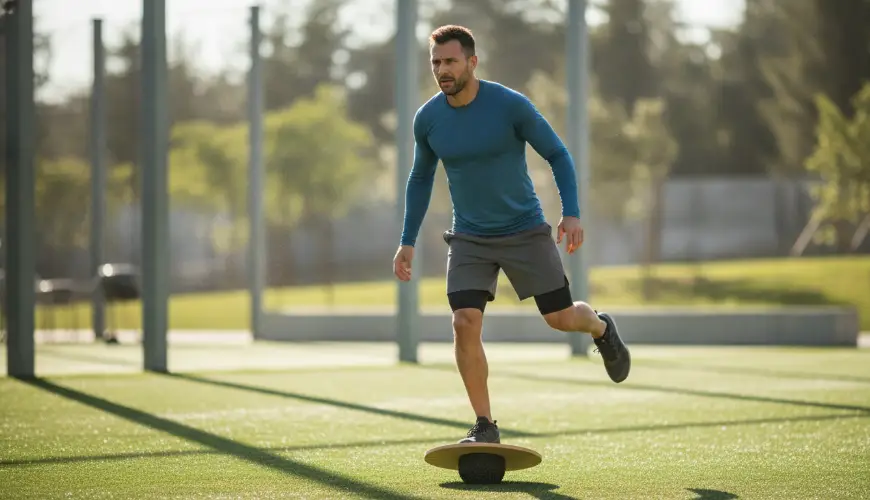
Modern sport has long focused on muscles, endurance, and technique. Training plans were filled with kilometres, kilograms, and seconds. Yet in recent years, a conviction has been spreading among elite athletes and their coaches that true performance begins much higher than in the legs or arms – it begins in the brain. Neuroathletic training, meaning systematic work with the nervous system, eyes, and vestibular apparatus, is gradually making its way from neuroscience laboratories into the everyday practice of athletes at all levels.
This is no passing trend or marketing gimmick. This approach is backed by solid scientific foundations and a growing body of evidence that the brain is the true control centre of performance – and that it can be trained, strengthened, and optimised just like muscles.
Try our natural products





What neuroathletic training actually is and why it matters
Simply put, it is training of the nervous system with the aim of improving athletic performance, reducing the risk of injury, and accelerating recovery. While classical training works with the body from the outside in – strengthening muscles, improving cardiovascular capacity, or developing movement technique – the neuroathletic approach works in the opposite direction. It starts with the brain and the neural pathways that control the entire body.
The pioneer of this approach in its modern form is an American trainer and Z-Health Performance therapist, whose methodology draws on findings from neuroscience, optometry, and vestibulology. The fundamental premise is surprisingly simple: the brain constantly evaluates the safety of movement. If it receives imprecise or poor-quality information from the senses – from the eyes, the inner ear, or proprioceptors – it protects the body by limiting strength, range of motion, or reaction speed. In other words, the brain deliberately "brakes" performance to prevent injury. Neuroathletic training seeks to release this brake by improving the quality of incoming information.
Consider, for example, a competitive cyclist who repeatedly struggles with neck pain and reduced stability when riding in an aerodynamic position. The classical approach would look for the cause in shortened muscles or poor technique. The neuroathletic perspective would ask a different question: are his eyes seeing correctly in the horizontal plane? Is his vestibular system functioning symmetrically on both sides? Is this information being properly integrated in the brain? The answers can be surprising – and the solution then comes not from weights or a foam roller, but from targeted exercises for eye movements and the balance system.
Eye training: Vision as the foundation of athletic performance
The eyes are the brain's most important source of information about the surrounding world. Research shows that approximately 70% of the sensory input the brain processes comes from the visual system. Yet vision training in sport has traditionally been limited to reaction tests or tracking a moving object. The neuroathletic approach goes considerably deeper.
Eye training in this context encompasses several key areas. Saccadic movements – rapid shifts of gaze from one point to another – are essential for orientation in a rapidly changing environment, such as in ball sports. Smooth pursuit, meaning the ability to follow a moving object without interruption, directly influences the timing of strikes, passes, or rebounds. Convergence and divergence, meaning the ability to focus on a near or distant object, play a role in depth perception.
Notably, the eye muscles are directly connected to the postural system. If eye movements are asymmetrical or imprecise, the brain compensates with tension in the neck, shoulders, or lumbar spine. This compensation then limits performance and increases the risk of overuse. This is precisely why many athletes who have begun working with eye training have seen improvements not only in perceptual accuracy, but also in movement economy and reduced muscle stiffness – without a single conventional stretch.
Practical exercises require no expensive equipment. They include, for example, fixing the gaze on a specific point while moving the head, tracking a moving finger in various planes, or working with the vestibulo-ocular reflex – that is, the ability to maintain a stable image on the retina even when the entire body is moving. These seemingly simple exercises can have a dramatic impact on athletic performance when performed systematically and with an understanding of what they are training.
The vestibular system: The silent conductor of balance and coordination
The inner ear is rarely mentioned in the context of sport. Yet the vestibular apparatus – a system of canals and sacs hidden deep within the skull – is one of the most important sources of information for the brain. It registers acceleration, rotation, and the position of the head in space, and works together with the eyes and proprioceptors to maintain balance and movement coordination.
As neurologist and sports scientist Dr. Andrew Huberman of Stanford University has noted, the vestibular system is literally the "anchor" of the entire movement system – without accurate information from the inner ear, the brain cannot effectively orient itself in space or plan complex movement sequences.
Problems with the vestibular system manifest in athletes in various ways. These may include reduced stability when moving in non-standard positions, impaired coordination after turning or rolling, or chronic balance difficulties that cannot be overcome through conventional training. In more serious cases, vestibular system dysfunction can contribute to recurring injuries of the ankles, knees, or lumbar spine – because the body is constantly compensating for inaccurate spatial information.
Vestibular training includes exercises such as controlled head rotations with a fixed gaze, movement on unstable surfaces under varying visual conditions, or specific movement combinations that deliberately stimulate individual parts of the inner ear. The goal is not to "overload" the vestibular system, but to gradually expand its tolerance for various movement situations and improve the speed and accuracy of its responses.
An interesting practical example comes from the training of alpine skiers. During competition, they are exposed to extreme rotations, accelerations, and changes in body position – and their vestibular system must handle situations that would literally disorient the average person. Systematic vestibular training away from the snow allows them to maintain clear spatial orientation even in the most demanding sections of the course, directly affecting both their time and their safety.
The brain as a training target: Sensory integration and neural plasticity
Training the eyes and vestibular system would be incomplete without the third component – the brain itself and its ability to integrate incoming information and transform it into efficient movement patterns. This ability, referred to as neural plasticity, is one of the most remarkable properties of the human brain: neural pathways change, strengthen, and reorganise in response to experience and training.
Neuroathletic training deliberately harnesses this plasticity. The goal is not merely to improve the function of individual sensory systems, but to ensure that the brain can quickly and accurately integrate information from the eyes, the inner ear, and the body – and generate optimal movement responses on that basis. This process is called sensory integration and underlies everything from reaction speed and movement precision to the ability to learn new skills.
In practical terms, this means that neuroathletic training does not remain at the level of isolated exercises for the eyes or balance, but progressively combines them into more complex situations that simulate the conditions of actual athletic performance. An athlete might, for example, perform eye exercises while standing on one leg, or combine vestibular stimulation with cognitive load – such as counting or decision-making. In this way, the nervous system learns to function effectively under pressure, which is precisely what sport demands.
An important component of this approach is also working with breathing and the state of the nervous system. The brain functions best when it is not overwhelmed by a stress response – and this is why many neuroathletic protocols also include targeted regulation of the autonomic nervous system through breathing techniques or relaxation exercises. Research in the field of sports psychology consistently shows that regulating nervous system activation before and after performance has a direct impact on movement quality and recovery speed.
Who benefits most from neuroathletic training
It would be a mistake to assume that neuroathletic training is the exclusive domain of professional athletes or people with neurological conditions. In reality, it can deliver significant results for virtually anyone who is physically active – whether a recreational runner, a golf enthusiast, a dancer, or someone returning from injury.
This approach is particularly valuable in situations where conventional training stops yielding results. If an athlete is doing everything right – training hard, recovering well, eating properly – and yet performance is not improving or injuries keep recurring, the cause may lie precisely in the nervous system. Neuroathletic assessment and training can then uncover and address problems that would otherwise remain hidden.
The neuroathletic approach also produces very good results in rehabilitation following concussion or vertigo, where dysfunction of the vestibular and visual systems persists long after the acute symptoms have subsided. The specialist literature in this area continues to grow and supports the integration of neuroathletic methods into standard rehabilitation protocols.
The world of sport is changing. The boundaries of performance are shifting less and less through harder training and more and more through a smarter understanding of how the body and brain actually function. Training the eyes, the vestibular system, and neural integration is not a replacement for conventional preparation – it is a natural extension of it, one that opens dimensions of performance that previously remained untouched. And that is why neuroathletic training will be talked about more and more in the years to come.