

# Why Food Textures Bother Us More Than the Taste Itself

Everyone knows it. You're sitting at the table, food is in front of you that everyone says is excellent. You take a bite, the taste is pleasant, the aroma enticing – and yet something resists. Your tongue registers something that your brain immediately evaluates as unacceptable. It's not about taste. It's about texture. This seemingly trivial sensory detail has surprisingly deep roots in human biology, psychology and culture, which is precisely why it deserves more attention than we usually give it.
Aversion to a particular food texture is not a whim or oversensitivity. It is a complex reaction involving evolution, memories, neurological processes and social patterns. Understanding this phenomenon can change the way we think about food – and perhaps about ourselves.
Try our natural products





Why does the brain respond to texture differently than to taste?
When we put food in our mouth, an entire set of sensory receptors activates simultaneously. Taste buds capture sweetness, bitterness, saltiness, acidity and umami. Olfactory receptors process aroma. But there is also a third, less discussed stream of information – so-called oral somatosensory perception, meaning the perception of texture, temperature, pressure and consistency through nerves in the mouth, tongue and gums. All of these signals travel to the brain in parallel and the brain integrates them into a single overall experience.
The key point is that texture and taste are processed in different areas of the brain. While taste is primarily evaluated in the gustatory cortex, texture activates areas associated with touch and also with emotions – specifically parts of the limbic system. This explains why aversion to texture can be so strong and so difficult to rationally suppress. It is not simply a conscious "I don't like this", but a deeply rooted emotional reaction that precedes any conscious evaluation.
Research in the field of food science, such as studies published in the academic journal Food Quality and Preference, repeatedly shows that texture is among the strongest predictors of whether a person will accept or reject food – regardless of its taste. In other words, even perfectly seasoned food can be rejected purely on the basis of how it behaves in the mouth.
Take a specific everyday example: oysters. Many people who have never tried them describe their aversion before even putting them in their mouth – based solely on the visual impression of their slippery, gelatinous consistency. Those who do try them often admit that the taste was delicate, oceanic, pleasantly salty – but the texture prevented them from enjoying it. The brain simply sent a "stop" signal before the taste had a chance to register its verdict.
Evolution that protects us – or complicates our lives
Aversion to certain textures is not random. From an evolutionary perspective, there are very good reasons why a slimy, greasy or gelatinous consistency can trigger immediate nausea. Foods that are spoiling, full of microorganisms and bacteria, tend to change their texture – firm meat becomes soft, fruit disintegrates, the surface of foods becomes sticky. The brain learned to associate these textural signals with danger, and this association is so deeply encoded that it has survived thousands of years of civilisational development.
Similarly, aversion to mushy or overly soft consistency in foods that should normally be firm works the same way. An apple that is mealy and yielding will be evaluated by the brain as potentially spoiled – even if it is still edible. Crunchiness, on the other hand, signals freshness, firmness and safety. It is no coincidence that the sound of crunching when biting is automatically associated by most people with a pleasant eating experience.
Anthropologist John Allen, in his book The Omnivorous Mind, describes how the human brain developed a sophisticated system of "texture filters" that helped our ancestors distinguish safe foods from dangerous ones at a time when there were no other ways of testing food quality. This system was then a safety net. Today, living in an environment with unprecedented food quality control, it may be more of a source of unnecessary limitations.
But evolution does not operate on the basis of the current situation. It operates on the basis of thousands of years of recurring patterns. And so it continues to warn us against textures that once could have meant danger – even when they pose no threat today.
When psychology and personal history enter the picture
Biology is only part of the story. Personal experience and psychological association play an equally important role. Textural aversion very often forms in childhood and can persist throughout life, even when a person cannot remember the original trigger at all.
Imagine a child who, at the age of five, takes a bite of cooked spinach and the experience is unpleasant – not because of the taste, but because of the slimy, slippery consistency that reminds them of something foreign and disagreeable. The brain stores this experience as negative. Twenty years later, the adult refuses leafy greens without knowing why. The taste is irrelevant to them, because the texture triggers a defensive reaction before they even get to it.
This mechanism is well documented in the psychology of food. Experts speak of so-called negative conditioning, where a neutral or even pleasant stimulus becomes negative through a single powerful negative association. And texture is a particularly sensitive area in this regard, because it is processed by the emotional centres of the brain, which remember more intensely than purely rational structures.
Interestingly, textural preferences vary significantly not only between individuals, but also between cultures. In Japanese cuisine, textures that would provoke rejection in Europe are highly valued – gelatinous desserts made from agar-agar, slimy natto from fermented soybeans, or smooth, almost melting tofu. Japanese people perceive these textures as pleasant and desirable, while many Europeans experience a strong aversion upon first contact. The difference is not in physiology, but in cultural experience and repeated exposure from an early age.
As food scientist Gordon Shepherd says: "The taste of food does not originate in the food itself, but in the brain of the person consuming it." And into that brain enters not only chemistry, but the entire life history of the individual.
Neophobia, textural sensitivity and when it's something more
There is a spectrum on which each of us sits. At one end are people with high textural tolerance, who eat a wide range of foods without difficulty regardless of consistency. At the other end are people with marked textural sensitivity, for whom encountering an "unsuitable" texture can be a genuinely unpleasant physical experience.
This extreme textural sensitivity is one of the characteristic features of the eating disorder known as ARFID (Avoidant/Restrictive Food Intake Disorder), which in recent years has been increasingly recognised as a distinct diagnostic category. People with ARFID do not restrict their food intake out of fear of weight gain or dissatisfaction with their body, but precisely because of the sensory characteristics of foods – and texture plays a key role.
Similarly, heightened textural sensitivity appears in people with autism spectrum disorders, where sensory processing is generally more intense and less filterable. For these individuals, rejecting food on the basis of texture is not a choice or a whim – it is a natural and unavoidable response of their nervous system.
Even outside these clinical categories, there are many people who have strong textural preferences without any diagnosable disorder. And that is entirely normal. Textural sensitivity is a natural variation in human sensory experience, not a failure or a weakness.
Awareness of this fact can be liberating – both for those who themselves struggle with textures, and for those around them. Instead of frustration or pressure to "overcome" the aversion, a curious and open approach can help. Nutrition counselling professionals recommend gradual familiarisation with a new texture in a safe and pleasant environment, without pressure and without negative consequences in the event of rejection.
How to consciously work with textural preferences
Textural preferences are not fixed. The brain is plastic and capable of learning throughout life. Repeated exposure, positive associations and curiosity can gradually change what we perceive as acceptable or even enjoyable.
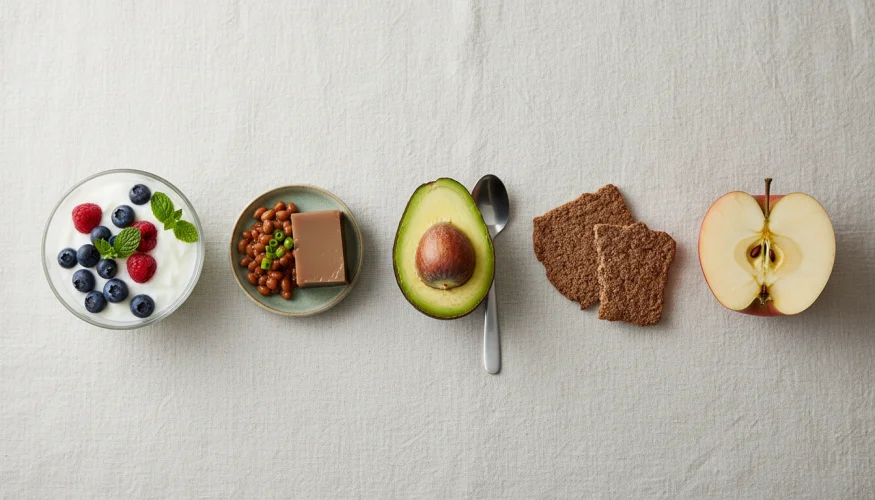
A practical approach is so-called gradual desensitisation – that is, repeated contact with a texture in small doses, ideally combined with taste or olfactory stimuli that are pleasant for the individual. If someone dislikes the soft consistency of avocado, they might start by tasting it in combination with crunchy toast, where the textural contrast reduces the unpleasant impression. Gradually they can try avocado with a less dominant accompaniment, until the brain learns to associate this texture with a positive experience.
Contextual influence works similarly. The same texture can be accepted or rejected depending on where and with whom we are eating, how the food is presented and what our expectations are. Yogurt served in an elegant glass bowl with fresh fruit will likely be received differently than the same yogurt consumed from a plastic cup in a hurry. The environment and context are part of the overall sensory experience.
It is also useful to distinguish between textures that bother us and those that cause us genuine physical discomfort. The first group can be learned to accommodate or tolerate. The second group deserves respect and, if necessary, professional support, if it significantly limits quality of life or nutrient intake.
Finally, perhaps most importantly, it is worth accepting the fact that textural preferences are a legitimate part of every person. Food is much more than just a collection of nutrients – it is a sensory, emotional and cultural experience. And texture is one of its most powerful, most underrated and most fascinating dimensions. Next time someone rejects food with the remark "I don't like the consistency", it may be worth remembering that behind it lies an entire world of biology, memory and personal history – and not mere whim.