

How to Slow Down in Everyday Stress to Give Your Body and Mind Space for Relief
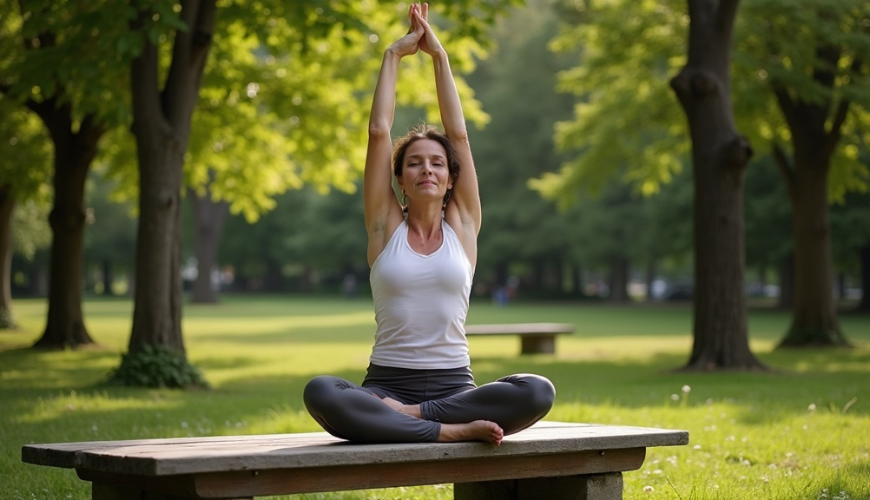
Everyday stress has become an almost invisible companion today. It's not always about major life upheavals—often, it's more about the accumulation of small things: notifications piling up, switching between tasks, performance pressure, overcrowded traffic, lack of sleep, quick meals "on the go," and the feeling that your mind is racing even when your body finally sits down. It's no wonder that more and more people are looking for ways to slow down in everyday stress and avoid constant stress without having to turn their lives upside down. The good news is that small, subtle changes often help—everyday little things that ease stress and gradually bring more calm back into the day.
Stress itself isn't "bad." In moderation, it can provide energy, speed up reactions, and help manage challenging situations. The problem arises when it becomes a long-term mode. The body and mind then function as if danger is imminent, even when it's "just" emails, deadlines, and an endless list of obligations. This is where it becomes important to distinguish what still helps and what starts to harm—the impact of long-term stress on both physical and mental health.
When Stress Stays On: What It Does to the Body and Mind
Long-term stress often appears subtle. Some notice more frequent headaches, others worse sleep, and others find that "everything annoys them." Typically, a person gradually adapts to increased tension and takes it as the norm—until a moment comes when the body reacts more loudly. Stress doesn't just happen "in the head." It affects hormones, the nervous system, digestion, and immunity.
On a physical level, tense muscles (neck, shoulders, jaw), energy fluctuations, impaired digestion, overeating, or a loss of appetite may occur. A frequent feeling of "inner restlessness" is also common, where a person can't relax even when they finally have free time. On a psychological level, stress manifests as irritability, reduced concentration, anxiety, distraction, or the feeling that "it's all too much." Sometimes there is also a disconnection from one's own needs—as if the body sends signals, but the head drowns them out.
Research has long shown that chronic stress is associated with poor sleep and can also affect cardiovascular health or immune responses. Useful and understandable information can be found, for example, from the World Health Organization (WHO) in the areas of mental health and stress. Practical materials on mental well-being and burnout prevention are also provided by the Czech National Institute of Mental Health.
However, the goal is not to "erase" stress. It is realistic to learn how to turn it off periodically so that it doesn't become a permanent setting. And this is exactly where simple tips and tricks for stress relief that fit into the regular day come into play.
Try our natural products





How to Slow Down in Everyday Stress Without Major Life Revolutions
When one says "slowing down," many imagine a vacation or a weekend without obligations. Yet, the biggest difference is often made by something else: short micro-breaks in the middle of an ordinary day. Slowing down is not a luxury but a skill—and it can be trained just like fitness. It's not about doing everything more slowly, but rather doing fewer things at once and giving the nervous system the signal that it doesn't always have to be on high alert.
One of the quickest ways to switch the body from tension to a more relaxed mode is through breathing. It's not necessary to know complex techniques. It's enough to consciously extend the exhale a few times—for example, inhale through the nose and exhale a bit longer than the inhale took. The body often understands this as the message: "It's safe." In practice, this can look almost trivial: a few breaths by an open window, in the bathroom before a meeting, or on the way home from work while waiting at a crosswalk. It's these small things that matter because they repeat every day.
Slowing down is also significantly supported by working with attention. Modern stress often arises not just from the volume of work but from constant switching—task, message, notification, another task. The brain then has no chance to "complete" one thing and calm down. A simple principle helps: allocate short blocks when one is available and short blocks when one is unavailable. It doesn't have to be hours. Sometimes just 20 minutes without a phone, or at least with notifications turned off, is enough. How to avoid constant stress often begins precisely by not giving stress direct access to your pocket and screen every thirty seconds.
A big topic is also sleep. Stress and sleep reinforce each other: when a person is tired, it's harder to handle pressure; when stressed, it's harder to fall asleep. Yet even a small evening ritual can significantly change the quality of falling asleep. Soft lighting, a warmer shower, a calmer pace, and a "soft transition" from activity to rest help. Often, a simple agreement with oneself works: not dealing with anything that raises the heart rate in the last 30 minutes before bed—work emails, messages, dramatic news on the internet. It's a small thing, but it has a surprising effect because the body finally gets time to slow down.
Slowing down also relates to the environment in which one lives. Chaos at home or work can subtly maintain tension because the brain constantly registers "unfinished business." Sometimes it's enough to tidy up one small area—the kitchen counter, the work desk, or a bathroom shelf—and there's a feeling of being able to breathe. In an ecological household, it often helps to eliminate aggressive scents and irritating chemicals, which can unnecessarily burden some people. Gentler, mild cleaning product alternatives and simplicity in the household can be surprisingly calming—not just due to healthier air, but also because the whole cleaning process is less of a "battle" and more of a routine.
Slowing down also includes food. Not necessarily a perfect diet, but ordinary regularity and moments when eating without multitasking. When lunch is eaten at the computer while responding to messages, the body gets calories, but the brain doesn't get a break. And those breaks are crucial in everyday stress. Sometimes it's enough to make eating a short ritual: sit down, put down the phone, eat the first three bites slowly. It sounds simple—and that's exactly why it works. Stress often breaks down on the smallest habits.
One thing is often underestimated: movement that isn't performance-based. Not everyone wants to run or go to the gym, but the body needs to release tension. A brisk walk, a quick stretch, a few squats, or even just "airing out your head" around the block helps. When movement is linked with daily routine, it stops being another obligation. It's enough to get off a stop earlier or take the stairs. And if possible, a touch of nature is ideal—even a city park can work wonders because it changes the rhythm of perception and diverts attention from endless stimuli.
"It's not about having fewer worries, but having more space between them." This sentence aptly captures why even small changes work. Stress often accumulates where there is no gap.
Everyday Little Things That Ease Stress: A Real-Life Example and a Few Proven Tricks
Imagine a typical morning: someone wakes up later than they intended, dishes from the previous day are still in the kitchen, the phone beeps, the mind is already counting tasks, and traffic jams add to the commute. In such a moment, it's easy to fall into the feeling that the day is already "lost." But it's exactly here that small steps, which can be taken immediately, make sense.
In real life, it often looks like someone, instead of automatically scrolling through news while waiting for coffee, opens a window, takes three deep breaths, and notices the light outside. It won't change the traffic situation or work deadlines, but it will change the internal setting. The body stops fighting for a moment. And when such "micro-slowing" is repeated several times a day, stress begins to break down into smaller and more manageable parts.
It also helps to prepare small anchor points in advance that restore a sense of control. A typical example is "mini-morning order": not cleaning the whole apartment, but doing one thing that immediately improves the atmosphere—like quickly rinsing a cup, wiping the counter, or preparing a water bottle for the bag. This creates the impression that the day doesn't start with chaos but with at least one completed step.
To keep stress lower in the long term, it's worth stopping putting pressure on oneself even in small things. Many people have a strict inner commentary: "I should handle more, I should be faster, I should always be okay." But the pressure for constant calmness is paradoxically another stressor. Relief often comes when it's accepted that tension will sometimes come—and that there are tools to soften it.
If it's helpful to have a few concrete support points, here's a short list that can be adjusted according to the reality of any day:
- Pause for 60 seconds (without the phone) and just extend the exhale
- Drink water before having another coffee (dehydration can worsen stress)
- Complete one thing (a single email, a single drawer, a single detail) instead of having ten unfinished
- Take a short walk or stretch between tasks to avoid "sitting in stress"
- Slow down in the evening: fewer screens, more calm light and routines
What's important is that these aren't "perfect habits" but accessible brakes that can be used even in demanding times. When stress repeats, relief needs to repeat too.
In everyday life, it's also helpful to limit sources of unnecessary tension. Sometimes this means simplifying the household and routines: fewer things, fewer decisions, fewer "musts." Minimalism is often understood as aesthetics, but practically it is mainly a relief for the head. When reusable items, quality bottles, containers, cloth bags, or mild products are repeatedly used at home, small worries like "I have to go shopping again" or "I'm out again" decrease. Sustainable choices can have not only an ecological benefit but also a psychological effect: less chaos, more predictability.
And what if stress persists despite this? Then it is worth paying attention to signals that it is no longer just ordinary tension. If sleeping problems persist long-term, panic states, significant anxiety, or the feeling that one can't handle everyday functioning appear, it's appropriate to seek professional help. It's not a failure but prevention. Useful directories and contacts can be found, for example, on the NUDZ website or in WHO materials, or with a general practitioner who can recommend further steps.
Meanwhile, it still holds true that a large portion of stress can be "released" in small moments. Not by making life flawless, but by bringing rhythm back into it. And rhythm often doesn't arise from big promises but from small, repeated decisions: taking a break, eating in peace, going for a walk, quieting the phone, tidying one thing, breathing at the window. When these small brakes become a regular part of the day, stress is no longer a continuous flow—and it's precisely then that it becomes possible not only to slow down in everyday stress but also to feel once again that life is not just a list of tasks to survive.