
A six-pack is the result of both training and a diet plan that makes sense in the long term.
When you say six pack, most people imagine firm "abs" on the abdomen, which symbolize fitness, discipline, and often confidence. However, in practice, there are many myths surrounding it: that doing hundreds of sit-ups daily is enough, that it can be achieved in a few weeks, or that abs automatically mean well-defined abs. In reality, the path to visible abdominal muscles is a combination of smart training, sensible eating, recovery, and patience – and also having a realistic view of what is healthy and sustainable for the body.
Perhaps that's why the common question "what is a six pack" is actually a good starting point. It's not about one "muscle," but about the appearance of the abdominal area, where the rectus abdominis muscle is visible, divided by tendinous intersections. For some, it's naturally more pronounced, for others less – and that's not a fault or laziness, but anatomy. Additionally, there's the fat layer, posture, tension of the deep stabilization system, and how a person breathes. Visible "abs" are therefore the result of sufficiently strengthened abdominal muscles and relatively little subcutaneous fat covering them. And this is where it becomes clear why just six pack exercises aren't the whole answer.
Try our natural products
What a Six Pack Really Is and Why Lifestyle Often "Hides" It
Everyone has abdominal muscles – even those who have never intentionally trained them. The difference lies in whether the abdominal muscles are strong, functional, and whether they are visible. Visibility is largely a matter of energy balance (how much energy the body takes in and how much it expends), diet quality, and overall activity. If the diet is long-term based on ultra-processed foods, sugary drinks, and an irregular routine, the body naturally stores reserves – and the abdomen is often one of the places where this becomes apparent.
At the same time, it's fair to say that the pursuit of maximally defined abs can slip into unhealthy extremes. Especially for women, as the female body naturally holds a slightly higher percentage of fat, partly due to hormonal functions. Visible abs are therefore not the only indicator of health, and certainly not a "requirement." As the well-known phrase that trainers like to repeat goes: "Abs are made in the kitchen." It's a simplification, but it captures reality: without a sensible diet, achieving a visible six pack is difficult.
Stress and sleep also play a role. When a person sleeps little, they crave sweets and salty foods more, recover less effectively, and often train less effectively. Chronic stress also promotes water retention and can worsen the relationship with food. That's why it's good to approach the topic of how to get a six pack as a broader lifestyle project, not a two-week challenge.
For greater credibility, it is worth recalling that the long-term impact of exercise, diet, and sleep on body composition is supported by a wide range of research and recommendations from authorities such as the World Health Organization (WHO) (recommendations for physical activity and healthy lifestyle).
How to Get a Six Pack for Beginners: Less "Burning," More Smartness
When someone looks for how to get a six pack for beginners, they often expect one magical plan. However, a beginner typically needs something entirely different from someone who has been training for years. At the start, the most important thing is to establish a routine, improve technique, and strengthen the core so that it is functional – meaning it helps with posture, protects the lower back, and improves performance in everyday life.
In practice, it might look like this: a typical workday, eight hours at the computer, a quick evening shopping trip, and fatigue. A person thinks, "I'll at least do abs," does 100 sit-ups, the next day their neck and lower back hurt, and they give up the routine after a week. Yet just 10–15 minutes, 3× a week, with sensible exercises and an emphasis on breathing and stability, would suffice. The body needs a regular signal, not a one-time effort.
Beginners should think of the abdomen as a "corset": it's not just about the front side, but also the oblique abdominal muscles, deep muscles, and pelvic stabilization. In practice, this means including exercises that teach the body to maintain a firm core without unnecessary arching in the lower back. And not skipping the rest of the workout: strong legs, back, and glutes are surprisingly important for a nice abdomen because they improve posture and overall body composition.
Regarding frequency, it's not necessary to "crush" the abdomen every day. For most people, 2–4× a week is ideal, a short block that complements walking, strength training, and occasional brisk cardio. And if aesthetics are also the goal, it’s good to remember that the body can't burn fat from just one area – so-called spot reduction is a myth. Six pack exercises strengthen the muscle, but fat is lost overall.
Six Pack Exercises That Make Sense (and Won't Destroy Your Back)
The best exercises are often the "boring" ones that work: they teach stability, control, and strength. To keep the text clear, a short list will suffice – and then smoothly transition into how to use them in practice.
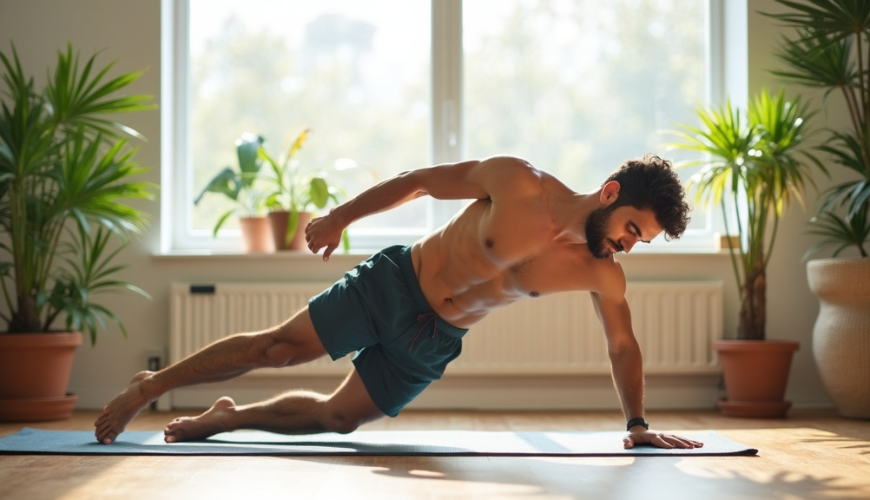
- Plank – a foundation for stability, important to maintain a straight line and active core
- Dead bug – excellent for pelvic control and deep abdominal muscles
- Bird dog – connects the core with the back and improves coordination
- Controlled crunches (not swinging sit-ups) – slower tempo, relaxed chin, without pulling on the neck
- Knee raises in a hang or on a bar (or supported on parallel bars) – once basic stability is mastered
- Pallof press with a band – an "anti-rotation" exercise that strengthens the oblique abdominal muscles without overloading
In practice, a short workout can be built from this: for example, 3 rounds of 30–45 seconds of work and 15–30 seconds of rest. Beginners can start with shorter intervals and gradually add more. More important than time is quality: the core should work, the lower back should not protest. As soon as the lower part of the back starts arching or the person holds their breath, it's better to scale back.
The transition to a more visible abdomen often comes "beyond the abdomen": when full-body strength training and more natural movement are added. Brisk walking is underrated, yet it's excellent and gentle for reducing fat and stress. And it fits into the concept of a healthy lifestyle, which is about not overexerting oneself – better regularly and long-term than sporadically.
How to Train Abdominal Muscles in Women: Reality, Hormones, and Healthy Sustainability
The topic of how to train abdominal muscles in women is often burdened with pressure on appearance. Yet the female body has different physiological priorities than the male, and "a flat stomach at any cost" can be a trap. Women typically hold a higher percentage of fat, which is normal and healthy. Additionally, water retention can change during the cycle, affecting how the abdomen looks in the mirror – sometimes literally from day to day. And this is where it’s useful to shift focus from quick effects to functionality and strength: a firm core shows in better posture, more stable back, more comfortable running, and clothing fitting better.
Women also often deal with diastasis (separation of the rectus abdominis muscles) after pregnancy. In such cases, it's advisable to be cautious with classic sit-ups and instead start with activating the deep core, breathing into the abdomen, and gentler stabilization exercises. If there's suspicion of diastasis or pain, consulting a physiotherapist is appropriate – this isn't "unnecessary caution," but a sensible step.
Regarding diet, drastic diets aren't necessary. For abdominal appearance, the best approach is usually a combination: enough protein (helps with satiety and recovery), plenty of fiber (vegetables, legumes, whole grains), quality fats, and a regular drinking regime. Sometimes the abdomen "improves" without significant weight loss – just by improving digestion, reducing alcohol and sugary drink intake, and eating more calmly. And yes, bloating can reliably hide a six pack even if a person is slim.
From a sustainability perspective, it makes sense to base changes on everyday small actions: home cooking from fresh ingredients, fewer disposable packages, more plant-based meals that are gentler on the planet and often richer in fiber. This fits well into the philosophy of a healthy lifestyle: it’s not just about "defining the abdomen," but about feeling good in the long term.
And how to know if abdominal training is really working? Not just by photos. Positive signals include being able to sit upright without fatigue, lifting groceries without back pain, the body not "falling apart" while running, and being able to breathe more calmly during exercise. Aesthetics often come as a side product.
So when the question how to get a six pack comes up again, it’s worth rephrasing it a bit: how to have strong abdominal muscles that help in life, and how to add a regimen to them so they gradually become visible externally? The answer is surprisingly down-to-earth: regular movement, moderate caloric deficit, quality sleep, less stress, and patience. And also the willingness to accept that a six pack is not the only or best proof of health – but it can be a pleasant bonus when things are done smartly and with respect for one's own body.