

Poached eggs are suitable when you need to supplement protein without unnecessarily complicated cook
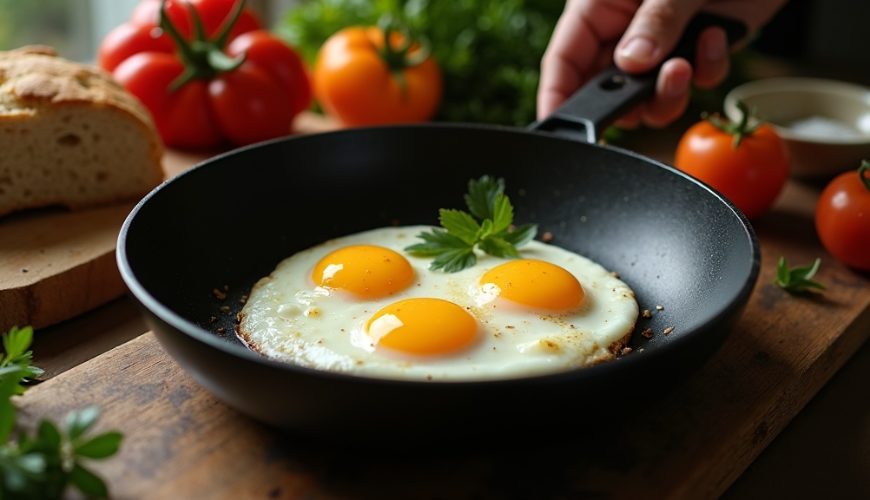
Poached eggs are among the dishes that have been staples in Czech kitchens for generations. They are not demanding in terms of time or ingredients, yet they can feel almost festive—especially when you achieve a delicate egg white and a runny yolk that spreads over bread or vegetables on the plate. In recent years, people have been returning to them for another reason: a simple dish can be both nutritious, affordable, and surprisingly versatile. And there's no real need to question whether they fit a modern healthy lifestyle—rather, how to prepare them so they taste great and also provide the body with what it needs.
Anyone who has ever quickly sorted out breakfast before work or dinner after a long day knows that some recipes are not worth complicating. This is where poached eggs have their strength. Just a few minutes, a pan, and a bit of fat—and you have a meal on the table that can both satisfy and delight. Yet, there are many questions surrounding them: what are poached eggs, how do they differ from sunny-side-up eggs, how to achieve the “perfect” yolk, and how to make a nutritious meal of poached eggs that is not just a makeshift option but a full-fledged part of the diet?
Try our natural products





What are poached eggs and why do people keep coming back to them
When you say "poached egg," most people imagine an egg cracked onto a pan, where the white sets and the yolk ideally remains runny. However, in practice, the term is used a bit loosely. Some think of a classic sunny-side-up egg, while others consider it an egg that is covered with a lid during preparation so that the white cooks on top without having to flip the egg. Then there's the version where the egg is gently "poached" in a small layer of fat in the pan and allowed to cook very slowly—resulting in a delicate structure without burnt edges.
In everyday language, you often encounter the notion that poached eggs = eggs on a pan, usually with a runny yolk. The important thing is what people expect from the result: that the white isn't rubbery, the yolk isn't dried out, and there isn't a greasy puddle on the plate. When done right, it’s one of those dishes that taste "clean"—simple, understandable, yet satisfying.
What's interesting is how poached eggs can adapt to different dietary styles. Some people put them on sourdough bread with tomato, others add sautéed vegetables, and some see them as a quick energy source after sports. It all works because eggs are nutritionally a "concentrated" food: in a small volume, they offer proteins, fats, vitamins, and minerals.
And why do people return to them even today, when the internet is full of complex recipes? Perhaps because in a time overwhelmed with options, a simple egg on a pan feels almost reassuring. It's a meal that can be prepared both at home and at a cottage, from local ingredients, without packaging and without unnecessary waste. When you add quality bread, seasonal vegetables, and a few herbs, you get a plate that can be genuinely called a nutritious meal of poached eggs.
Recipe for poached eggs: simple steps and small tricks that make a big difference
A good recipe for poached eggs is not so much about a list of ingredients as it is about timing and temperature. Eggs are sensitive—and the difference between "perfect" and "overcooked" can sometimes be a matter of half a minute. Nevertheless, they can be prepared reliably, even when there isn't much peace and time in the kitchen.
The basic rule is: better to go slower than too fast. An overly hot pan often means burnt edges of the white and a yolk that starts to coagulate before the white is done. If the goal is a delicate white and still runny yolk, medium to lower temperature and a bit of patience are worth it.
Gentle classic on the pan (for 1–2 servings)
The ingredients are almost symbolic: fresh eggs, a pinch of salt, possibly pepper, and fat according to taste. Butter, ghee, or quality vegetable oil with a higher smoke point are suitable; those who prefer a mild taste often choose butter, while those concerned with stability at higher temperatures opt for ghee. The pan is also important—a non-stick surface saves nerves and helps keep the amount of fat reasonable.
The process is simple, but it's worth monitoring details. The pan is first heated to medium temperature, the fat is allowed to melt and "calm down" slightly—it shouldn't smoke. It's good to crack the egg into a bowl first and then carefully pour it onto the pan; this minimizes the risk of shell pieces and makes it easier to place the egg so that the yolk stays centered. The white starts to set from the edges, gradually turning white and firming up. For those who want it done on top without flipping, covering with a lid for the last minute can create the effect of a "gently steamed" top.
Salting is a somewhat personal topic. Some salt in the pan, others only on the plate. If salt is added too early to the raw white, it can create small "tears" on the surface, making the white appear less clean. A gentler result often comes from salting just before the end or after cooking.
And now for one small trick that people often discover by accident: when you add a teaspoon of water to the pan and quickly cover it with a lid, the resulting steam helps finish the white on top without having to flip the egg. The yolk can remain beautifully runny. It's simple and surprisingly effective.
"A simple dish is not recognized by how many steps it has, but by how well the basic ones are done." This sentence fits poached eggs more than many complicated recipes.
Real-life example: a quick dinner that doesn't deceive the body or mind
Imagine a typical weekday evening: one comes home late, hunger is apparent, but there's no desire to eat something heavy or reach for ultra-processed foods. There are a few eggs in the fridge, some leftover salad greens, a piece of cheese, and sourdough bread on the counter. Within ten minutes, a plate is ready: mashed avocado or just a drop of olive oil on the bread, two poached eggs on top, and a salad with lemon on the side. It's quick, tasty, and most importantly—the body feels it received real food. In such situations, it becomes evident how well protein supplementation with poached eggs works without unnecessary complexity.
Protein supplementation with poached eggs and how to make them truly nutritious
Eggs are often mentioned as a quality source of protein, and it's not just a kitchen myth. Proteins from eggs have very good bioavailability, and eggs also contain other important nutrients. According to databases like USDA FoodData Central, one large egg contains about 6 grams of protein (values vary according to size). This means that two to three eggs can form a solid basis for a meal, especially when supplemented with other ingredients.
However, protein alone isn't everything. If you want to create a truly nutritious meal from poached eggs, it's worth considering the whole: fiber, vegetables, quality sides, and a reasonable amount of fat. Poached eggs can easily be "drowned" in oil or placed on a white roll such that they may delight the taste buds but hunger returns within an hour. Yet, a few small changes can make a world of difference.
Combining with foods that add fiber and volume works well: leafy greens, tomatoes, cucumber, steamed broccoli, sautéed mushrooms, or even sauerkraut. Sides like sourdough bread, rye pastries, or boiled potatoes often prove effective. And those aiming for a balanced plate might add legumes—like lentils as a salad base. Suddenly, a simple egg becomes a meal that sustains energy longer and feels "grounded."
There's also the question of ingredient quality. With eggs, the origin and how the hen was raised are often considered. Without moralizing: the taste difference is noticeable, especially with fresh eggs. Additionally, it's worth paying attention to how eggs are handled at home—storing them in a cool place, gentle cooking, and timely consumption are key.
For those who want to push poached eggs towards sustainability, it's surprisingly easy to think about what's happening around them. Cooking with what’s already at home, using vegetable leftovers, choosing local ingredients, and not going overboard with disposable packaging are all viable options. In a household striving for more ecological operation, such a meal is a small but practical step.
Whether poached eggs are suitable for active people, the answer is often yes—precisely because they can easily be used as protein supplementation with poached eggs after a workout or as a hearty breakfast. However, it's important to consider the rest of the day: if the diet is already rich in protein, there's no need to "chase numbers." On the other hand, if the day is more about bread and quick carbs, two eggs with vegetables can pleasantly balance the diet.
For those who like to verify information, there are reliable sources that have long focused on eggs and their nutritional value. Useful references include:
- Harvard T.H. Chan School of Public Health – an overview of eggs and their place in the diet.
- USDA FoodData Central – a nutritional values database.
In the end, the most pleasant thing about poached eggs is their unpretentiousness. They require no special equipment, pretend nothing they aren't, and yet can always be made a little differently. Sometimes with chives and bread, other times on a heap of sautéed vegetables, or as a quick end to a day when there's no energy left for long cooking. And isn't that one of the best reasons to keep them in the repertoire—to have a recipe for poached eggs on hand that's simple but can always feel like a small homemade victory?