
The goblet squat is an exercise that will improve your squat technique, even if you're working out a
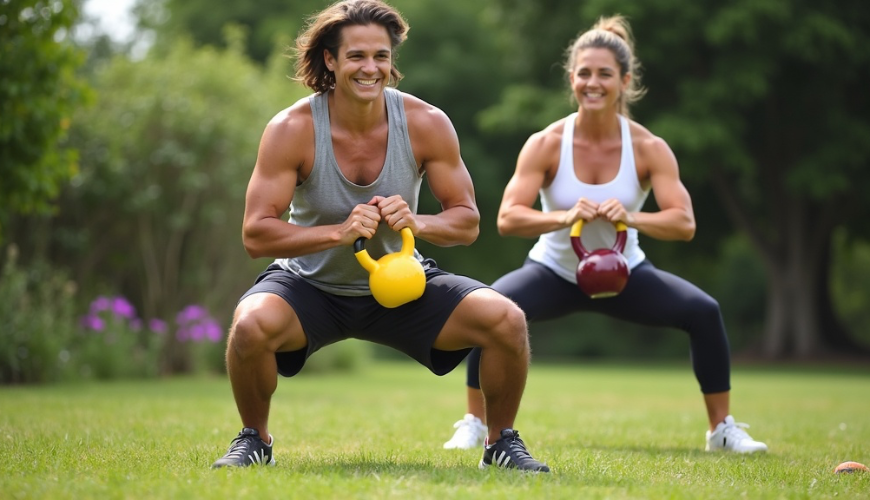
The goblet squat is among the exercises that may look simple at first glance, but can actually make a significant difference in training. This might be because it is learned faster than some other squat variations, while still reliably testing the legs, core, and breath work. In recent years, it has become a staple in functional training and home workouts because it requires minimal equipment and space. And although sometimes people confuse the spelling of "goblet" with "goplet," the correct term is goblet squat – named for holding the weight at the chest as if holding a goblet in your hands.
Interestingly, this "goblet" position often helps those who are afraid of squats or feel unsure in them. The weight in front naturally leads the body into a more stable position and guides where the chest should go and how to hold the back. Adding a goblet squat with a kettlebell creates a combination that is practical, effective, and welcoming even for those returning to regular exercise after a long break.
Goblet Squat: What It Is and Why It Works
The goblet squat is a squat variation where the weight is held in front of the body at the chest – usually a kettlebell, dumbbell, or small barbell. This position has one major advantage: the body tends to remain more upright than in some other squats, which makes the technique easier for many people. It doesn't mean it's an "easy" variant – it's just often more intuitive for the body. If someone rounds their back or falls forward in a classic squat, the goblet squat subtly reminds them to keep their torso solid with the weight in front.
In practice, the goblet squat primarily strengthens the thighs and glutes, but the work of the core is equally important. Abdominal muscles and the deep stabilization system engage to prevent the weight from "pushing" the torso backward or the body from collapsing in the lower position. And because the weight is close to the center of gravity, the movement tends to be smoother and more controlled. For many, it serves as an ideal bridge between bodyweight squats and heavier variants.
With the goblet squat, depth is relatively easy to monitor. When squatting with just body weight, feedback is often lacking – one might think they are going low, but actually stop high. In the goblet squat, the lower position is more pronounced, and the body "folds" into it more naturally if the technique is correct. However, it's not about chasing the deepest squat at all costs. Stability, fluidity, and the ability to maintain a neutral spine are more important.
When discussing how regular training changes the body, the goblet squat often serves as a good example. It's an exercise where results often manifest not only in leg strength but also in posture, walking up stairs, or lifting objects from the ground. This transferability to everyday life is why people keep coming back to it.
Goblet Squat with Kettlebell: Technique, Mistakes, and Simple Adjustments
The most common and accessible variant for many households is the goblet squat with a kettlebell. The kettlebell is held by the "horns" (handle) or the bell's body, close to the chest. Elbows point roughly downward, sometimes slightly forward, and the hands are not just "holders" – the entire upper body should be active to prevent the weight from swaying.
The movement starts with the stance: feet roughly shoulder-width apart, toes slightly outward (depending on hip structure), weight distributed across the entire foot. As you descend, the hips and knees bend simultaneously, with the knees tracking the direction of the toes. The chest remains open, with the gaze calmly forward or slightly downward (depending on what helps maintain a neutral neck). There's a brief pause at the bottom, not "resting" in the joints, followed by a smooth return upwards through pressing into the ground.
Most issues don't arise from a lack of strength but from details. A common mistake is trying to sit too far back like on a chair while keeping the knees "locked" – resulting in uncertainty, heel lifting, and a feeling that the squat isn't working. The goblet squat generally requires balanced movement: the hips go down between the heels, and the knees can naturally move forward if the heels stay grounded.
Another classic mistake is rounding the back in the lower position. Sometimes it's just a matter of hip and ankle mobility, other times the weight is too heavy. Sometimes reducing the squat depth, slowing down the tempo, and focusing on a solid core is enough. As the body gradually adapts, depth often comes naturally.
To better illustrate, consider someone who works at a computer all day, feels tired in the evening, and whose movement is limited to quick shopping trips and weekend "catching up on steps." When they start incorporating goblet squats with a lighter kettlebell two to three times a week, the first change often isn't dramatic muscles, but rather improved ease in getting up from a chair, reduced lower back pulling when lifting bags, and less huffing up to the third floor. Results become apparent in everyday life – and that's often the most convincing motivation to continue.
When learning technique, a simple aid can sometimes help: squatting to a box or bench that provides a clear depth target. Once the movement is confident, the box is removed. If ankle issues arise, slightly raising the heels (e.g., with a thin pad) can help temporarily. It's not "cheating," but a temporary aid until mobility and control improve.
A memorable reminder often quoted by strength coaches is: "First, the quality of movement, then the weight." In the goblet squat, this is doubly true, as it's an exercise commonly used as preparation for more demanding variants.
Goblet Squat and Its Benefits: Comparison with Other Squats and What to Expect from Regular Training
When it comes to comparison with other squats, the barbell squat is most commonly mentioned alongside the goblet squat – typically the back squat (barbell on the traps) or front squat (barbell in front on the shoulders). Each variant has its place but differs in demands on technique, mobility, and mindset.
The barbell squat is often the king of strength training because it allows for progressively lifting really heavy weights. This is advantageous for developing maximum strength and muscle mass, but it also requires higher demands for stability, experience, and a safe environment (racks, stops, space in the gym). In the back squat, the center of gravity shifts differently than in the goblet squat, which reveals more about one's ability to work with the torso and hips. In the front squat, the torso is more upright, but there's a greater demand for wrist, shoulder, and thoracic spine mobility.
Conversely, the goblet squat is often considered more accessible. Thanks to the weight in front, it's easier to maintain an upright chest, and for many, it's simpler to "find" the correct movement path. It's a great choice for home workouts, beginners, and those who want to squat without the complicated setup of a barbell. However, the goblet squat can be limited by how much weight one can hold at the chest. Often, the legs could handle more, but the grip, forearms, or upper back protests first. Here, it becomes evident that the goblet squat isn't "worse," just serves a different purpose: teaching quality and strengthening the whole, not just chasing kilograms.
Compared to bodyweight squats, the goblet squat has one major added value: the weight acts as a counterbalance and a checkpoint. When squatting without weight, it's easy to "cheat" the movement – shorten the range, lose tension in the core, or twist to the sides. Goblet squat and its benefits often lie in teaching people to squat better even without a barbell.
What specific benefits often emerge when the exercise is done wisely and regularly? It can be stated without complex promises: better leg strength, firmer core, more stable knees (due to better movement control), and often better hip and ankle mobility because the body repeatedly, but safely, reaches the range. At the same time, it's an exercise that can raise the heart rate, serving as a conditioning element in shorter sets and shorter breaks.
And what about the results? Here, it's worth keeping reality grounded. If the goal is to improve the squat as a movement, strengthen the body, and feel stronger in daily life, results often appear within a few weeks: better control, more confident depth, less "pulling" in the lower back, easier stair climbing. If the goal is to significantly build muscle and strength, the goblet squat can be a great start, but over time it may be necessary to add other variants, such as the barbell squat, or intensify the goblet squat with a slower descent, pause at the bottom, or more repetitions.
The role of recovery, sleep, nutrition, and overall stress also comes into play. Regular training isn't just about "getting your workout in," but giving the body a chance to improve. Those who squat once every two weeks will feel like they're always starting over. Those who squat two to three times a week often find that the technique stabilizes and the weight can increase without feeling like a struggle.
If this text were to have just one short, practical list, it would be about how to set up the goblet squat for long-term benefits:
- Start light and add weight only when the movement is stable and smooth
- Keep heels on the ground and ensure knees point roughly in the direction of the toes
- Maintain a firm core (not "sticking out the belly," but bracing the torso as a whole)
- Work with breathing: inhale before descending, exhale upon returning up
- Think long-term: prefer two to three shorter sessions a week over sporadic marathons
For credibility, it's fair to note that squats and their variations commonly appear in recommendations from reputable organizations focused on strength and conditioning because they are a fundamental movement pattern. Those looking for a broader understanding of how strength training fits into a healthy lifestyle can refer to recommendations from the World Health Organization on physical activity and strength training (https://www.who.int/news-room/fact-sheets/detail/physical-activity) or materials from the NSCA (National Strength and Conditioning Association), which has long worked with principles of safe strength training (https://www.nsca.com/).
And finally, what's also appealing about the goblet squat is that it can be done almost anywhere with minimal preparation. All you need is a kettlebell or a dumbbell, a few meters of space, and the desire to do something for a body that often lacks natural movement in everyday life. Isn't that the type of simplicity that sustainable habits need? When the goblet squat becomes part of the routine, it gradually changes not only leg strength but also the overall sense of stability – a change noticeable even before it can be measured with a tape measure or photographed in the mirror.