
Upcycling clothing makes sense because it reduces waste and changes the relationship with shopping.
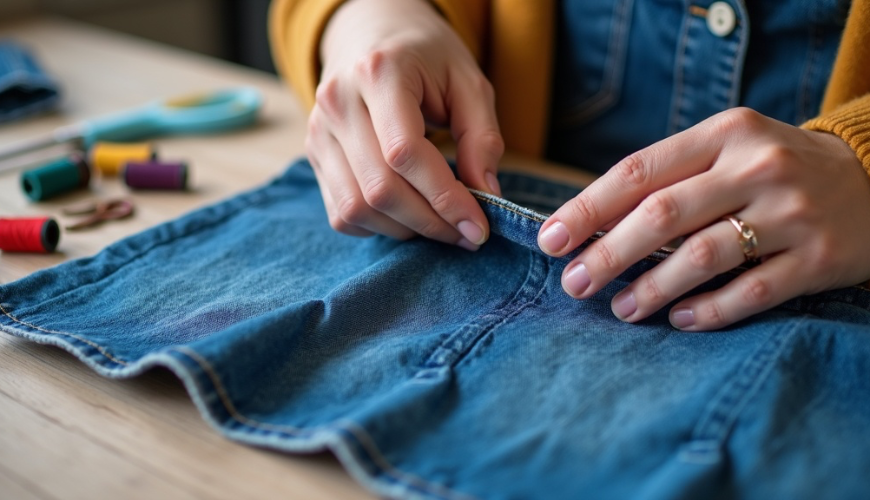
Upcycling clothing sounds like another trendy buzzword from the fashion world, but in reality, it's a very practical approach that can change the way we look at our own wardrobe. At a time when clothing is produced faster than ever and prices often tempt impulsive purchases, the amount of textile waste is also growing. And this raises the question: does a T-shirt with a small hole or a dress that "isn't quite right" really have to end up in the trash?
Try our natural products

What is upcycling and why is it talked about so much
When discussing what upcycling is, it is most often explained as "elevating" an old item into a new one – ideally more valuable and practical. Unlike recycling, which often breaks down material and reprocesses it (which can be energy-intensive and not always possible), upcycling clothing works with what already exists. It uses the fabric, cut, buttons, zippers, embroidery, or even just pieces of textile, giving them new life in the form of another garment or accessory.
Upcycling is closely related to what used to be common: altering, patching, shortening, repurposing children's clothing "from siblings." Today, we return to this with a new vocabulary and often with different motivation. It's not just about saving money, but about a more sustainable wardrobe, creativity, and an effort to reduce the fashion industry's impact on the planet.
And authoritative sources confirm that these impacts are not small. For example, the United Nations Environment Programme (UNEP) has long pointed out the high environmental footprint of textiles – from water consumption to chemicals and emissions associated with production and transportation. Anyone wanting to get a firsthand picture can start perhaps here (sections dedicated to sustainable consumption and production often mention the textile sector).
Upcycling is surprisingly "low-threshold." There's no need to buy a sewing machine right away, study pattern construction, or change your entire style. Just start noticing what's already at home and think: can it be adjusted so it's enjoyable to wear again?
Why upcycling is good: more than just saving money
When looking for an answer to the question of why upcycling is good, most people first think of their wallet. Yes, transforming a shirt into a blouse or turning jeans into shorts can save money. But the benefits are often deeper and more long-term.
Firstly, there is the reduction of textile waste. Textiles are problematic waste partly because they are often a mix of materials (e.g., cotton with elastane, polyester with viscose), complicating recycling. Upcycling clothing circumvents this problem – the material isn't broken down, just reused. In practice, this means fewer discarded items and less pressure to produce new ones.
The second major theme is reducing demand for fast fashion. Every piece that is saved and worn again is one piece that doesn't need to be replaced with a new one. And producing new clothing isn't just about the fabric – it's about growing or producing fibers, dyeing, sewing, packaging, and transportation. According to the European Environment Agency (EEA), textile consumption in Europe is among the significant sources of environmental impact. Overviews and reports are available here (search for "textiles" or "textile consumption").
Upcycling also has a social dimension. Clothing often carries a story: a coat from a grandmother, a shirt from a first job, a T-shirt from a concert. Sometimes a person doesn't want to part with it, but no longer wears it. Upcycling offers a compromise – preserve the memory, but give it a contemporary form. And that's the special charm of things that aren't "from the store," but have character.
And there's another aspect that sometimes gets overlooked in discussions: upcycling helps build a healthier relationship with shopping. When a person learns to see value in what they already own, they stop feeling like they have "nothing to wear." Suddenly, the wardrobe doesn't seem like a problem, but a source of possibilities.
One sentence sums it up very simply: "The most sustainable piece of clothing is the one that already exists." This statement, in various forms, appears in materials focused on sustainable fashion and well encapsulates why upcycling clothing makes so much sense.
How to upcycle clothing so it's enjoyable and functional
The question of how to upcycle clothing often sounds more complicated than it actually is. Most successful alterations rely on a simple principle: select a suitable piece, clarify the goal, and choose the simplest path to achieve it. Many people are surprised that even a small change can have a big effect – and that "not knowing how to sew" isn't the end.
It starts with selection. The best items for upcycling are those with quality material but something that prevents them from being worn: the cut doesn't fit, they're too long, have a stain in a discreet place, are outdated, or have a small flaw. Big favorites are denim, cotton shirts, sweaters, and hoodies – because they can handle intervention and often last.
A practical example from real life looks unassuming: in one household, jeans with worn knees had been lying around for years. Throwing them away seemed wasteful, donating them too, as they were "on their last legs." Eventually, they were turned into sturdy shopping bags and smaller bread bags – from the legs that remained in good condition, with fabric scraps as reinforcement. The result wasn't just functional; suddenly, an "end-of-life" item became an accessory used several times a week. And that's precisely the moment when upcycling stops being theory and becomes a part of everyday life.
It's important to clarify what to expect from the result. Should it be something for everyday wear or more of an experiment? If the piece is meant for frequent use, it pays to stick to simple and durable solutions: shortening, narrowing, replacing zippers, patching, dyeing. If it's about creative play, combining multiple pieces, patchwork, or bold applications might come into play.
A big help is also the "problem lens": what exactly prevents wearing it?
- Is it the length (too long dresses, pants, sleeves)?
- Is it the fit (too wide at the waist, too tight at the shoulders)?
- Is it damage (hole, stain, abrasion)?
- Is it the style (no longer contemporary, outdated)?
Often, solving just one of these issues brings the piece back into play. Shortening a midi skirt to above-knee length can change the overall impression more than buying new. Adding a slit to a skirt, changing buttons on a coat, or dyeing a faded black T-shirt can "refresh" an item without much effort.
Upcycling clothing can also be done without sewing. Textile tapes, iron-on patches, textile glues, or creative knots and belts can work wonders, especially with looser cuts. And for those who don't want to glue or iron, the simplest route can be starting with combining. Sometimes, it's not about changing the piece but rediscovering it in a different context – with a belt, layered over a dress, with different shoes. Upcycling, in a broader sense, isn't just about scissors and needles, but also about new utilization.
When making modifications, it pays to follow some practical guidelines. First and foremost: always "test" the change first. Pin the length, mark with chalk, put it on, and walk around. Many unsuccessful modifications come from rushing and cutting without trying. The second guideline is not to have excessive demands for perfection. Upcycled items often have slight irregularities that belong to them – and paradoxically, that makes them interesting.
A special chapter is dealing with stains and "irreparable" flaws. A stain on the front of a T-shirt might be a reason for discarding it, but also an opportunity: embroidery, a patch, a pocket, an application, or even a clever shortening and turning into a tank top. With shirts, it often pays to save the collar and cuffs, even if the rest is worn out – these parts can be used for repairing other items or as material for small accessories.
Upcycling "within the household" works well: one item becomes another, which is practically used. Old cotton bedding can serve as material for light summer pants or as a lining. Soft T-shirts can be turned into cleaning cloths, but if they're in good condition, it would be a shame to stop at this last station – they can often be transformed into children's clothing, headbands, or simple bags.
And what if there's no time or desire? That's also solvable. Clothing upcycling doesn't have to be a home project. There are seamstresses and tailors who can alter cuts to fit while preserving the original material. Similarly, local brands are developing, creating new collections from discarded textiles. In such a case, upcycling becomes a way to support local production and craftsmanship while acquiring something original.
Upcycling also connects well with what people often appreciate most about a sustainable lifestyle: the feeling that things at home make sense. When clothes are thought of similarly to food in the kitchen – using what's available first and only then replenishing – the wardrobe gradually calms down. Instead of constantly chasing trends, quality, comfort, and durability come to the forefront.
Perhaps the most appealing thing about upcycling is that it can be done in small steps. One saved sweater, one altered skirt, one bag from jeans. And suddenly, it becomes a habit that subtly changes the household: fewer excesses, more joy from things that were supposed to be "past their prime," and also a greater sense of what truly deserves a place in the wardrobe next time. Upcycling clothing thus isn't just a creative pastime but also a quiet, practical way to relieve oneself from overconsumption – while dressing in a way that makes sense and feels good.