
A non-toxic household can be built gradually by starting with laundry, dishes, and the bathroom.
Living in a modern apartment or house is comfortable, but few people ever stop to consider what is actually "floating" in it. It's not just about dust from the street or pollen. A significant role is also played by what is used for cleaning, washing, scenting, polishing, and disinfecting at home. In recent years, a topic has emerged here that may sound a bit like an internet trend but actually has a very practical core: non-toxic household. Some call it a "non-toxic home," others speak of an eco-friendly or healthier home. Whatever the term used, the point is similar: to avoid unnecessarily burdening the air, skin, or wastewater with aggressive chemicals at home – while still keeping it clean, pleasant, and functional.
You might be familiar with it. You clean the bathroom with a "strong" cleaner, and soon your eyes start to sting. Or you clean the oven, and the next day, there is still a pungent odor lingering in the kitchen. Then there's the subtler but more long-term aspect: detergent residues on laundry, fragrances in fabric softeners, furniture sprays, or air fresheners that promise a "fresh meadow" but actually just mask odors with another layer of scent. It's not about instilling fear. It's more about considering whether it's necessary for a home to be filled with substances that one wouldn't voluntarily inhale or apply to the skin – just because "that's how it's always been done."
Try our natural products
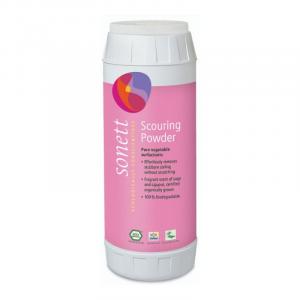
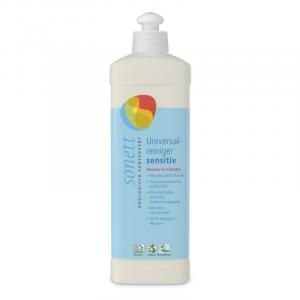
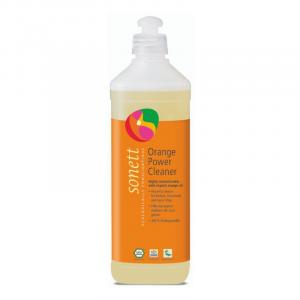
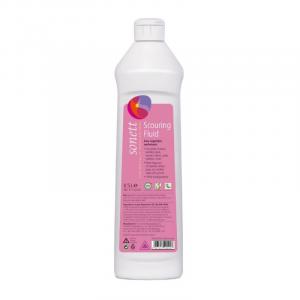
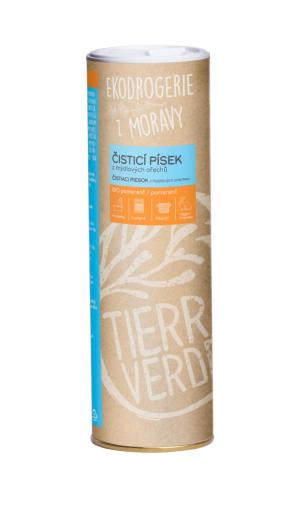
What is meant by a non-toxic (non-toxic) household
A non-toxic household is not a sterile laboratory or a home without a single chemical molecule – that's impossible anyway. It's more about a mindset: choosing products and habits that minimize unnecessary burden on health and the environment. In practice, this often means less fragrance, fewer aggressive substances, fewer "miracle" combinations that promise to solve everything with the push of a spray, and more simplicity.
The English term non-toxic is often used, which has settled in mainly on social networks in Czech. It's more meaningful to talk about an "eco-friendly" or "healthier" home because the word "non-toxic" can sound absolute. However, reality is a spectrum: some things are more irritating, some less; some are problematic for aquatic organisms, some decompose more easily. The important thing is the direction and willingness to make gradual changes that make sense for a particular household.
When people hear non-toxic household products, most think mainly of cleaning. However, the home's "chemical footprint" also includes laundry detergents, dishwashing liquids, air fresheners, candles, diffusers, sometimes even cosmetics or materials used at home. The easiest place to start is where contact is most frequent: the kitchen, bathroom, laundry, and indoor air.
Why switch to a non-toxic household: less irritation, fewer unnecessary products, more peace
There are several reasons why to switch to a non-toxic household, often surprisingly aligning across different types of people. Some deal with sensitive skin and eczema. Others don't want suffocating fragrances in their home. Some have small children crawling on the floor and putting everything in their mouths. And some simply realize that if something is used at home every day, it should be as reasonable as possible.
The health aspect usually concerns irritation – eyes, respiratory tract, skin. Some common cleaning agents can be heavily scented or contain substances that, when used improperly (typically in a small, unventilated space), cause unpleasant reactions. Added to this is the issue of indoor air quality. The European Environment Agency has long highlighted that indoor air quality is important because people spend a large portion of their time indoors, and indoor pollution can come from various sources, including household products and fragrances. Authoritative overviews and recommendations for indoor environments are published by the European Environment Agency (EEA) (search for "indoor air quality").
The second aspect is ecological and, in fact, economic. The more products a household uses "for each thing separately," the more packaging, transportation, consumption, and waste is generated. A non-toxic approach often leads to minimalism: one universal cleaner, one detergent or gel for laundry, reasonable surface care, fewer impulsive purchases. Many are surprised that when unnecessary items are removed, cleaning doesn't deteriorate – on the contrary, it simplifies.
There's also a psychological aspect that is sometimes underestimated. Home is a place where one wants to breathe. Literally. When aggressive scents and the "chemical" aftermath of cleaning are eliminated, the apartment often begins to feel like a calmer space. As one sentence aptly puts it: "Clean isn't what smells the most; it's what is truly free of dirt."
To illustrate this with a simple example from everyday life. Imagine a family in an apartment block: two children, a dog, a small bathroom without a window. The bathroom is cleaned quickly, often in the evening. A classic "strong" cleaner with fragrance removes limescale, but in the small bathroom, heavy air quickly forms, and eyes begin to sting. When the same place is cleaned with a gentler product without a strong fragrance and with regular, shorter cleaning (perhaps using a smaller amount but more frequently), the difference is surprising: the bathroom is clean, the air is breathable, and cleaning isn't associated with an unpleasant feeling. Here it shows that "non-toxic" isn't about perfection but about a practical change that can be maintained.
How to recognize non-toxic cleaning products and what to watch out for
Under the term non-toxic cleaning products, people often imagine anything "natural." But natural substances can also irritate (like essential oils), and even an "eco" product can be unnecessarily scented. Therefore, it makes sense to look at several simple guidelines: composition, method of use, dosage, and also brand transparency.
It's very useful to track independent certifications that have clear rules for composition and environmental impact. In Europe, for example, the EU Ecolabel is well-known. It doesn't say "this is absolutely non-toxic," but it sets a bar for more eco-friendly products and restricts some problematic substances.
Besides certifications, a simple question helps: is it really necessary for a floor cleaner to have a "tropical storm" or "sea breeze"? Scent is a frequent source of sensitivity and a marketing trick that substitutes feeling for function. Cleanliness isn't determined by perfume.
It's also wise to be cautious about home mixing. Sometimes, the internet suggests that mixing "this and that" creates a universal miracle. But mixing different products can be risky. A general and safe rule to remember: don't mix cleaners together unless you know exactly what you're doing, and always ventilate. A non-toxic household isn't about chemical experiments but about calm, understandable choices.
When selecting non-toxic household products, it's often effective to focus on where contact is greatest:
- on dishes and kitchen surfaces (due to residues on plates and hands),
- on laundry (due to long contact with skin),
- in the bathroom (due to aerosols and inhalation),
- and in the air (candles, scents, sprays).
And this is where the biggest difference can be made without turning the household upside down.
Where to start so it makes sense even in everyday pace
The most common barrier is paradoxically simple: people feel they have to change everything at once. But a more realistic approach is "replace it with a better choice when it runs out." This avoids throwing away half-full bottles and the stress of major change.
Starting with the products used most often works well: a dishwashing detergent, laundry detergent, universal cleaner, bathroom cleaner. At that point, it quickly becomes apparent that a gentler variant doesn't have to be weak. It often just requires a different habit: allowing time to work, using the right dosage, ventilating regularly, not overdoing cleaning "by force."
Then there's a small thing with a big effect: fewer products, but better ones. Instead of five different sprays, one universal and one targeted for the bathroom. Instead of fabric softener that overpowers everything, a quality laundry detergent and proper drying. Instead of an air freshener, an open window and removing the source of odor. It sounds simple, but that's the magic of the non-toxic approach: don't cover it up, solve the cause.
Non-toxic household isn't just about cleaning, but also about what stays on the skin and in the air
With laundry, it's often underestimated that textiles are in contact with the skin for hours. For someone sensitive, the difference between a heavily scented laundry gel and a gentler variant without unnecessary additives can be noticeable. The same applies to dishwashing products: hands are soaked, skin is softened and more prone to irritation. Therefore, it makes sense to choose products that are functional but without unnecessarily aggressive "aftereffects."
With indoor air, the situation is similar. Scents from diffusers, sprays, or some candles linger in the room for a long time. When a household strives for a non-toxic direction, it often finds that the biggest change isn't in what is added, but in what is removed. Fewer scents, fewer "instant" solutions. More ventilation, textiles that are regularly washed, and surfaces that are maintained simply.
This isn't moralizing. Rather an invitation to a slight curiosity: how would home feel if "fresh" really meant fresh air, not just perfume?
What can help in choosing: transparency and verifiable information
In the area of non-toxic products, it's good to stick to verifiable information and not fall for the impression that every label with a leaf automatically means eco-friendliness. Besides the EU Ecolabel mentioned above, there are other standards and databases that help with orientation. For general information on chemical substances in the EU, a reliable source is also the European Chemicals Agency *[ECHA](https://echa.europa.eu/)* (useful for understanding how substances are evaluated and regulated). This doesn't mean that one has to read scientific documents, but it's good to know that there are institutions and frameworks that deal with safety.
From a practical perspective, the biggest help is a simple rule: choose brands that don't hide their composition, don't rely only on "secret fragrance blends," and provide meaningful instructions for use. Non-toxic cleaning products often rely on being used correctly – with reasonable dosing and a bit of time to act. When this is followed, the result is often comparable, and sometimes even better, because surfaces aren't damaged and the household doesn't have to keep "treating" itself with more chemicals.
And one more little thing, which is surprisingly important: packaging and concentration. Concentrated products or the possibility of refilling mean less plastic and less water transport. Sustainability often hinges on logistics, not a catchy slogan.
Transitioning to a non-toxic household most often doesn't happen with one big decision but with a series of small changes that gradually come together. You replace the dishwashing detergent, then the laundry gel, then the universal cleaner. You realize you don't need an air freshener because regular ventilation and less fragrance do more. And suddenly, the home is not only clean but also more pleasant – without the pungent aftermath of cleaning and without the feeling that every bathroom cleaning has to be "endured."
Those who hesitate why to switch to a non-toxic household often find that it's not about a perfect list of forbidden words but about ordinary relief: less irritation, fewer unnecessary products, less waste, and more certainty that home is truly a place where one can breathe freely. And isn't that actually one of the simplest luxuries almost anyone can afford?