

Clove for Gums: How to Use It and What to Expect
Clove as a Natural Helper for Gum Inflammation
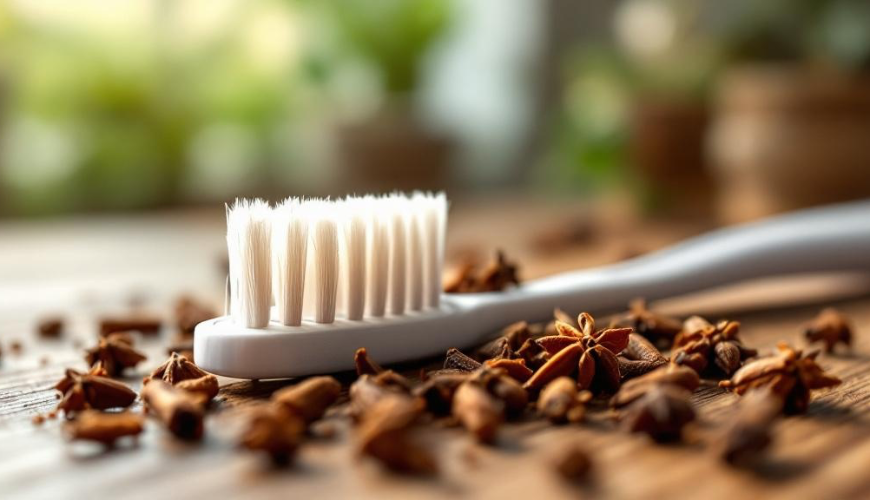
Gum inflammation is a common issue that affects millions of people worldwide. In its early stages, it may manifest as slight bleeding during tooth brushing or mild swelling, but if left untreated, it can progress to more severe periodontal disease, potentially leading to tooth loss. However, you may not realize that relief from these unpleasant symptoms can come from a common spice in your kitchen – clove. How does clove work on gums, and why is it considered an effective remedy against inflammation?
Traditional and Modern Power of Clove
Clove, the dried flower bud of the clove tree (Syzygium aromaticum), has been used in folk medicine for centuries. In traditional Chinese and Ayurvedic medicine, it was used as an anesthetic and antimicrobial agent. Today, its effects are confirmed by some scientific studies. For example, a study published in the Journal of Dentistry suggests that clove oil has similar antiseptic effects as some synthetic mouthwashes.
The key active component of clove is eugenol, a strong aromatic compound with anti-inflammatory, analgesic, and antibacterial properties. Eugenol is even commonly used in dentistry – for example, in preparing temporary fillings. It is no surprise that clove for gum inflammation is effective not only as first aid but also as part of daily oral care.
How Does Clove Help with Gum Inflammation?
Gum inflammation (gingivitis) is usually caused by the accumulation of dental plaque, which promotes the growth of bacteria. These bacteria irritate the gums, leading to bleeding and pain. Using clove on gums can help in several ways:
- Antibacterial effect: Eugenol destroys or slows the growth of bacteria and fungi.
- Anti-inflammatory action: It helps reduce swelling and redness of the gums.
- Local anesthetic effect: Painful areas can be temporarily numbed similarly to the use of local anesthetics.
- Support for healing: Some substances in clove support tissue regeneration.
Thanks to these properties, many people turn to clove as a natural alternative to commercial products for gum inflammation. It is not just an old wives' tale – the use of clove is justified even in the modern approach to sustainable and healthy body care.
Practical Ways to Use Clove on Gums
The simplest option is to apply a whole dried clove directly to the painful or swollen area in the mouth and gently chew it. This releases the active substances that begin to work locally. If you don't want a hard piece of spice in your mouth, you can prepare clove oil. This is made by macerating clove in a carrier oil (e.g., olive or coconut) for several days.
For acute cases, you can purchase ready-made essential clove oil, which is very concentrated. In this case, a strong warning applies: never use it undiluted. Just one drop mixed with a teaspoon of coconut oil – the resulting mixture can then be gently applied to inflamed gums using a cotton swab or clean finger.
Another option is gargling or rinsing the mouth with a clove decoction. Simply boil a few cloves in water for 10 minutes, let it cool, and then use it as a natural mouthwash 2–3 times a day.
Can a Natural Remedy Replace Conventional Treatment?
It is important to say that although clove for gum inflammation is a very effective home remedy, it should never completely replace professional care. If the inflammation persists for more than a week, worsens, or is accompanied by pain, bad breath, or loosening of teeth, it is necessary to visit a dentist. However, clove can be used very well as a supplement to regular care, prevention, and help in the early stages of the problem.
Alongside clove, regular and thorough oral hygiene is, of course, essential – proper tooth brushing, using interdental brushes, and limiting sugar intake. Combining natural methods and modern medicine can thus bring the best results.
Natural and Gentle Solution for the Whole Family
One of the advantages of using clove is its low ecological footprint. You can buy dried clove in organic quality, store it for a long time, and use it not only for dental care but also in cooking or for colds. This simple and traditional remedy is an ideal example of a sustainable approach that does not harm the body or the planet.
The experiences of people who have turned to clove are often very positive. For example, Mrs. Jana from Opava described: "My gums hurt for several days, but I didn't want to immediately resort to chemicals. I tried clove, as my mother advised, and after just two days, the pain significantly reduced."
What to Watch Out For?
Although clove is generally safe, it should be used wisely. Prolonged or excessive use can cause mucous membrane irritation. In small children, it should be used very cautiously and always after consulting a doctor. People allergic to eugenol should avoid it entirely.
It is also important to avoid internal use of essential oil without expert supervision – concentrated clove oil is strong and can be toxic if ingested. If you plan to use clove on gums regularly, consider forms like decoction or gently diluted oil.
Try our natural products




A Small Miracle from the Kitchen
It is fascinating how real healing power lies in common spices often right under our noses. Clove is a beautiful example of how traditional natural practices can be combined with a modern approach to health care. In an era where we seek ecological and gentle alternatives to commercial products, clove presents an accessible, effective, and sustainable option for taking care of your gums without chemicals.
Whether you are dealing with mild inflammation or just want to support oral health naturally, clove can be the right helper. Just take a look in your pantry – your new home "dentist" may already be waiting there in the form of a few small, brown buds.