

Conjunctivitis is often contagious, so it's worth knowing the incubation period and practicing good
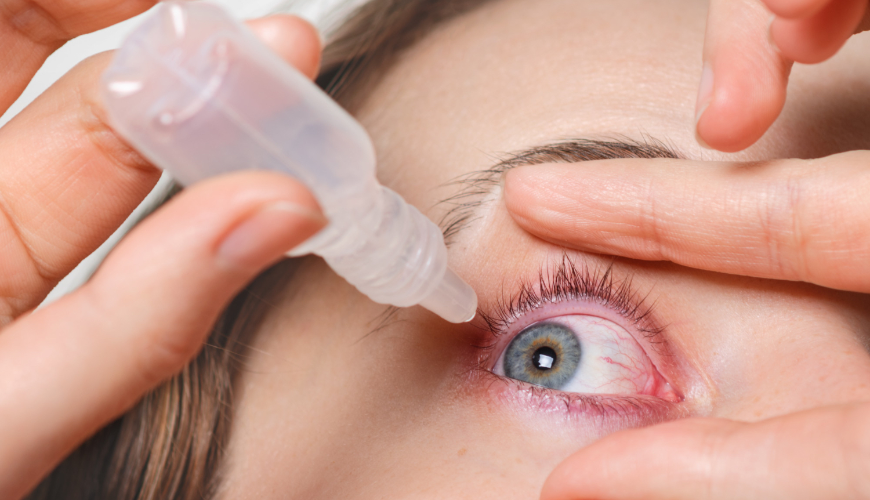
Conjunctivitis is one of those issues that can surprise you with its speed and unpleasantness. You wake up in the morning, your eyes are burning, stinging, and your eyelids feel glued together. At work or school, a single glance in the mirror makes it clear that it's not just "tired eyes" from staring at a screen for too long. But how to reliably identify conjunctivitis, when to be vigilant with children, and what to do to prevent the issue from recurring? And is conjunctivitis contagious, or is it "just" irritation?
The conjunctiva is a thin membrane covering the white of the eye and the inner side of the eyelids. It is an unobtrusive but important protective layer – it catches dust, reacts to allergens and infections, and helps keep the eye moist. When it becomes inflamed, the symptoms are often very visible and sometimes dramatic. However, it pays to stay calm: most cases improve with proper care within a few days, you just need to recognize what type of issue you're dealing with.
How to Recognize Conjunctivitis and What Are the Most Common Symptoms
When people think of conjunctivitis symptoms, many imagine mainly a red eye. While this is typical, it's certainly not the only symptom. Burning, stinging, the feeling of sand in the eye, or tearing often accompany it. Sometimes sensitivity to light and uncomfortable squinting occur. In practice, the most telling sign is often a combination of multiple symptoms at once – the eye is red, the eyelid may be slightly swollen, and discharge forms in the corner, drying during the day.
It's important to note the nature of the discharge. In some types of conjunctivitis, the discharge is more watery and the eyes tear a lot, while in others it is thicker, yellow to green, and the eyelids "stick" together upon waking. In everyday life, it might look like a child not wanting to open their eye in the morning because the lashes are stuck together, and the parent feels like it's something acute – and they are often right.
Conjunctivitis isn't just one thing. It is most commonly distinguished by:
- infectious (viral or bacterial),
- allergic,
- irritant (for example, from smoke, chlorinated water, dust, dry air, or prolonged contact lens wear).
This distinction is crucial for further action. Viral conjunctivitis is often associated with a runny nose, sore throat, or cold and usually has a watery discharge. Bacterial conjunctivitis more often causes a thick purulent discharge and "stuck" eyelids. Allergic conjunctivitis typically itches, is often bilateral, and frequently recurs in a specific season or upon contact with animals, dust, or pollen.
However, there are situations where it's better not to wait and seek medical attention as soon as possible: severe eye pain, significant vision deterioration, suspicion of injury, light sensitivity, or when one feels like "something is" in the eye and it can't be flushed out. For newborns and young infants, caution is always advisable – their eyes are more sensitive, and the causes may differ.
Incubation Period and the Question of Whether Conjunctivitis Is Contagious
When infectious conjunctivitis is mentioned, most people immediately consider the practical aspect: is conjunctivitis contagious? Unfortunately, both viral and bacterial forms often are. They are primarily transmitted through contact – hands, towels, pillows, tissues, and even shared household items. In children, it easily spreads in kindergartens and schools because they touch everything possible and often automatically rub their eyes.
Regarding the incubation period, meaning how long it takes from infection to the first symptoms, it depends on the cause. With viral infections, it can typically be a few days, often about 1–3 days, sometimes longer. For bacterial infections, symptoms may appear more quickly, possibly within 1–2 days. For allergic conjunctivitis, the incubation period is more figurative – the reaction can occur very quickly after contact with the allergen, sometimes within minutes.
In practice, the tricky part is that a person can be contagious even before they fully realize the problem. For viral conjunctivitis, it also applies that it often spreads similarly to common colds. Therefore, it makes sense to think about basic hygiene even when there's "just a little tearing."
One thing is important: not every red eye means an infection. Eyes can be irritated by air conditioning, wind, or dry air. In such cases, the issue tends to be more symmetrical, without significant discharge, and improves with eye moisture or reducing the irritating factor. In contrast, with infectious conjunctivitis, the condition often gradually worsens, discharge, swelling, and uncomfortable pressure in the eyelids increase.
"Hand hygiene is one of the most effective steps to prevent the spread of infectious eye conditions in the family." It sounds simple, but in everyday household operations, this is often the biggest challenge.
To increase credibility, it's good to reference authoritative sources: the American CDC (Centers for Disease Control and Prevention) writes comprehensively about infectious "pink eye" and transmission prevention: https://www.cdc.gov/conjunctivitis/ and also the NHS (British National Health Service): https://www.nhs.uk/conditions/conjunctivitis/. Information on hygiene and prevention is very consistent in these recommendations.
Conjunctivitis in Children: Why It Recurs and When to Be Alert
Conjunctivitis in children is a chapter in itself. Not only because it spreads more quickly in children's groups, but also because children describe what they feel less accurately. It often manifests through behavior: a child rubs their eyes, is irritable, doesn't want light, sometimes complains of "seeing fog," and has matted lashes in the morning.
A typical real-life scenario looks inconspicuous: on Monday, one child in preschool starts rubbing their eyes, and in the afternoon, they are red. By Tuesday, two more children have "red sclera," and by Wednesday, half of the parents are trying to figure out if it's an allergy or infection. Add to this the fact that children share toys, rest pillows, and sometimes even drinking bottles. If it's viral conjunctivitis, spreading is just a matter of time.
In children, it's also common for conjunctivitis to "ride along" with a cold. Tear ducts and nasal cavities are connected, and when a child has a cold, their eyes may tear and be more sensitive. However, this doesn't necessarily mean resorting to antibiotic drops immediately – a doctor should decide, as not every conjunctivitis is bacterial.
Special attention is warranted when conjunctivitis repeatedly occurs in just one eye. This may indicate, for example, an issue with tear ducts, irritation from a contact lens (in older children), or a persistent source of infection – perhaps a poorly cleaned lens case, old eye makeup in teenagers, or a towel that "circulates" in the family. Sometimes recurrent problems hide an allergy that initially appears as an infection, but instead of pus, itching and watery tearing dominate.
And when is it better not to wait with a child? If they have significantly swollen eyelids, a fever, complain of eye pain, refuse to open their eye due to light, or if vision is deteriorating. With the youngest children, it is always wise to consult with a pediatrician, as the course can be faster and the parent may not be sure what is still "normal."
Regarding the return to a group setting, it depends on the cause and the doctor's recommendation or the facility's rules. Generally, for infectious conjunctivitis, it makes sense to stay home at least during the period of greatest discharge and redness, when the risk of transmission is high, and mainly until hygiene can be managed (not touching the eyes, washing hands, using one's own towel). For allergic conjunctivitis, the focus is more on relief and preventing contact with the allergen, not isolation.
How Long Treatment Lasts and What Really Helps in Everyday Routine
The question of how long conjunctivitis treatment lasts is one of the most common because it affects work, school, and everyday functioning. However, the answer is not universal – it depends on the type of conjunctivitis and how quickly the cause can be eliminated.
For viral conjunctivitis, symptoms often improve within a few days but can persist for 1–2 weeks. Treatment is mainly supportive: rest, hygiene, artificial tears, cold compresses, and reducing irritation. Antibiotic drops for viral causes do not help, and therefore should not be used "just in case" without a doctor's recommendation.
For bacterial conjunctivitis, relief often comes within 24–48 hours after starting suitable drops or ointment (if recommended by a doctor), but it's important to follow the treatment duration according to instructions, even if the eye seems better quickly. An untreated infection can return or prolong into an unpleasant "dragging" state.
Allergic conjunctivitis may last as long as contact with the allergen persists. Antihistamine drops, reducing pollen exposure (e.g., ventilating at the right time, showering after returning from outside) and avoiding known triggers can help. Surprisingly effective can be what sounds trivial: not washing bedding in heavily scented products, reducing dust in the home, and maintaining appropriately humid air.
In everyday routine, it's worth considering several practical steps that reduce the risk of spreading and returning issues. And because less is sometimes more, a simple list of the most important things is enough:
- Washing hands before and after each eye treatment, and ideally more often during the day
- Own towel and pillow (at least during the issues), no sharing of washcloths
- Avoid touching eyes and rubbing them, even if they itch
- Throw out old eye makeup and temporarily refrain from using it; do not wear contact lenses until the eye is well
- Gentle eyelid cleaning with a sterile pad and suitable solution (not aggressively, without "scrubbing")
A very common question is whether chamomile helps. It is traditionally used, but in sensitive individuals, it can paradoxically cause irritation or an allergic reaction. If something is applied to the eyes, it should be clean, safe, and ideally recommended by a professional – caution is advisable for the eyes. Similarly, it's good to avoid "universal" drops from a home medicine cabinet if it's unclear what they're for and whether they're still within their period of use.
This also involves the everyday environment: dry air from heating, air conditioning, dust, or cigarette smoke can irritate the eye and prolong healing. From a healthy lifestyle perspective, it makes sense to support natural eye comfort by ventilating the home, maintaining cleanliness without unnecessary chemicals, and using gentle products that do not leave aggressive fumes. In an eco-friendly household, this is often a natural standard – and the eyes often notice it before anyone else.
And what if the issues drag on? If they do not improve after several days, on the contrary, they worsen, or pain and vision deterioration occur, an ophthalmologist is the right call. With conjunctivitis, it's sometimes easy to overlook that it's not just about the conjunctiva, but a deeper problem requiring targeted treatment.
Thus, conjunctivitis is not just a "red eye," but a signal that the eye is reacting to infection, allergy, or irritation. By recognizing conjunctivitis symptoms in time, monitoring the incubation period in case of contact with the infected, and tightening hygiene in the household, it's often possible to prevent one eye from becoming a family relay race. And even though it sometimes looks dramatic, in most cases, with sensible care and the right approach, eyes return to normal so that in a few days, you mainly remember one thing: how much ordinary, natural comfort matters when the eyes simply don't sting.