

A tidy apartment that doesn't exhaust you begins with finding a healthy balance of cleaning.
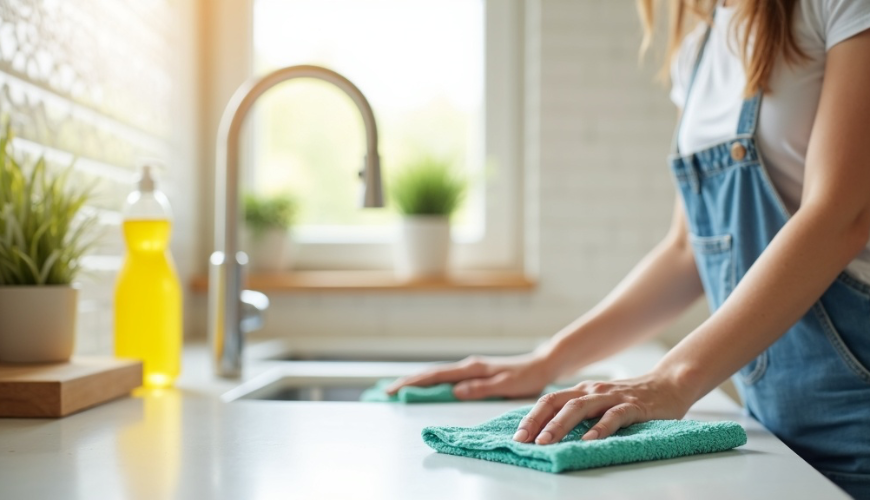
In some households, cleaning is done "just like that," when guests come over. Elsewhere, there is a regular routine that resembles a small domestic operation: towels are changed according to a schedule, the floor is mopped even when there's not a speck of dust to be seen, and cleaning products are switched out so often it makes your head spin. And here lies the unpleasantly relevant question: why do we sometimes clean more than is healthy – and what can we do about it to keep the home pleasant, not exhausting?
Cleaning is a peculiar discipline. On one hand, it brings an immediate sense of control, cleanliness, and a "sorted world." On the other hand, it can subtly turn into pressure that compels a person to constantly polish, straighten, and disinfect everything. Moreover, it often masquerades as a virtue: who would criticize a clean apartment? Yet, there's a thin line between healthy order and a state where the household becomes an endless project.
Try our natural products
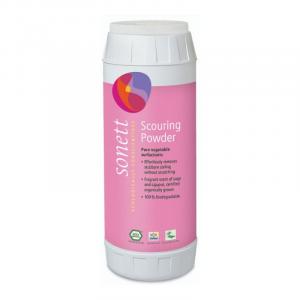
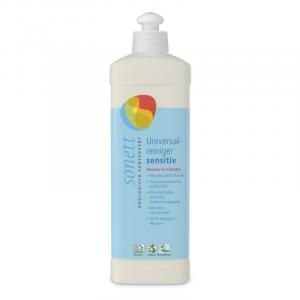
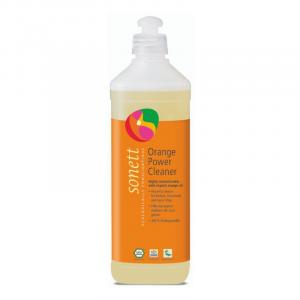
When Order Becomes Pressure: Why We Clean More Than Is Healthy
Excessive cleaning is not usually due to laziness or a "whim." More often, it's a mix of learned patterns, stress, and societal expectations. Excessive tidiness can kick in when life is uncertain: work is demanding, relationships are strained, things happen in the world that one cannot control. Cleaning then becomes a simple, accessible activity with a clear result. A few swipes with a cloth and you see a change. The brain quickly associates this with relief.
The culture of "the perfect home" also plays a role. Social media can create the impression that it's normal to always have everything as tidy as in a catalog: a kitchen counter without a single item, a bathroom without a drop of water, cushions aligned at right angles. But the reality of a household where people actually live is different. And if one tries to imitate that catalog, cleaning easily turns into a daily race that cannot be won.
Sometimes there's also a fear of judgment in the background. A visitor is coming in three days, but the bathroom grout is being scrubbed today – "what if someone notices." Often, this "someone" doesn't even exist. It's more of an inner voice that ties a person's worth to how their home looks. And here it's worth pausing: should cleanliness really be the measure of peace, success, or even decency?
There's also the health aspect to consider. Overusing aggressive cleaning agents can unnecessarily burden the respiratory system and skin, and in a household with small children or allergy sufferers, this can become even more apparent. A solid overview of why it's reasonable to use disinfection sparingly and purposefully is offered by the World Health Organization (WHO) in recommendations for hygiene and cleaning in homes and communities – although created in a specific context, the principle of "purposeful, not excessive" makes sense in the long run.
Interestingly, excessive cleaning often does not bring more peace. Quite the opposite. The person is tired, irritable, "nothing can be out of place" at home, and paradoxically, it's harder to breathe in a space meant for relaxation – both figuratively and literally.
"Order is not a goal. Order is a means to live well at home."
This simple sentence can reset perspective. Cleaning should serve life, not life serve cleaning.
Less Is More in Cleaning Too: How to Recognize a Healthy Balance
The idea that "less is more in cleaning" does not mean giving up. It’s not about leaving dirt at home or living in chaos. It’s about cleaning smarter: with fewer things, less chemistry, and less time wasted. And most importantly, with less pressure for perfection.
A healthy balance is often recognized by how a person feels after cleaning. Is it relief and lightness? Or rather exhaustion and the feeling that "it’s still not enough"? If cleaning regularly ends in frustration, it’s a sign that something has been set too strictly.
A simple rule helps: clean in a way that keeps the household hygienically safe, comfortably livable, and pleasant to look at – nothing more, nothing less. Hygiene mainly concerns the kitchen, bathroom, and areas where food or waste are handled. Livability means you can walk, cook, sleep, and function normally without having to move something out of the way every five minutes. And a pleasant impression? Surprisingly often, it’s about a few small things: a clean table, a ventilated room, a made bed, a trash bin without overflowing waste.
In practice, the greatest impact comes not from "scrubbing more," but having fewer things that create visual noise. When half the surfaces are filled with decorations, trinkets, and "temporarily placed" items, cleaning never seems complete. Conversely, a household where things have their place and unnecessary items are continuously sent away almost cleans itself. And that’s precisely the type of sustainable simplicity that aligns with the philosophy of a mindful home: less consumption, less waste, less stress.
A real example? In one ordinary family with two children, the same scenario repeated every evening: after dinner, the "quick clean-up" turned into an hour-long routine. Someone mopped, another arranged toys, another polished the sink because "since it’s being done…". The result: parents went to bed late, tired, and feeling they didn’t accomplish everything. The breakthrough came when they set a single rule: in the evening, just get the kitchen to a usable state (dishes, counter, table) and the living room so that the morning can start normally. Mopping was left for specific days, toys were reduced, and each had its own box. Suddenly, cleaning didn’t take an hour but twenty minutes. The home wasn’t sterile – it was functional. And that’s often what people are truly looking for.
In "less is more" also includes a gentler approach to cleaning products. In many situations, a mild universal cleaner, warm water, and a microfiber cloth are enough. An acidic helper (like one based on citric acid) for limescale, something degreasing for grease, and that’s often it. Excessive switching of products, scents, and "extra strength" is expensive, burdens the home environment, and sometimes even the surfaces. Moreover – the more products, the more decisions, and the greater the mental clutter.
What and How to Clean Without Overdoing It: A Simple Routine That Makes Sense
The question of what and how to clean without overdoing it can be simplified: clean what directly impacts health, comfort, and the long-term maintenance of the home. And leave the rest until it really needs attention. A perfect shine on the bathroom faucet is a pleasant bonus, but not a life necessity.
The biggest difference comes when cleaning is divided into small, sustainable steps. It's not necessary to "catch up" on everything with a big Saturday general cleaning, after which one has no energy for anything else. Much more natural is short, ongoing care and occasional targeted deep cleaning. And most importantly: not beating oneself up if the home occasionally looks like a place where life happens.
If there should be only one list, then one that helps maintain healthy priorities without adding pressure:
- Daily or every other day: ventilate, wash dishes / empty the dishwasher, wipe the kitchen counter and table, quickly check the trash, tidy up "hot spots" (entryway, dining table).
- Weekly: bathroom and toilet, change towels, vacuum (depending on the household), change the bed linens (often 1× every 1–2 weeks).
- As needed: windows, oven, grout, closets, "detailed" cleaning – things that are done when there’s a reason, not because it’s Tuesday.
This framework is important mainly because it gives permission: some things simply don't have to be done all the time. And when they are done, it’s better to do them purposefully. Typically, for example, disinfection. At home, it makes sense mainly where there’s a risk of transmission – after illness, with raw meat, at the toilet. Otherwise, regular cleaning suffices. Excessive disinfection can also irritate and sometimes unnecessarily disrupt what naturally works in the household.
Similarly, it’s worth considering cleanliness for cleanliness’ sake. Is it really necessary to wash towels after every single use when nobody at home is sick, and the towel can dry properly? Is it necessary to mop the entire floor three times a week when shoes are not worn indoors and the biggest mess is a crumb under the table? Often, a local solution suffices: sweep only where it makes sense, and leave the thorough mopping for when it’s truly needed.
A big topic is also "visual cleaning" versus "hygienic cleaning." Visual cleaning soothes the mind: aligned things, clear surfaces, minimal knick-knacks. Hygienic cleaning protects health: kitchen, bathroom, dust where it collects. When these two approaches are combined, a simple and effective system emerges. And often, it turns out that the greatest relief comes not from more scrubbing, but clearing items from surfaces where they don’t belong.
From a sustainable perspective, it also makes sense to consider what is used for cleaning. Gentler products, reusable cloths, refilling bottles, and fewer disposable products are small things that add up over time. The household then is not only clean but also calmer – without an overstuffed cabinet of chemicals, without sharp scents, without the feeling of constantly needing to buy something new.
And finally, there’s perhaps the most important aspect: the psychological one. If cleaning becomes an escape from stress, it’s fair to acknowledge it. In such moments, a small change can help: instead of "I must clean the entire apartment," just one completable task – like tidying the table, taking out the trash, putting laundry in the basket. Done. The feeling of control remains, but it doesn’t turn into a multi-hour marathon. And when the pressure for order is linked to long-term anxiety, exhaustion, or insomnia, it's important to take it seriously – just like any other signal that it’s too much.
The home is not meant to be an exhibition space. It should be a safe place where you can breathe normally, laugh, cook, rest, and occasionally leave a sweater draped over a chair. A clean apartment is nice, but a well-lived apartment is priceless. And that's where the old adage holds true: less is more – when "more" means just another obligation.