

Small habits work better than big changes because they can be easily maintained even on ordinary day

When it comes to lifestyle changes, many people automatically think of grand gestures: a strict diet, a drastic home cleanup, an ambitious sports plan, or a radical "never again from now on." However, this mindset often triggers a chain that ends in disappointment. Enthusiasm lasts for a few days, then a challenging week at work, a child's illness, fatigue comes along, and the carefully planned restart falls apart. It's not about weak willpower, but about the fact that human life is full of variables, and big leaps are often fragile. Interestingly, the opposite is often true in practice: small habits work better than big changes. And what's more – even a little is enough if it's well conceived and repeatable.
It may seem a bit counterintuitive. After all, when someone wants to "improve something," why start so modestly? But that's where the strength lies. Changes can be small and still work better because they can naturally fit into the daily routine. They don't require heroic performance but smart adjustments. And when they are repeated, they start to add up.
Try our natural products

Why Small Habits Work Better Than Big Changes
Big resolutions often rely on a one-time burst of motivation. Motivation is great but variable – much like the weather. Today, a person is full of energy; tomorrow, routine takes over. A small habit, on the other hand, is based more on simplicity and repetition than on the current mood. In this regard, what behavioral science has long emphasized makes sense: easy behavior is repeated more often, and what is repeated gradually becomes second nature. An overview of how the environment and small "nudges" influence decision-making is offered by the Behavioral Insights Team – an organization that popularizes the practical use of insights into human behavior in everyday situations.
The psychological aspect is also important: a big change can affect identity ("I'm a completely different person now") and thus create pressure. Once a person fails, they easily slip into black-and-white thinking: it's either perfect or not at all. Small habits are more forgiving in this respect. If one day doesn't go as planned, nothing "collapses." You continue the next day. Sustainable habits are not about never slipping, but about being able to get back on track.
And then there's another thing: a big change usually means more decision-making. What will I eat? When will I exercise? How will I manage it? How much will it cost? The more decisions, the greater the decision fatigue. Small habits, on the other hand, minimize decision-making. When the step is clear and short, the brain doesn't perceive it as a threat or a complex project. It's just a small action.
"It's not about having a perfect plan. It's about having a plan that survives an ordinary day." This sentence appears in various forms in interviews with people who have managed to change their lifestyle in the long term – and surprisingly often, they describe not starting with a revolution but with small things.
Sustainable Habits: When Change Fits Into Life (and Not the Other Way Around)
The term sustainable habits is sometimes narrowed down to just ecology, but in reality, it is broader: it's about habits that are sustainable for a person's time, energy, budget, and relationships. In other words, those that don't last a week but potentially years. And this is where small steps excel.
Sustainability often stands on two pillars: availability and joy. If a habit is too costly (in terms of time, money, or mental energy), it starts to be postponed. If a habit is only "right" but doesn't bring any good feeling, it fades away in the long run. Small changes have the advantage that they can be set up to be realistic and pleasant at the same time.
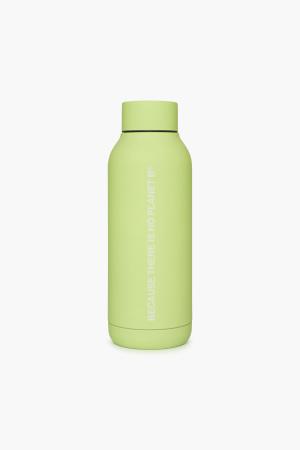
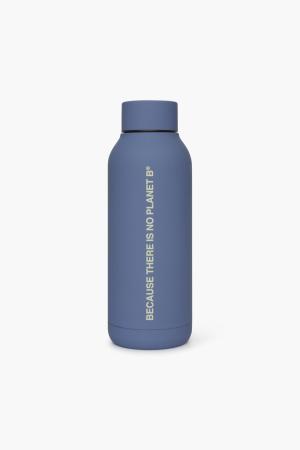
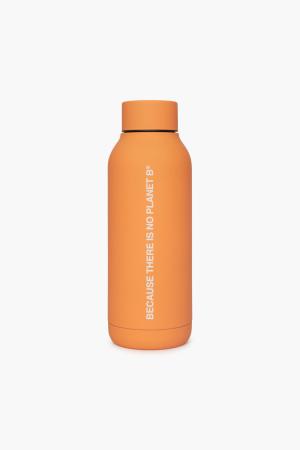
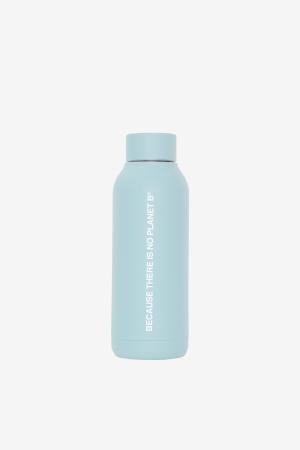
Let's consider a common situation from real life. In one household, they talked for a long time about reducing single-use plastics and chemicals in cleaning, but it always ended with "when there's time." Then a simple step was taken: a nice reusable water bottle appeared in the kitchen, and a cloth made from natural material started hanging next to the sink instead of paper towels. Nothing dramatic. Just two small things that were visible and easily accessible. Within a few weeks, the consumption of disposable napkins automatically decreased, and the person stopped buying bottled water "on the go." And interestingly: only then did the desire to address other things – like more environmentally friendly dishwashing liquids or laundry gel – emerge. Not because someone ordered it, but because the feeling of "this is doable" had already developed.
This moment is crucial. Small steps create a sense of success. Success is not only a reward but also information: the brain starts associating change with being achievable. Even a little is enough when repeated and well-supported by the environment.
A very practical principle is "making the right choice the easiest one." If a person wants to drink water more often, having a glass or bottle on the table helps. If they want to eat more vegetables, having them washed in a transparent container in the fridge helps. If they want to reduce impulsive purchases, having a list and reasonable "pauses" before shopping helps. Not because people are lazy, but because our behavior is largely a reaction to the environment.
In the area of a healthy lifestyle, sleep is often underestimated. Yet, it is a foundation that affects appetite, mood, and the ability to handle stress. Even here, small habits work surprisingly well: dimming the lights half an hour earlier, charging the phone outside of the bedroom, preparing tea, opening a window. It doesn't sound like a "transformation," but it can change the quality of the evening. Changes can be small and still work better because they don't disrupt the daily routine – they just gently shift it.
And when talking about a more ecological household, small habits tend to be the most realistic path. For example, starting by using what already exists at home: using up supplies, repairing what can be fixed, and only choosing more sustainable alternatives when something new is needed. This is, incidentally, an approach that is recommended even in broader environmental contexts – gradual reduction of impacts is often more effective than a one-time "perfect" transformation that exhausts both the wallet and nerves. For basic context on consumption impacts and ways of thinking about them, it's useful to look at the United Nations Environment Programme (UNEP) pages, which gather verified information on sustainability in various areas.
Even a Little: How to Turn Small Changes Into Habits That Stick
The hardest part of change is often not starting but sticking with it. And here small habits offer several simple, humanly understandable mechanisms that help without becoming a complex system.
Firstly, a small habit should be so simple that it can be done even on the "worst day." This is a good test. If the goal is to move, it can be a ten-minute walk. If the goal is to strengthen, it can be a short routine without equipment. If the goal is a healthier diet, it can be one thing: adding a serving of vegetables to lunch or having one quick, quality snack at home that saves the afternoon.
Secondly, it helps to link the habit to something that already happens. Instead of "I'll meditate," it's easier to "after brushing my teeth, I'll sit in silence for two minutes." Instead of "I'll sort," it's easier to "when I throw away the packaging, I'll immediately put it in the right bin that's handy." The habit thus attaches itself to an existing routine and doesn't need special planning.
Thirdly, it's good to anticipate that there will be periods when it won't work. And that's not a failure but a normal rhythm of life. Sustainability comes from the fact that a habit has a "backup version." When there's no time to cook, there's a simple option in the pantry. When there's no energy to exercise, there's a short stretch. If an eco-friendlier purchase doesn't happen, continue the next week. Why do small habits work better than big changes? Because they are flexible and account for reality.
Fourthly, small steps tend to trigger others. A person starts drinking more water, and suddenly they think more clearly about what they eat. They start going to bed a little earlier, and suddenly have more energy for movement. They replace disposable bags with fabric ones and start noticing how many packages actually accumulate at home. Change spreads not through pressure, but curiosity.
If there were to be a single practical "guide," it's more of a simple rule: choose a change that is small, specific, and visible. Visible means it is in sight – it reminds itself. Specific means it's clear what exactly should be done. And small means it can be achieved without strain.
A Short List When You Need to Hold On
- Shrink the step so that it is doable even on a busy day (even if "just" 2 minutes or 1 decision).
- Link it to an existing routine (after coffee, after a shower, after coming home).
- Adjust the environment so that the right choice is the easiest (have things handy, remove unnecessary obstacles).
- Have a backup version for days when there is no energy (something is always better than nothing).
- Notice the effect after a few weeks, not after a few hours (small things add up quietly).
In all this, there is actually one reassuring message: there is no need to wait for the perfect Monday, a new month, or "when things are calm." Sustainable change often begins on an ordinary Tuesday when a slightly better choice is made than yesterday. And then again. And again.
In the end, it turns out that the greatest strength is not in dramatic turns, but in small steps that can be repeated. Even a little is enough if it has continuity. And when such small things add up, the result is no longer small – it's just reached by a path that is surprisingly calm, human, and long-term sustainable.